Electronics Recycling Atlanta GA | Secure Data Destruction

A lot of organizations start looking for electronics recycling Atlanta GA services when a cleanout is already underway. A hospital is closing a wing. A university is emptying a lab before renovation. An IT team is staring at racks, workstations, obsolete instruments, and a pile of hard drives nobody wants to touch without a documented process.
That’s when the usual consumer recycling advice stops being useful. A box of old keyboards is easy. A room full of centrifuges, incubators, lab PCs, storage arrays, monitors, controllers, and possibly contaminated equipment is not. In Atlanta, the job isn’t just hauling electronics out of a building. It’s securing data, documenting chain of custody, separating regulated materials, coordinating loading access, and making sure the wrong item doesn’t end up in the wrong stream.
Navigating the Challenge of Corporate E-Waste in Atlanta
If you manage surplus equipment for a hospital, research lab, university, school district, data center, or government site, you’re rarely dealing with “junk.” You’re dealing with assets that can carry regulated data, hazardous components, resale value, and audit exposure all at once.
Atlanta is the right place to take this seriously. The metro area is a major e-waste hub, and Georgia’s electronics flow has expanded sharply. Electronics imports to Georgia rose from 2,000 units in 2013 to over 55,000 units by 2017, which points to a growing disposal burden for organizations that cycle through technology and technical equipment (Georgia electronics recycling market context).
That matters for local operations. In practical terms, Atlanta organizations produce a mix of standard IT hardware and specialty equipment that doesn’t fit consumer drop-off programs. A corporate IT refresh may include servers, switches, and laptops. A campus decommission may also include spectrometers, fume hoods, microscopes, controlled-temperature units, and embedded-control devices.
What makes B2B disposal harder
The trade-offs show up fast:
- Security versus reuse: A working workstation or instrument controller may still have remarketing value, but only after approved data sanitization.
- Speed versus documentation: Fast pickups help free space, but rushed projects often miss serial capture, internal approvals, or destruction records.
- Convenience versus compliance: Consumer drop-off sites are useful for small personal loads, but they usually aren’t built for enterprise chain-of-custody, dock scheduling, de-installation, or audit packages.
- Scrap removal versus proper segregation: A general hauler can move metal. That doesn’t mean they should touch lab electronics, media devices, or units with mercury- or lead-related risk.
Practical rule: If the equipment ever stored patient data, research data, student records, financial information, or controlled operational data, treat the disposition project like a compliance event, not a trash event.
The most effective projects start with an internal owner who can coordinate facilities, EHS, IT, procurement, and compliance. That’s also why a structured playbook matters more than a generic pickup request. For a broader operational overview, this guide to corporate e-waste solutions in Atlanta and nationwide is a useful baseline before you schedule anything.
Beyond Computers What Your Organization Can Actually Recycle
Most public-facing Atlanta recycling pages focus on laptops, TVs, phones, and office electronics. That leaves a major gap for hospitals, clinics, research labs, universities, and industrial facilities. General guides often skip the reality that lab equipment can contain higher concentrations of mercury and lead, which raises the stakes for proper segregation and certified handling (lab asset disposal gap in Atlanta guidance).
Standard IT equipment
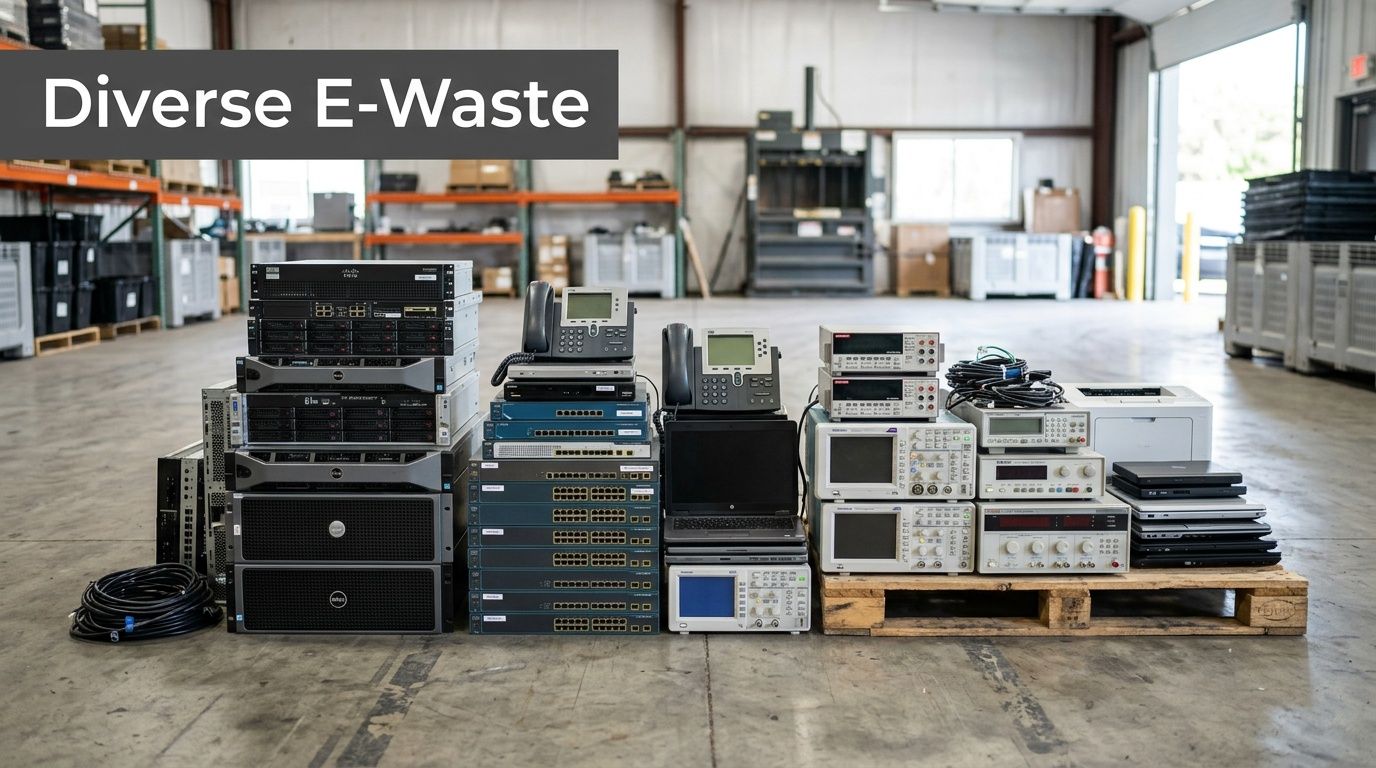
Most qualified B2B recyclers in Atlanta can handle the core IT categories you’d expect:
- Workstations and laptops including docks, thin clients, keyboards, mice, and power supplies
- Servers and storage such as rack servers, blade systems, network-attached storage, SAN hardware, and backup appliances
- Networking gear including switches, routers, firewalls, patch panels, and wireless controllers
- Display equipment such as monitors and specialized operator displays
- Peripherals including printers, scanners, mobile devices, VOIP phones, and related accessories
These items are usually straightforward if they’ve been staged correctly and inventoried before pickup. The complication comes from data-bearing components hidden inside otherwise ordinary hardware. A printer with internal storage or a lab workstation attached to an instrument can carry more risk than a stack of commodity monitors.
Scientific and laboratory equipment
A real B2B electronics recycling partner distinguishes itself from a public drop-off location.
Organizations often need removal and recycling support for items such as:
- Centrifuges
- Incubators
- Microscopes
- Analytical instruments
- Fume hoods
- Water baths
- Hot plates and stirrers
- Pipettes and small benchtop devices
- Lab freezers and controlled environment units
- Embedded-control lab systems tied to PCs or local storage
These assets create logistical and compliance issues that general recycling pages don’t address well. Some are bulky. Some are plumbed in. Some require de-installation before they can even be moved. Some have broken housings, damaged screens, or accessory sets that need to stay grouped with the parent unit for audit and valuation purposes.
Why lab equipment needs a different process
The mistake I see most often is treating a lab cleanout like an office cleanout. That usually causes one of three problems.
First, teams separate the obvious computers from the instruments, even though the instrument may contain electronic controls, boards, display systems, or data-bearing components. Second, facilities crews stack everything in one mixed stream. Third, nobody confirms whether the unit has been cleared for handling from an EHS standpoint.
A better intake review asks simple questions:
- Is it data-bearing?
- Does it contain hazardous components or need special segregation?
- Does it require de-installation, disconnection, or special lifting?
- Can it be refurbished, remarketed, harvested for components, or only recycled?
Some of the most complicated loads in Atlanta aren’t the heaviest ones. They’re the mixed loads where office IT, lab instrumentation, and storage media are all blended together without labels.
What usually doesn’t fit a basic drop-off model
Consumer programs can be useful for residents, but B2B clients often run into exclusions or practical dead ends with:
- Oversized or palletized loads
- Equipment requiring on-site dismantling
- Items from active healthcare or research environments
- Storage media requiring documented destruction
- Instrument systems with unknown contamination history
- Projects that need scheduled dock access, manifests, and chain-of-custody records
If you’re sorting older computer components before a larger pickup, this practical reference on what to do with old PC parts can help teams separate low-risk accessories from items that require formal ITAD handling.
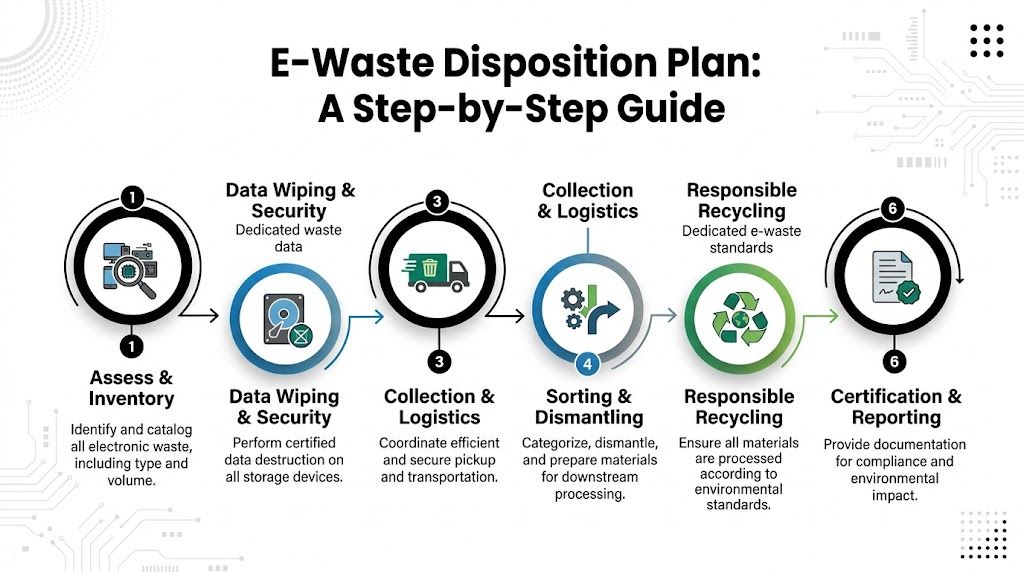
Your Step-by-Step E-Waste Disposition Plan
The cleanest projects follow a repeatable sequence. That’s true whether you’re shutting down a single lab, clearing one floor of a medical office, or decommissioning multiple rooms across a campus.
A structured ITAD approach works because it removes ambiguity. The strongest local example in the source material is Emory University’s pilot program in metro Atlanta, which processed 64 tons of e-waste, resold or recycled 99.6%, generated $31,840 in revenue, and sent only 0.4% to landfill (Emory ITAD benchmark in Atlanta). Those results didn’t happen by accident. They came from methodical inventory, sorting, and downstream handling.
Start with inventory before pickup is scheduled
The first deliverable isn’t a truck. It’s an inventory.
For each asset, capture what your team can verify without slowing the project down:
- Asset type such as laptop, server, centrifuge, microscope, freezer, or switch
- Manufacturer and model
- Serial number or asset tag
- Location down to building, floor, room, or lab
- Condition such as working, damaged, incomplete, or unknown
- Data status if known
- Handling notes including stairs, loading dock limits, or de-install requirements
If you skip this step, the rest of the project gets expensive. Teams lose track of devices, invoices get disputed, and compliance staff can’t reconcile what left the site.
Separate three streams early
Before the recycler arrives, create clear lanes for the material.
Reuse and remarketing candidates
Working laptops, late-model desktops, some servers, and selected lab-adjacent electronics may still have residual value. Keep power supplies, caddies, adapters, and core accessories with these units when possible.
Data destruction items
Any hard drives, SSDs, backup devices, server media, embedded controllers, or suspect data-bearing hardware belong in a controlled stream. Don’t mix them with general scrap.
Recycling-only material
Broken monitors, obsolete peripherals, non-viable boards, damaged housings, and equipment beyond reuse should move straight into the recycling stream after any needed data and safety review.
Prepare the site like a move, not a cleanup
The handoff goes faster when the building is ready. A pickup crew should know:
- where to park,
- which entrance to use,
- whether a freight elevator is available,
- what hours loading is allowed,
- who signs custody paperwork,
- and whether any items require facilities or EHS clearance first.
For lab environments, add one more checkpoint. Confirm whether the equipment has been decontaminated or cleared for removal by the organization’s internal process. Recyclers handle electronics. They shouldn’t be asked to decide whether a unit is safe to move.
The projects that bog down usually don’t fail in the truck. They fail in the building, when nobody has authority to release equipment or confirm that a room is actually ready.
Know what on-site service should include
For larger Atlanta projects, on-site support often matters more than the downstream recycling itself. Depending on the load, a provider may handle deinstallation, packing, palletization, box-truck pickup, and transfer to a processing facility.
That’s particularly important for organizations with mixed inventories. One option in this space is waste computer recycling support for business assets, which aligns with projects that need both logistics coordination and compliant disposition.
A capable field team should be able to answer practical questions such as:
| Project issue | What a qualified provider should clarify |
|---|---|
| Access constraints | Dock, stairs, elevator, and scheduling requirements |
| Device identification | Whether serial capture happens on site, before departure, or both |
| Packing standards | How loose drives, accessories, and fragile electronics are secured |
| Chain of custody | Who signs, what’s documented, and when records are issued |
| Unplanned discoveries | How they handle unlabeled media or additional items found during pickup |
Finish with reporting, not just removal
A truck leaving your site is not the end of the job. It’s the midpoint.
The closeout package should match the scope of the project and the risk profile of the assets. For regulated organizations, that typically means documented disposition by category, asset-level or batch-level tracking as agreed, and separate proof for media destruction when applicable.
When organizations treat electronics recycling Atlanta GA as a facilities task only, they usually miss value recovery and compliance detail. When they treat it like an operations project, the work runs cleaner, the documentation is better, and leadership gets a result they can defend.
Ensuring Ironclad Data Security and HIPAA Compliance
For hospitals, clinics, labs, universities, and public agencies, data security is the first filter in any disposal decision. If a device can store data, your team needs a defensible sanitization method before the asset leaves controlled custody.
That includes more than obvious computers. In real projects, risk often hides in retired servers, failed hard drives, backup media, lab PCs tied to instruments, and obsolete embedded systems that nobody has powered on in years.
The risk is not theoretical. For non-functional or obsolete lab media, secure destruction is mandatory because NIST 800-88 reports that 60% of data breaches involve improperly disposed media, and the Atlanta metro has over 200 hospitals, which puts healthcare organizations under particular pressure to control HIPAA exposure (Atlanta media disposal risk and healthcare context).
Wiping and shredding solve different problems
A lot of confusion comes from treating data wiping and physical shredding as interchangeable. They aren’t.
DoD 5220.22-M 3-pass wiping is useful when a functional drive may be reused or remarketed and the organization wants verifiable sanitization logs. Physical shredding is the right answer when the media is damaged, obsolete, failed, or too risky to return to circulation.
The right method depends on the actual media condition, not on what is cheapest or fastest.
Data Sanitization Methods DoD Wiping vs. Physical Shredding
| Criteria | DoD 5220.22-M 3-Pass Wipe | Physical Shredding |
|---|---|---|
| Best use case | Functional drives intended for reuse or remarketing | Non-functional, obsolete, failed, or high-risk media |
| Output | Sanitized media with audit trail | Destroyed media with no reuse path |
| Operational benefit | Preserves potential asset value | Removes doubt when media condition is unknown |
| Limitation | Requires a drive that can be read and processed | Eliminates any resale or reuse potential |
| Documentation expectation | Wipe logs and asset tracking | Certificate of Destruction and custody record |
Why chain of custody matters so much
The wiping or shredding method is only part of the control system. The bigger issue is whether your organization can prove what happened.
That means documenting:
- which device was collected
- who released it
- when it changed custody
- what sanitization method was used
- whether destruction was required
- what certificate or log was issued afterward
Without custody documentation, a “secure recycling” claim is mostly marketing language.
If a vendor can’t explain how media is tracked from pickup through sanitization and final processing, they’re asking you to accept trust where you should require records.
Lab equipment creates hidden data paths
B2B healthcare and research teams often get caught off guard. Instrumentation may look mechanical, but many systems store data in connected PCs, removable media, integrated boards, control modules, or attached local storage.
A disposal review should ask:
- Did the unit connect to a patient, study, or sample management environment?
- Did staff export results locally?
- Is there an embedded controller or attached workstation?
- Does the device still boot?
- If it doesn’t boot, where is the storage media physically located?
Those questions matter because the wrong assumption creates a blind spot. Teams often remember to wipe laptops and forget the service PC bolted under the bench, the retired NAS in the closet, or the controller attached to the analyzer.
Documentation your compliance team should request
For regulated organizations, ask for records that support both operational closeout and audit response.
A solid package may include:
- Asset inventory confirmation
- Pickup manifest or transfer record
- Serialized tracking where agreed
- Data wipe logs for sanitized drives
- Certificate of Destruction for shredded media
- Final recycling or disposition summary
If your legal, privacy, or compliance office needs a broader policy reference, these HIPAA compliance guidelines are a helpful companion when mapping internal disposal controls to external obligations.
What works and what doesn’t
What works is simple. Functional drives are tested and wiped with a documented standard. Non-functional media is physically destroyed. Custody stays documented. Exceptions are identified before material leaves the site.
What doesn’t work is just as familiar. Staff drop drives into mixed gaylords. Departments run independent cleanouts with no central inventory. A scrap vendor promises “data destruction included” but doesn’t provide asset-level evidence.
For organizations that need a service path built around documented media handling, secure data destruction for business equipment is the kind of operational model worth comparing against any local vendor you’re vetting.
Decoding the Costs and Value of Electronics Recycling
A lot of procurement teams still view electronics recycling as a pure disposal expense. That’s understandable when they’ve only dealt with broken monitors and obsolete peripherals. In enterprise projects, the economics are broader than haul-away cost.
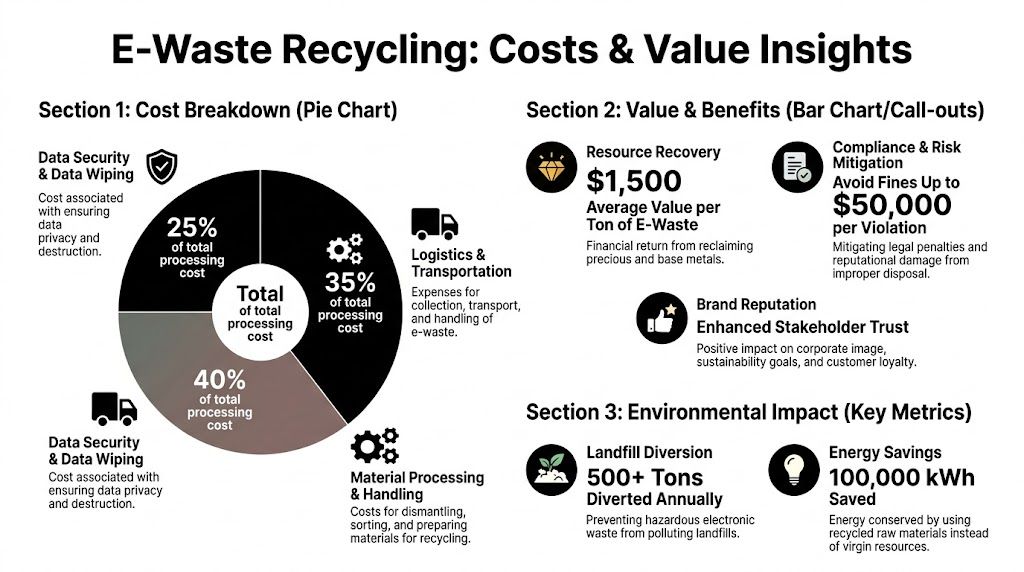
The actual budget usually depends on three things. Labor, because someone has to de-install, pack, palletize, and load. Logistics, because multiple buildings, docks, elevators, and time windows complicate transport. Material profile, because some assets are straightforward to process and others require detailed sorting, testing, or special handling.
Where the value comes from
Certified providers can often recover value through two channels. The first is component harvesting. The second is remarketing viable IT equipment that still has practical resale life.
According to the Atlanta disposal source material, 70-80% of materials are typically diverted via component harvesting or remarketing, and the resulting revenue share can cover 20-50% of total project costs (cost recovery and revenue share in Atlanta e-waste projects).
That changes the internal business case. The project still needs budget approval, but it may not belong in the same category as a pure waste haul.
What increases cost
Some cost drivers are unavoidable:
- Complex access conditions such as stairs, limited dock windows, and occupied facilities
- Bulky lab equipment needing de-installation or special packing
- Mixed loads that combine media, IT, and specialty devices with poor labeling
- Tight timelines tied to moves, shutdowns, or construction schedules
- Low-value material mixes with little reusable hardware
What raises cost unnecessarily is poor preparation. Unsorted rooms, bad inventory discipline, and unclear internal ownership can force the provider to do discovery work on site that should have been done before scheduling.
How to frame the project to leadership
For finance and compliance stakeholders, the strongest argument isn’t “recycling is green.” It’s that proper disposition reduces security risk, supports audit readiness, and may recover part of the project spend through reuse and materials recovery.
A practical way to present it is:
- Risk control for data-bearing and regulated assets
- Operational efficiency through planned pickup and decommission support
- Value recovery from viable equipment and harvested materials
If your team is comparing pickup-based service options, this guide on recycling electronics with free pickup is a useful reference point for evaluating whether a vendor’s model fits business cleanouts rather than residential drop-offs.
How to Choose the Right Atlanta Recycling Partner
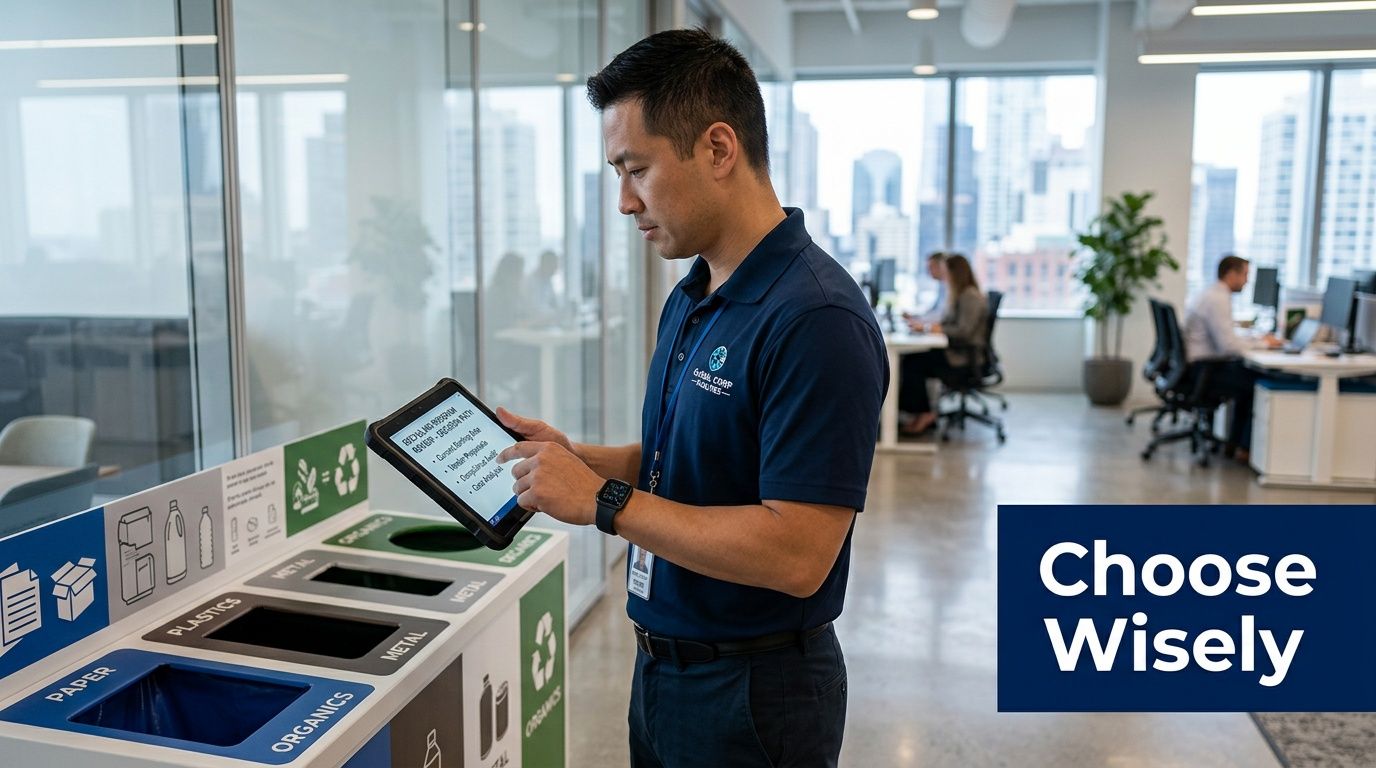
The wrong vendor usually sounds fine during the first phone call. Problems surface later, when you ask about data logs, downstream processors, on-site packing, or contaminated equipment protocols.
That’s why vendor selection should look more like a risk review than a simple quote comparison.
The shortlist questions that matter
Ask direct questions and listen for specific answers.
- Certifications: Do they operate with recognized recycling and environmental controls such as R2, e-Stewards, or ISO-aligned processes where applicable?
- On-site capability: Can they de-install, pack, palletize, and remove assets from active facilities, not just collect curbside-ready loads?
- Data handling: What happens to functional drives, failed drives, and embedded media?
- Documentation: What reports, certificates, logs, and manifests do they issue?
- Downstream transparency: Can they explain where materials go after initial sorting?
- Lab experience: Have they handled scientific equipment, not just office electronics?
A qualified vendor should answer these without vague sales language. If they can’t describe their chain of custody in plain terms, keep looking.
Look at the vendor like a third party with access risk
For hospitals, universities, and agencies, the recycler is not just a hauler. They’re a third party handling equipment, data-bearing media, and site access. That makes vendor review part of your broader security posture.
A practical framework for that mindset is this third-party risk management framework, especially if your procurement or information security team wants a more formal way to score operational and compliance risk before approving a service provider.
A low quote can become an expensive decision if the vendor fails at custody records, data destruction proof, or downstream control.
What a defensible choice looks like
The right Atlanta partner should be able to support both routine pickups and high-friction projects. That includes university lab closures, hospital equipment refreshes, data center rack retirements, and multi-room cleanouts where timing matters.
The deciding factor usually isn’t price alone. It’s whether the provider can do the hard parts cleanly. Asset tracking. Secure media handling. Organized loading. Clear records. Proper separation between reusable assets and recycling-only material.
That’s what turns electronics recycling atlanta ga from a recurring headache into a controlled business process.
Frequently Asked Questions About Lab and IT Recycling
Can lab equipment be recycled if it was used in a medical or research environment
Yes, but only after your internal team clears it for handling. The recycler should not decide whether a unit is biologically safe, chemically safe, or ready to move. Hospitals, labs, and universities need an internal sign-off path through EHS, facilities, or the responsible department before pickup.
Do you need to remove hard drives before pickup
Not always. In many B2B projects, keeping drives in place is better because it preserves asset identity and avoids loose-media mistakes. What matters is that the sanitization or destruction method is documented and tied back to the device or batch record.
What if the media is broken and can’t be wiped
That’s a shredding scenario. Failed, obsolete, or unreadable media shouldn’t be sent through a reuse workflow just because someone hoped to recover value. Physical destruction is the cleaner answer when the drive can’t support a verified wipe.
Are pickups only for computers and servers
No. Business cleanouts often include mixed loads of IT gear, lab electronics, bench equipment, displays, storage media, and support hardware. The important question is whether the provider has the crew, packing method, and logistics plan to handle those categories together without losing control of documentation.
What documentation should an organization expect after the job
For regulated or audit-sensitive environments, ask for a closeout package that fits your scope. That may include pickup records, inventory reconciliation, wipe logs, Certificates of Destruction, and a final disposition summary. Don’t wait until after the truck leaves to ask what paperwork is included.
Can a recycler help with de-installation and room clear-outs
Some can, some can’t. That’s one of the most important screening questions for Atlanta projects involving labs, hospitals, and campuses. If the equipment is plumbed in, racked, bench-mounted, or spread across multiple rooms, confirm on-site service capability before you approve the vendor.
If your organization needs a business-to-business partner for lab equipment, IT assets, and secure electronics recycling in metro Atlanta, Scientific Equipment Disposal handles de-installation, pickup logistics, compliant recycling, and documented data destruction for hospitals, universities, labs, corporations, and agencies.