Where to Recycle Telecom Equipment Near Me: A B2B Guide


You search where to recycle telecom equipment near me, and the results look deceptively simple. A county page says “electronics accepted.” A retail chain mentions phones and cables. A local drop-off list names computers, TVs, and maybe printers.
That's where many business disposals go wrong.
Telecom equipment doesn't behave like household e-waste. Old switches, routers, PBX systems, VoIP phones, rack hardware, patch panels, and cabling often sit inside a bigger compliance problem. Some assets store credentials, call logs, configuration files, or other sensitive operational data. Others are tied to a facility shutdown, a network refresh, a clinic remodel, or a lab decommission where chain of custody matters as much as recycling itself.
Facilities managers and IT directors usually aren't looking for a weekend drop-off event. They need a recycler that can answer practical questions fast. Do you accept enterprise telecom gear? Can you document transfer? How do you handle data-bearing devices? Who touches the equipment on pickup day? What paperwork do you issue after processing?
Generic consumer advice doesn't answer those questions. A broader guide to e-waste management can help frame the bigger disposal environment, but telecom assets need a narrower, business-grade workflow.
Why "Telecom Equipment Recycling Near Me" Is a Deceptively Hard Search
The frustrating part is that your search term is reasonable. If you have a closet full of retired routers and a stack of decommissioned VoIP phones, “near me” should surface a clear local option.
Instead, most search results lump telecom gear into the same bucket as household electronics.
That mismatch is well documented. Common “near me” searches for telecom recycling often return generic e-waste lists that rarely distinguish routers, switches, PBX systems, and cabling from consumer devices. Google Trends data cited in this context shows that 70% of e-waste searches seek item-specific confirmation, yet only 20% of local guides provide it, and EPA reporting cited in the same analysis notes that 40% of business telecom e-waste is mismanaged due to unclear local options (Louisiana DEQ reference).
What business users actually need
A hospital clearing out a telecom room doesn't need a vague “electronics accepted” notice. A university replacing campus phone systems needs to know whether a recycler will accept enterprise handsets, rack switches, structured cabling, and ancillary hardware in one coordinated job.
The problem isn't distance. It's specificity.
Business telecom recycling usually requires:
- Item-level acceptance clarity so you know whether the recycler takes PBX components, rackmount gear, transceivers, handsets, UPS-adjacent electronics, and cabling
- Data handling procedures for equipment that may retain settings, credentials, or call-related data
- Transfer records that support internal asset retirement and audit needs
- A downstream recycling explanation so you know where equipment goes after pickup or drop-off
Business e-waste fails most often at the handoff point. The recycler may be local, but if they can't describe acceptance scope, data process, and documentation, they're not a real fit for telecom gear.
What doesn't work
The weakest path is relying on a consumer drop-off list and hoping your load qualifies on arrival. That's how organizations end up with partial rejections, staff making multiple trips, or worse, equipment leaving the building without proper tracking.
A better search starts with the assumption that telecom equipment needs B2B-grade qualification, not just a nearby address.
Finding Certified E-Waste Partners for Telecom Gear
The fastest way to improve search quality is to stop searching for “electronics recycling” and start searching for qualified service types.

Search terms that filter out weak options
For telecom assets, broad local keywords bring in too many consumer-facing results. Use narrower terms such as:
- R2 certified electronics recycler near me
- e-Stewards ITAD provider
- NAID AAA data destruction near me
- telecom equipment recycling business pickup
- network equipment disposal certified recycler
- server and telecom decommission recycling
Those terms won't guarantee a good vendor, but they reduce the number of pages built only for household drop-offs.
What to verify before you schedule anything
Certifications matter because they force process discipline. In practice, you're looking for a recycler that can show documented handling standards, not just marketing language.
Ask for these basics:
- Current certifications. If they mention R2, e-Stewards, RIOS, or NAID AAA, ask for proof.
- Accepted equipment list. Make them confirm telecom categories in writing.
- Data-bearing asset workflow. Ask what happens to devices that contain storage or configuration data.
- Chain of custody documentation. A serious vendor should explain how equipment is logged from pickup through processing.
- Downstream partners. If they subcontract parts of the stream, ask who handles them.
A useful benchmark is the kind of network seen in New York City. The Lower East Side Ecology Center runs one of the nation's most active community-based e-waste programs and partners with certified recyclers including EcoTech Management and WALTER. As of May 2026, it offers multiple collection events weekly, which shows what a mature partner ecosystem looks like when collection and compliant processing are connected (Lower East Side Ecology Center community recycling events).
That example is community-oriented, but the lesson for B2B users is bigger. Good recycling infrastructure depends on visible partnerships, named processors, and repeatable intake channels.
Questions that reveal whether a vendor is prepared
Use a short qualification script. If a recycler struggles with these, keep looking.
Do you accept telecom-specific assets?
Ask them to confirm routers, switches, PBX systems, VoIP phones, rack gear, and cabling.Can you support business pickups?
Drop-off only works for some small jobs. Most business telecom removals need scheduled logistics.How do you document the transfer?
You want manifests, serialized inventories where appropriate, and final disposition paperwork.What do you issue after processing?
For many organizations, certificates of destruction and recycling reports matter as much as pickup itself.Who performs the work?
Clarify whether their own team handles the job or whether a third party appears at your dock.
A practical screening standard
Here's the working rule: if the vendor's website only talks about residents dropping off TVs and laptops, that's not enough evidence for a telecom decommission.
A business-grade provider should be able to support broader IT asset disposal workflows such as secure removal, inventory reconciliation, and documented downstream processing. If you're comparing vendors, it helps to review what a dedicated IT asset disposal process should include before you start calling around.
The best recycler isn't always the closest one. It's the one that can explain exactly how your telecom gear will be accepted, secured, transported, processed, and documented.
Asset Prep Data Security and Documentation
Once you've identified a qualified recycler, the job shifts inside your building. This is the part teams often underestimate.
Telecom disposal isn't “box it up and go.” Routers, firewalls, switches with management storage, VoIP phones, conference systems, and adjacent IT hardware can all hold information worth protecting. Even when a device seems obsolete, the risk doesn't disappear.

Start with an asset record
Before any pallet is wrapped, build an inventory. The practical fields are simple: make, model, serial number, asset tag, location, and final disposition category.
That inventory serves several purposes at once. It supports internal approvals, lets the recycler prepare correctly, and gives your compliance or security team a baseline to reconcile after pickup.
A strong standard exists here. A compliant telecom methodology includes inventorying assets using IEEE 1680.1 standards, sanitizing data using NIST 800-88 guidelines, and auditing recycler certifications such as R2 and RIOS to avoid weak downstream handling (New York registered facilities guidance).
Data sanitization isn't optional
If the device can store, cache, or authenticate, treat it as data-bearing until proven otherwise.
That includes equipment many teams overlook:
- Routers and firewalls that may retain credentials, VPN settings, and configuration files
- Managed switches that may store management data and network definitions
- VoIP phones and call systems that may contain directories, extensions, and user settings
- Servers supporting telecom systems that may carry call records, backups, and admin data
Gold standard: Inventory first, sanitize to NIST 800-88, and audit the recycler's certifications before the first device leaves the site.
For functioning media, software wiping may be appropriate. For failed or obsolete storage, physical destruction is often the cleaner path. The exact method depends on device condition, internal policy, and regulatory exposure.
What to remove before pickup
Not every prep step is technical. Some are administrative, and they matter just as much.
Use this short checklist:
- Remove internal identifiers such as paper labels, sticky notes, and informal naming that exposes users, departments, or room numbers
- Separate reusable accessories if your organization redeploys racks, rails, power cords, or optics internally
- Package by category so the recycler doesn't have to sort mixed loads blindly at the dock
- Flag exceptions early such as damaged batteries, broken screens, or nonstandard hardware in the same room
Clean separation saves time and reduces disputes over what was handed over.
Documentation closes the loop
Pickup without paperwork leaves you exposed. After transfer and processing, ask for records that match the way your organization tracks assets.
For many IT and facilities teams, that includes:
| Record | Why it matters |
|---|---|
| Pickup manifest | Confirms what left your site and when |
| Serialized inventory | Supports reconciliation for higher-risk assets |
| Certificate of data destruction | Documents sanitization or destruction actions |
| Certificate of recycling | Confirms environmental disposition |
If your internal team needs a template for what that last piece should look like, review what a proper certificate of destruction is expected to document.
Pre-call before loading
One more practical habit saves a lot of wasted time. Call before you move anything.
The same compliant methodology cited above advises teams to cross-reference and pre-call to confirm acceptance because telecom loads are frequently more specialized than standard e-waste intake. That's especially important if your shipment includes mixed categories, unusual rack gear, or legacy communications systems.
A recycler that accepts “electronics” may still reject your actual telecom load. Confirmation should happen before equipment reaches the truck.
Understanding Your Regulatory and Data Privacy Obligations
Disposal mistakes rarely look dramatic at the start. A few pallets leave the building. Someone signs a pickup slip. The room is cleared.
The risk shows up later, when no one can answer where the equipment went, how the data was handled, or whether the recycler followed an accountable process.
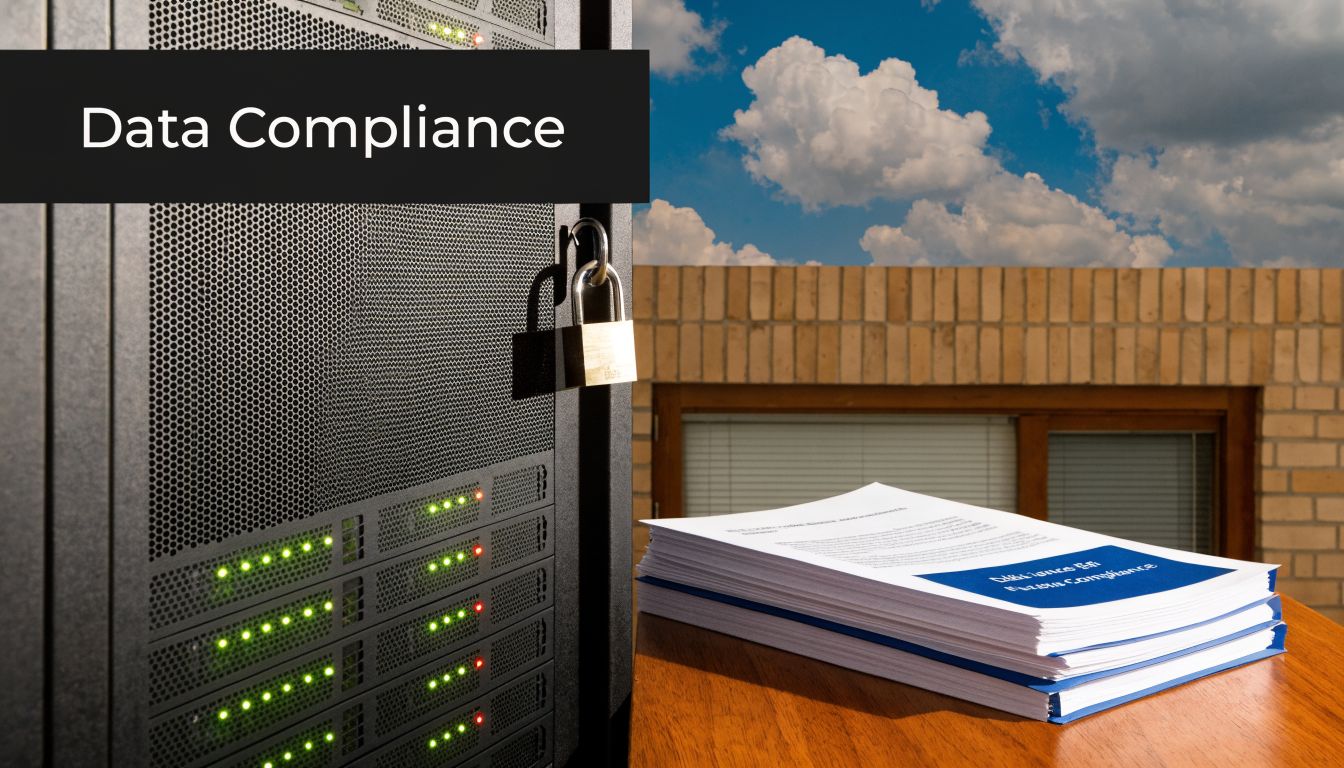
Why state frameworks matter
A strong example comes from New York. The state's Electronic Equipment Recycling and Reuse Act requires manufacturer-funded take-back programs and supports a broad network of registered recycling facilities. That infrastructure is designed to ensure electronic equipment is handled under strict environmental and data security expectations (New York City e-waste drop-off guidance).
That matters even if you don't operate in New York.
It shows what mature oversight looks like. Compliant e-waste disposition isn't just about getting gear out of a building. It's about using a system where acceptance, transport, processing, and accountability are all visible.
Telecom equipment can trigger privacy exposure
Healthcare organizations already understand this risk, but the same principle applies in finance, research, higher education, and enterprise IT. Telecom hardware can sit close to sensitive workflows even when it doesn't look like a traditional storage asset.
Examples include:
- VoIP systems tied to patient, client, or internal communications
- Network appliances holding credentials, configurations, and access information
- Supporting servers connected to voice, messaging, or routing infrastructure
- Admin consoles and management interfaces linked to controlled environments
If your organization handles protected data, the disposal event has to be treated as part of that protection program. Internal privacy officers, compliance leads, and information security staff should all have input on the disposition method.
Environmental compliance isn't separate from security
Many teams split these issues in their heads. Security handles data. Facilities handles recycling.
In real projects, they overlap. The recycler that protects data poorly often handles environmental compliance poorly too. That's why businesses should care about process integrity, not just price or speed.
A more complete operational view of managing e-waste usually includes both sides of the equation: secure asset control and responsible downstream recycling.
If a vendor can't explain their environmental controls and their data controls in the same conversation, they're not ready for high-stakes telecom equipment.
What your team should ask internally
Before approving disposition, align on a few internal questions:
- Who owns sign-off? IT, facilities, compliance, and procurement often all touch the project.
- Which assets are high sensitivity? Don't assume only servers qualify.
- What records must be retained? Match disposal paperwork to your audit expectations.
- Is pickup enough, or do you need on-site services? The answer affects custody and staffing.
That internal discipline usually matters more than the recycler's marketing claims.
Evaluating Logistics Drop-Off Pickup and On-Site Services
The right recycler can still become the wrong choice if the logistics model doesn't fit your job. Telecom disposition fails all the time because organizations choose the cheapest transfer option instead of the one that matches risk and volume.
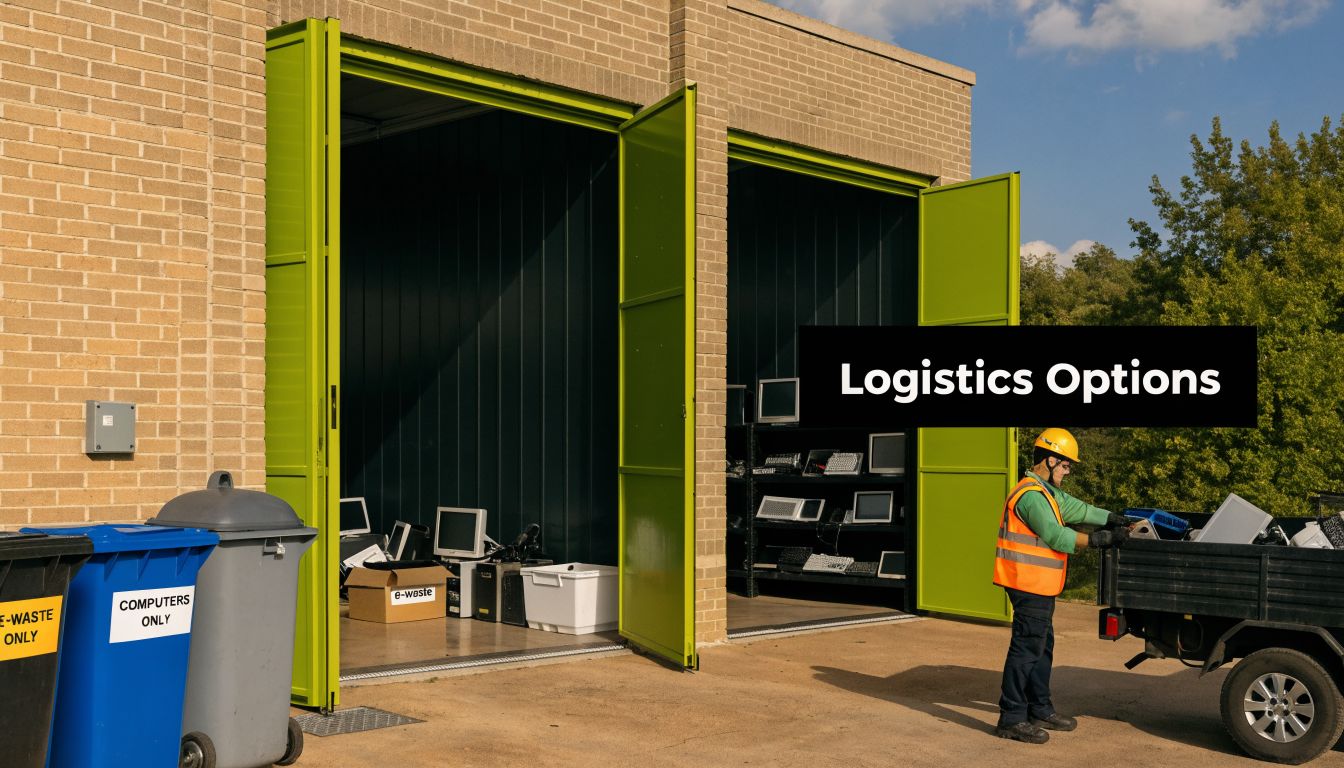
When drop-off makes sense
Drop-off is best for small quantities, clearly accepted items, and low-complexity loads. If you have a handful of noncritical devices and your staff can transport them safely, it can work.
The limitations are obvious. Your team does the packing, loading, movement, and handoff. If there's a mismatch on acceptance, you find out at arrival.
Why pickup is usually the business default
Scheduled pickup fits most organizations better because it reduces internal handling and creates a cleaner transfer moment. The vendor arrives, the load is verified, and the custody chain starts in a way your team can document.
Pickup is often the practical middle ground when you have telecom closets, branch office hardware, or a moderate network refresh that doesn't require a full de-install crew.
When on-site services are worth it
For larger projects, on-site de-installation and removal are usually the right call. That includes facility closures, hospital renovations, school technology upgrades, lab decommissions, and data room cleanouts.
In those cases, the value isn't just convenience. It's control.
Use this comparison:
| Service model | Best fit | Main trade-off |
|---|---|---|
| Drop-off | Small, simple loads | Weakest operational control |
| Scheduled pickup | Most B2B telecom disposals | Requires timing coordination |
| On-site de-install and removal | Large, sensitive, labor-heavy projects | Higher service scope |
Logistics should follow risk. The more sensitive the equipment and the messier the removal, the less sense self-transport makes.
There's also a practical overlap with broader relocation work. If your telecom disposal is part of an office consolidation or site shutdown, planning it alongside experienced office moving solutions can help teams sequence de-installation, packing, and asset separation more cleanly.
For organizations that need a recycler to come to them, a business-oriented electronics recycling free pick up service is often the easiest place to compare what a proper pickup workflow should include.
A Streamlined Solution for the Atlanta Metro Area
For Atlanta-area organizations, the local answer to where to recycle telecom equipment near me should be more than a map pin. It should be a provider that can handle the full job: telecom rooms, network gear, data-bearing assets, pickup logistics, and compliance documentation without forcing your team to improvise.
That's why Atlanta businesses, hospitals, universities, labs, and government agencies usually benefit from working with a B2B specialist rather than a consumer-style drop-off outlet. The closer your project gets to a clinic renovation, server room cleanup, telecom refresh, or facility shutdown, the more important on-site coordination becomes.
Scientific Equipment Disposal, based in Norcross, serves that need in the Atlanta metro with business-focused electronics and equipment disposition. The company supports on-site de-installation, packing, pickup, and logistics with its own box-truck fleet, which matters when internal staff doesn't have the time or labor to break down a telecom room correctly. Its data security services are built for sensitive environments too, including free DoD 5220.22-M 3-pass hard drive wiping and shredding for obsolete or nonfunctional media.
That combination is especially relevant for healthcare and research settings where telecom and IT assets may sit close to HIPAA-sensitive workflows. It also helps corporate IT teams that need a clean chain of custody and a recycler that understands mixed loads of networking gear, servers, peripherals, and related electronics.
If you're local to metro Atlanta and need a provider that's set up for secure, compliant B2B removals, review Scientific Equipment Disposal's Atlanta electronics recycling services to see whether the logistics and accepted asset categories match your project.
If your team needs a practical partner for telecom equipment, IT assets, or mixed electronics in the Atlanta area, Scientific Equipment Disposal offers business-focused pickup, secure data handling, and compliant recycling support for hospitals, labs, universities, corporations, and government facilities.