Electronics Recycling Services in Sugar Hill GA

A lot of Sugar Hill businesses reach the same point at the wrong time. A lab renovation is underway, a server closet is over capacity, or a department has replaced a floor of aging desktops and now everything that used to be “temporarily stored” is taking over real workspace.
The pressure usually starts with space. It quickly turns into questions about hard drives, asset tags, chain of custody, environmental rules, and who’s going to move a heavy analyzer or a rack-mounted server without creating a new problem. For hospitals, clinics, schools, manufacturers, and corporate offices, old electronics aren’t just clutter. They’re regulated assets with security and disposal obligations attached.
That’s why Electronics Recycling Services in Sugar Hill GA should be treated as an operational process, not a cleanout day.
Navigating E-Waste Disposal for Sugar Hill Businesses
A facilities manager in Sugar Hill might be staring at a mixed pile of retired laptops, failed UPS units, old monitors, networking gear, barcode scanners, and a few pieces of lab equipment nobody wants to touch until someone confirms they can leave the building safely. The IT director wants drives handled correctly. Compliance wants documentation. Operations wants the room cleared this week, not next month.
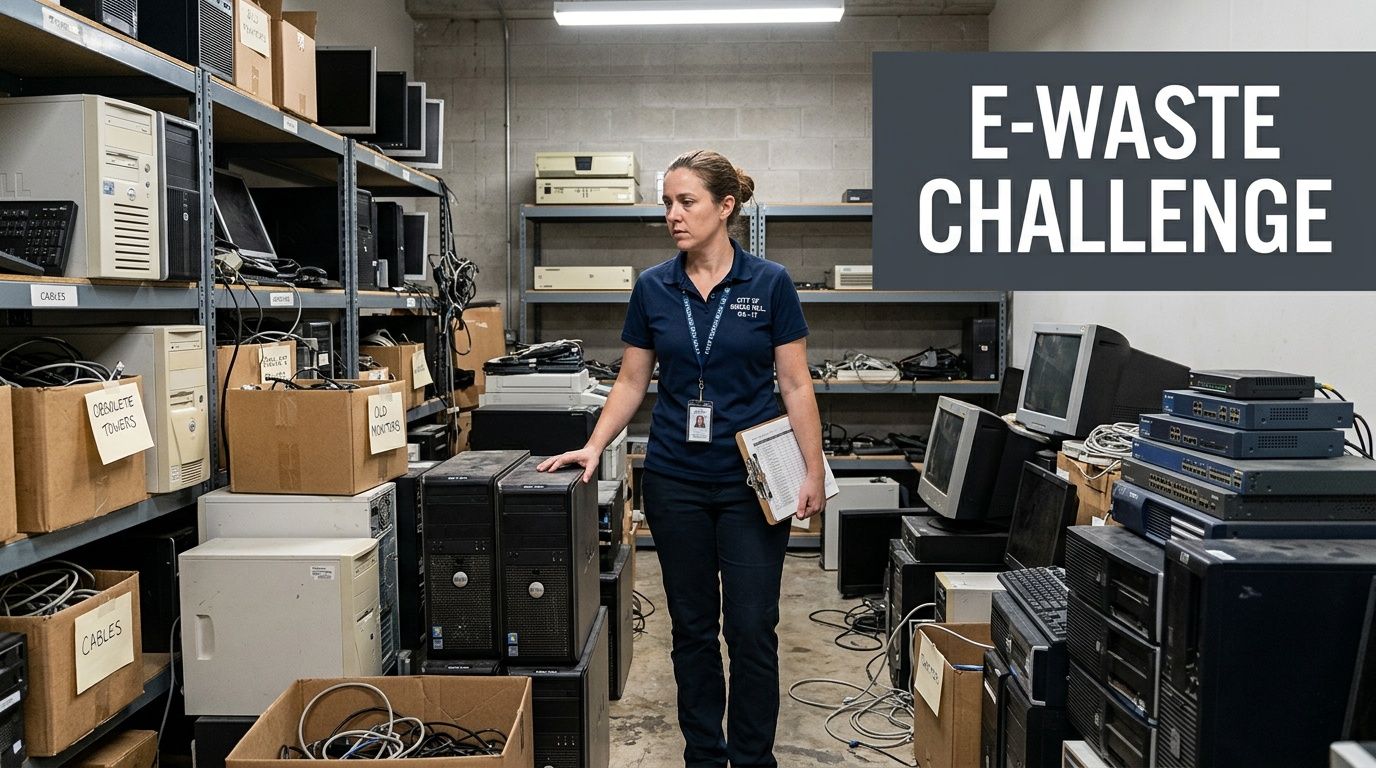
That situation is common because business e-waste builds up gradually. One upgrade cycle leaves behind a few pallets. One lab refresh leaves instruments in corners. One office consolidation turns “surplus” into a fire-code and security issue.
Why local businesses need more than a drop-off option
Business electronics disposal has to solve several problems at once:
- Data exposure: Devices may still contain patient data, employee records, financial files, login credentials, or proprietary research.
- Physical logistics: Heavy or awkward equipment often needs de-installation, packing, and safe removal from active work areas.
- Environmental responsibility: Electronics contain materials that shouldn’t go into general waste streams.
- Audit readiness: Someone needs to document what left the site, how it was handled, and what happened to it afterward.
A responsible local benchmark exists. Atlanta Recycling Solutions, featured at Sugar Hill Earth Day events, achieves over a 95% recycling rate for received materials, while global e-waste reached 62 million metric tons in 2022 and only 22.3% was properly recycled, according to Reworx on electronics waste disposal in Sugar Hill. That contrast matters. It shows why disciplined regional programs are more than a convenience.
Practical rule: If your disposal plan starts with “let’s move it all to the loading dock and figure it out later,” you don’t have a disposal plan yet.
For companies that need a business-focused local option, electronics recycling in Gwinnett County for businesses is typically the right model. It aligns pickup, security, and downstream handling instead of leaving staff to improvise.
Beyond the Bin The Scope of Professional E-Waste Services
Consumer recycling is a drop-off transaction. Business recycling is an asset disposition workflow.
That difference is easy to miss until a project gets complicated. A few office laptops may seem simple. A mixed load of workstations, servers, lab peripherals, printers, access-control hardware, and storage media is not. Once equipment has serial numbers, data risk, building access constraints, or resale potential, the work changes.
What a professional service actually includes
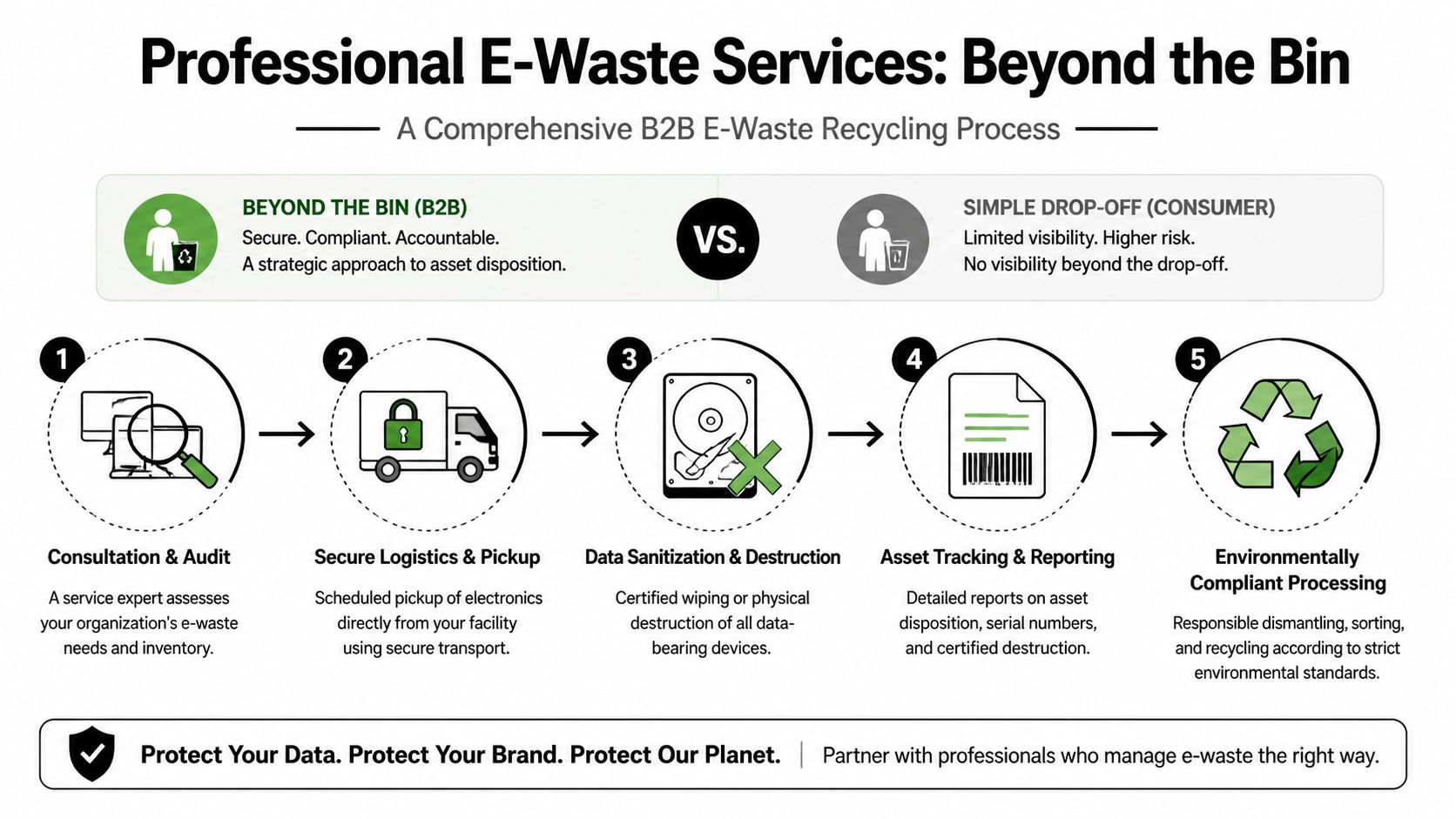
A useful comparison is this. A public bin is like hailing a ride. A professional B2B provider operates more like a logistics company with compliance controls.
That usually means the service includes:
Assessment before pickup
Someone reviews what you have, where it sits, whether it’s loose, boxed, palletized, rack-mounted, or still installed.On-site removal
Staff disconnect, stage, and move equipment without forcing your team to do the heavy lifting or guess at safe handling.Secure transportation
Assets leave in a controlled pickup, not in employee vehicles or piecemeal trips.Tracking and documentation
Equipment is matched to disposition records, especially when drives, servers, and tagged assets are involved.Final processing
Reuse, parts harvesting, commodity recovery, and certified recycling are handled through a documented downstream process.
Why B2B customers should think in terms of lifecycle
A facilities team doesn’t just need things gone. It needs the project to close cleanly. That means no mystery about whether a hard drive was wiped, whether a monitor was exported irresponsibly, or whether a decommissioned instrument ended up in the wrong waste channel.
The strongest vendors work from intake to final paperwork. They don’t disappear once the truck leaves.
The handoff isn’t complete at pickup. It’s complete when the organization has disposition records it can actually use.
Many generic “junk removal” style options fail. They can move equipment, but they can’t support asset accountability. That gap becomes expensive when internal audit, legal, procurement, or compliance asks for proof.
For organizations managing multiple sites or larger refresh cycles, corporate e-waste solutions in Atlanta and nationwide give a better framework. The service should be repeatable, not improvised every time a department cleans out a room.
Ensuring Data Security and Regulatory Compliance
For most business clients, the hardest part of electronics recycling isn’t recycling. It’s risk control.
If a retired desktop still contains user credentials, if a server held protected data, or if a lab workstation touched regulated records, disposal becomes a security event. The same is true on the environmental side. Electronics contain components that need controlled handling, especially when hazardous materials are part of the device makeup.
Why certification matters
A lot of companies treat recycling certifications like a logo on a website. That’s a mistake. In practice, certification should tell you whether the provider follows a verifiable process from intake through downstream handling.
According to CrusA LLC on responsible electronics recycling, R2 v3 certification requires a lifecycle management process with 95%+ material recovery rates, a zero-landfill guarantee, rigorous downstream tracking to prevent illegal exports or dumping, and 100% compliance with EPA and state regulations. For a facilities manager or IT director, that matters because it shifts disposal from assumption to evidence.
What compliance looks like on the ground
In real projects, compliance isn’t abstract. It shows up in decisions like these:
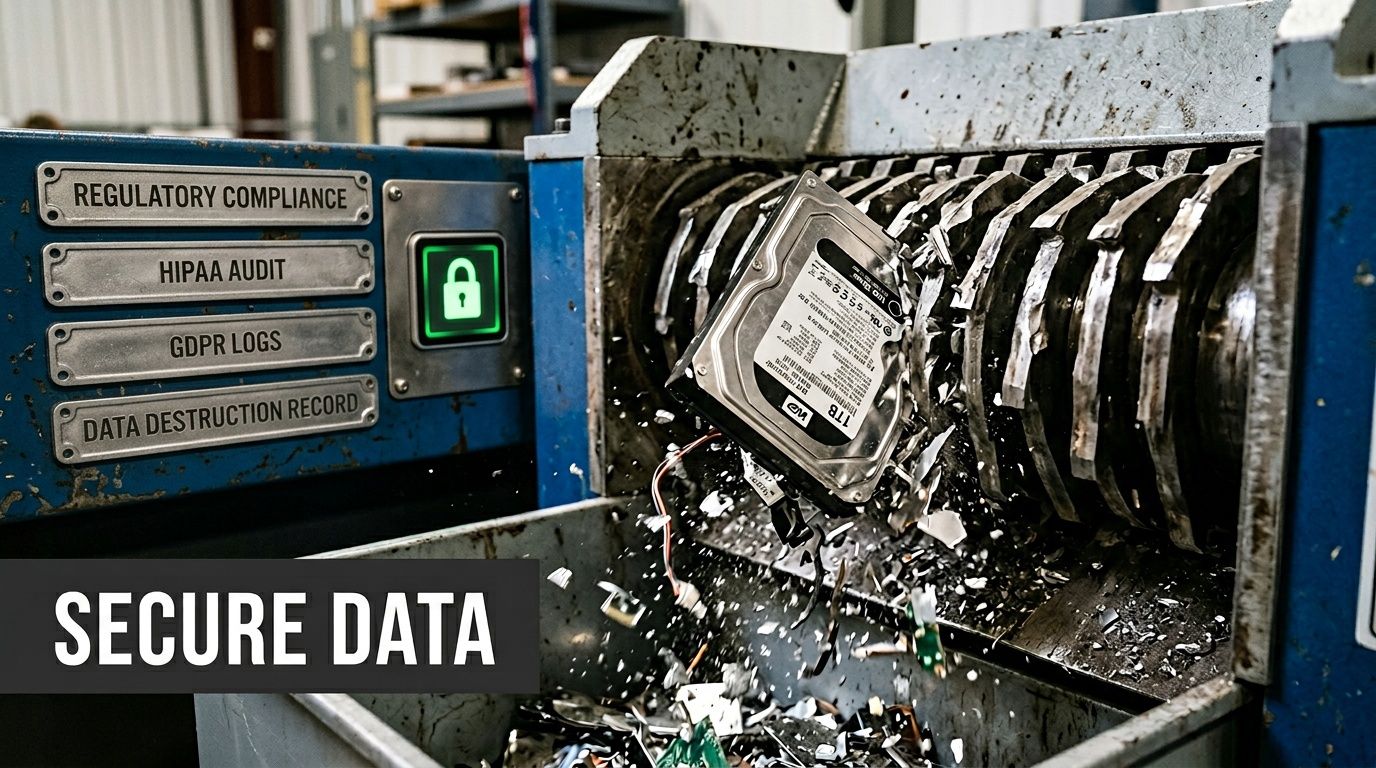
- Who handles data-bearing devices: Drives, arrays, backup units, and embedded media need a documented sanitization or destruction method.
- How material is sorted: Equipment must be dismantled and processed through approved channels, not mixed into general scrap.
- Whether chain of custody is preserved: Staff should be able to identify what was removed and how it was handled.
- How downstream vendors are managed: The first pickup vendor isn’t the whole story. Their downstream partners matter too.
For healthcare and research settings, this gets more serious. A hard drive from an imaging station or lab workstation can create a privacy problem long after the machine is no longer useful.
The operational link between maintenance and disposition
Good disposal planning starts before a device becomes waste. Organizations that maintain asset inventories, service histories, and retirement triggers usually execute cleaner decommissions because they already know what’s in the fleet and what data or contamination concerns may exist. The same discipline shows up in broader operational programs like preventive maintenance for UAE assets, where documented lifecycle controls reduce surprises at the end of service life.
Decision test: If a recycler can’t explain where your equipment goes after pickup, or can’t explain how data media is handled, keep looking.
Security teams also need a direct service path for sanitization and destruction. A dedicated secure data destruction service is often the dividing line between basic hauling and a compliant end-of-life program.
The Electronics Recycling Process From Pickup to Certification
Most organizations want the same thing from a recycling project. They want it to be orderly, fast, documented, and uneventful.
That only happens when the process is defined before the first item leaves the building. For Sugar Hill businesses, the best projects follow a straightforward sequence that covers planning, movement, data handling, and final documentation.
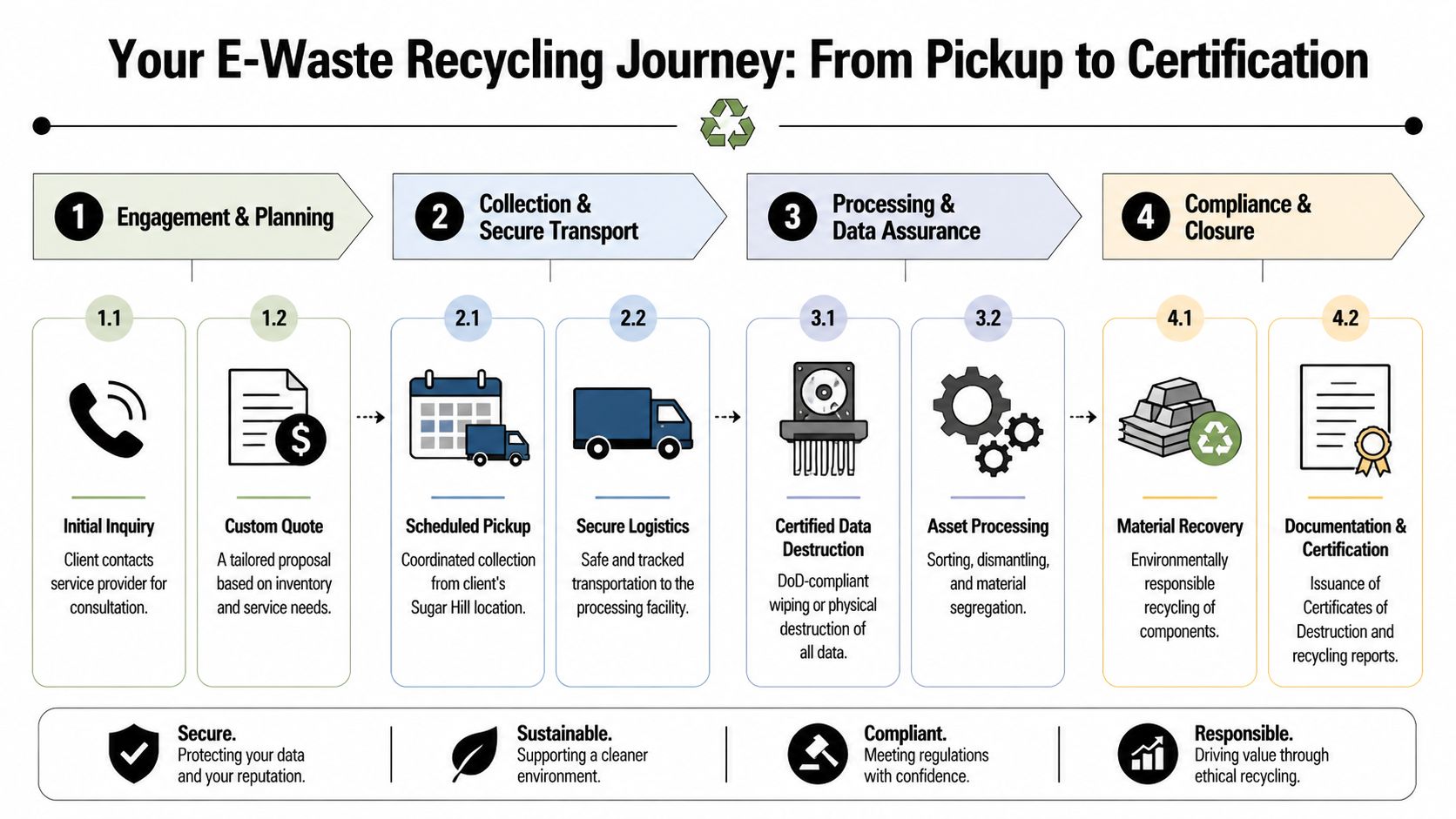
Step one and step two
The first stage is intake. A provider needs a usable picture of the job. Not every project requires a long site visit, but every project does require clarity about equipment type, quantity, access conditions, and whether anything is still connected.
After that comes scheduling and logistics. During this phase, experienced providers save clients time. They coordinate pickup windows, identify any de-installation needs, and make sure the right labor and vehicle capacity are assigned.
A business with a one-time office cleanout has one set of needs. A medical lab with benchtop instruments, old PCs, and secured media has another. The provider should adapt the removal plan accordingly.
Step three and step four
Transport isn’t just moving things from point A to point B. It’s the custody phase. Equipment is loaded, secured, and moved into the processing stream without creating blind spots.
Once data-bearing devices reach the handling stage, sanitization or destruction becomes the priority. According to Reworx on electronics recycling in Sugar Hill, the DoD 5220.22-M 3-pass wiping method applies complementary patterns at the sector level and outperforms older methods in efficiency while nullifying forensic recovery tools. For non-functional media, physical shredding to <2mm particles ensures complete data destruction, and integrated logistics can cut project turnaround to 48-72 hours.
That’s useful for planning because it gives operations leaders a realistic picture of what a mature workflow can support when timing matters.
For active facilities, speed only helps if it comes with documentation. Fast pickup without proof creates a second problem instead of solving the first.
What the client should receive at closeout
The final stage is where many clients judge the entire project. The truck is gone. Now the paperwork has to hold up.
A proper closeout often includes:
- Asset disposition records tied to the equipment removed
- Certificates of destruction for data-bearing media that required destruction
- Recycling documentation for environmental reporting or internal files
- Notes on remarketable items when reusable equipment has value recovery potential
Here’s the practical sequence typically followed:
| Project stage | What the client needs |
|---|---|
| Initial request | Clear scope and service fit |
| Scheduling | Pickup plan that matches site conditions |
| Removal day | Controlled on-site handling |
| Processing | Verified data sanitization or destruction |
| Closeout | Usable records for audit, legal, and internal tracking |
For organizations that want local coordination instead of piecing together carriers, recyclers, and destruction vendors, a free business electronics pickup in Gwinnett County model is often the cleanest route. One coordinated workflow is easier to manage than three partial vendors.
What We Recycle Lab, IT, and Data Center Assets
The inventory at a business site rarely fits a single category. A hospital may have office electronics in one wing, lab equipment in another, and retired network hardware in an IDF closet. A university can have all three in the same building.
That’s why accepted-items lists should be organized by function, not by vague labels like “miscellaneous electronics.”
For the laboratory
Lab assets need more scrutiny because removal may involve de-installation, contamination review, and building coordination.
Typical categories include:
- Analytical instruments such as spectrophotometers and related benchtop units
- Processing equipment including centrifuges, incubators, shakers, and mixers
- Lab support electronics like balances, controllers, power supplies, and monitors
- Casework-connected devices that may need careful disconnection before transport
If an item was used in a regulated or sensitive environment, the recycler may ask for decontamination documentation before pickup. That protects the client, the transport crew, and the downstream processors.
For the office and IT department
Office electronics usually form the biggest by-count category in a typical cleanout.
Common items include:
- User devices such as desktop computers, laptops, thin clients, tablets, and docking stations
- Peripherals including keyboards, mice, scanners, printers, label printers, and VoIP phones
- Networking gear like switches, routers, firewalls, wireless access points, and patch panels
- Power equipment including UPS units, battery backups, and assorted power distribution hardware
Asset tags, drive presence, and reuse potential all matter here. A newer laptop and a dead copier don’t move through the same disposition path.
For the data center
Data center equipment carries the highest concentration of security and logistics concerns. These projects often involve denser loads, rack work, embedded storage, and stricter access controls.
A focused data center equipment recycling in Gwinnett County program should cover equipment such as:
- Servers in rack-mounted and tower configurations
- Storage systems including SAN, NAS, and backup arrays
- Racks and infrastructure such as PDUs, KVM units, rails, cabinets, and structured cabling hardware
- Supporting network equipment tied to server and storage environments
Some of the most expensive mistakes happen when teams assume all electronics can be handled the same way. Lab equipment, office devices, and data center gear each need their own removal and processing logic.
Understanding the Costs and Value of Asset Disposition
The first pricing question clients ask is usually simple. “What does electronics recycling cost?” The honest answer is that cost depends on the work involved, not just the number of items.
A boxed pallet of retired keyboards is one kind of project. A third-floor pickup involving rack servers, monitors, printers, and installed lab electronics is another. Labor, access, packaging, de-installation effort, and the type of data destruction required all affect the final scope.
What tends to increase or reduce cost
Several variables shape the economics of a project:
- Equipment mix: Commodity peripherals are different from reusable servers or specialty instruments.
- Site conditions: Elevators, stairs, loading access, security check-in, and after-hours requirements all matter.
- Preparation level: Boxed and labeled equipment is faster to process than loose assets spread across multiple rooms.
- Data handling requirements: Devices that need documented wiping or shredding require more controlled processing.
Why value recovery changes the conversation
The better way to evaluate a project is through asset disposition value, not disposal cost alone.
Some equipment has resale or refurbishment potential. That doesn’t mean every retired asset is valuable. It means organizations should separate obsolete material from equipment that still has a secondary market, useful parts, or recoverable components. A disciplined ITAD-style approach can offset a portion of project costs through remarketing or parts recovery where appropriate.
This is also why “free haul away” claims deserve scrutiny. If a vendor can’t explain how value is assessed, where costs sit, and how records are returned, the free pickup may push hidden risk elsewhere.
A sound program does three things at once. It removes liability, captures any remaining value, and gives the client a clean closeout file.
Partnering with S.E.D. for Responsible Disposal in Sugar Hill
A facilities manager in Sugar Hill may be facing three deadlines at once: clear a lab, retire a server room, and document where every data-bearing asset went. In that situation, disposal is only one part of the job. The essential requirement is controlled execution from on-site removal through final paperwork.
Scientific Equipment Disposal handles business electronics and laboratory equipment projects across the Atlanta area with practical logistics, secure data handling, and sustainable recycling practices designed for regulated environments. S.E.D. works with hospitals, labs, universities, corporations, and public agencies that need more than pickup. They need a vendor that can coordinate access, remove equipment safely, maintain chain of custody, separate assets with reuse potential from true scrap, and close the project with clear documentation.
That lifecycle matters most for high-value lab and IT assets. A bench instrument, storage array, or rack server can involve de-installation constraints, internal data, resale review, and downstream compliance questions. Those details are often skipped in general e-waste programs. They are the center of a proper B2B disposition project.
If you are planning a lab decommission, office technology refresh, server retirement, or facility shutdown in Sugar Hill, contact S.E.D. for a no-obligation quote. Start with the asset mix, site conditions, and data destruction requirements. From there, the project can be scoped around timing, handling requirements, and the records your team needs for a clean closeout.
Frequently Asked Questions about Business Electronics Recycling
Questions usually shift once the asset list is built and pickup dates are under review. At that point, facilities teams and IT managers are usually focused on execution details, especially access, chain of custody, documentation, and whether any remaining value can be recovered.
Common Questions about B2B Electronics Recycling
| Question | Answer |
|---|---|
| Do you only serve Sugar Hill? | No. Business electronics recycling providers that operate in Sugar Hill often cover the wider Atlanta metro and may support regional or multi-site projects under one scope of work. |
| Can you pick up equipment from active offices, labs, or clinics? | Yes. Active sites are common. The project just needs a clear removal plan that covers building access, loading conditions, approved pickup windows, and whether in-house staff will disconnect any assets before removal. |
| Do you handle both electronics and lab equipment? | Yes. That matters for organizations retiring mixed asset inventories such as workstations, servers, analyzers, microscopes, test equipment, and peripheral devices. A single coordinated vendor reduces handoff risk and simplifies records at closeout. |
| What documentation should we expect? | Expect records that match the scope of the job. That may include asset lists, pickup documentation, downstream recycling records, and certificates of data destruction for data-bearing devices. For regulated environments, the paperwork should support your internal audit trail, not just confirm that material left the site. |
| Do we need to remove hard drives before pickup? | No, if your vendor is set up to manage data-bearing assets under documented custody controls. Many businesses leave drives in place so serial tracking, wiping, or physical destruction can be handled as part of one managed process. |
| What if some equipment still has resale value? | That should be reviewed before anything is classified as scrap. High-value lab and IT assets may qualify for reuse, refurbishment, or remarketing, which can reduce net disposition cost while keeping the process documented and controlled. |
| Is this only for large cleanouts? | No. Full decommissions are one use case. Routine IT refreshes, lab upgrades, server retirements, and smaller departmental removals also benefit from formal scheduling, asset accountability, and final certification. |
If your organization needs secure, compliant support with electronics or lab asset disposition, Scientific Equipment Disposal can scope the job from pickup through final documentation. Start with the asset types, site conditions, and data destruction requirements, and build the project around the controls your team needs.