Recycling Electronics in Atlanta: Secure & Compliant

A lot of Atlanta facility managers land in the same spot. An IT refresh is done, a lab move is underway, or a clinic has a back room full of retired desktops, failed analyzers, old centrifuges, monitors, docking stations, and a few mystery devices nobody wants to claim. The problem isn’t just getting the equipment out of the building. It’s figuring out what has data, what needs decontamination, what can be recycled, and what paperwork will satisfy compliance if someone asks questions later.
That’s where recycling electronics in Atlanta becomes more than a hauling job. For hospitals, universities, research groups, government departments, and corporate IT teams, disposal sits at the intersection of security, environmental handling, and logistics. A vendor that’s fine for a consumer laptop drop-off may not be set up for a lab freezer with contamination concerns or a rack of storage devices tied to patient records.
Your Guide to Compliant Electronics Recycling in Atlanta
The pressure is real when the deadline is close. A renovation date is fixed. The loading dock is already booked. Procurement wants old assets removed. Compliance wants a chain of custody. Operations just wants the room cleared without creating a new problem.
That’s why organizations need a process built for institutional equipment, not just household electronics. In Atlanta, the volume of retired devices has grown quickly. Local recycling volumes in Georgia rose from 2,000 units in 2013 to over 55,000 by 2017, a shift tied to the region’s tech growth and the rising disposal burden on hospitals, universities, and IT departments, according to Georgia electronics recycling trends in Atlanta.
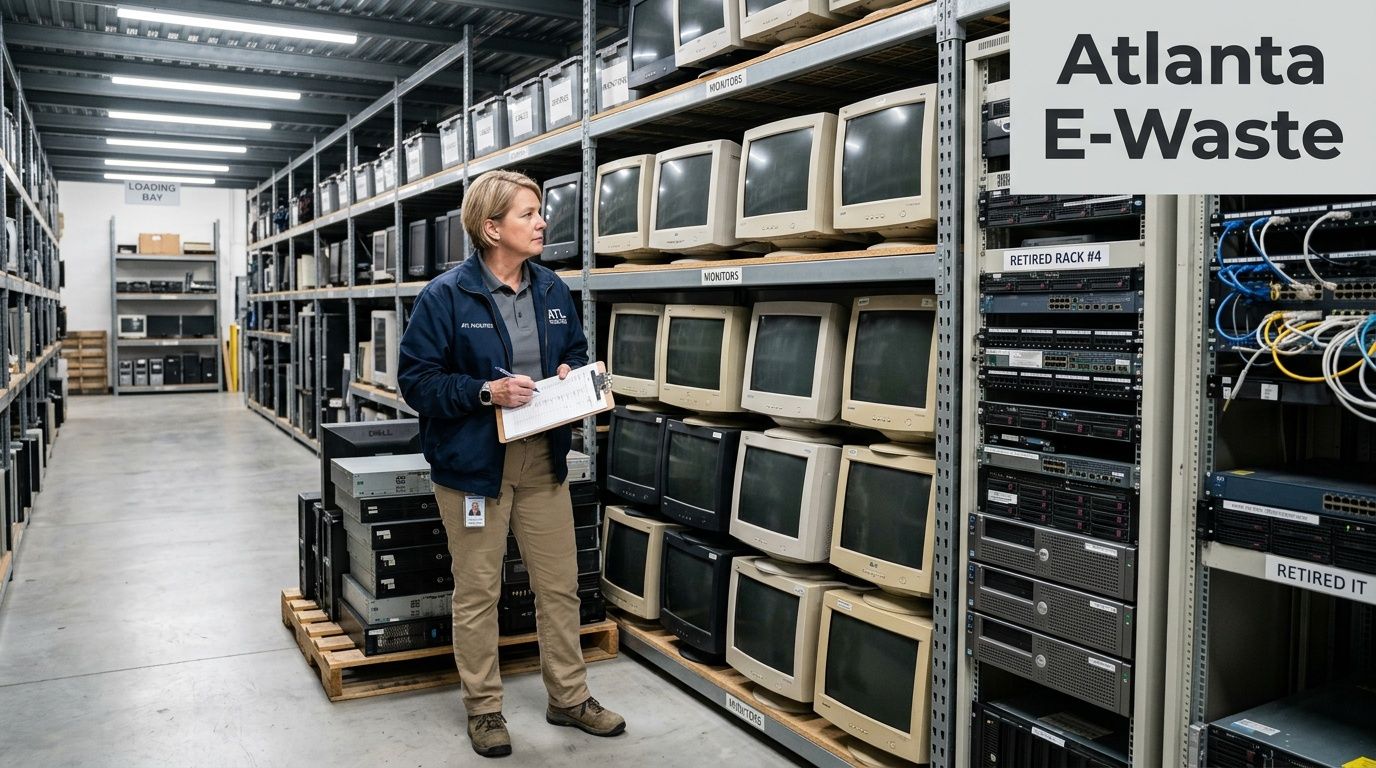
If you’re dealing with office electronics only, the job is simpler. If you’re dealing with specialized assets, it isn’t. Lab decommissions usually mix standard IT gear with equipment that has residual chemical exposure, embedded storage, internal batteries, proprietary software, or regulated data. Medical environments add HIPAA concerns. University settings often add research data and departmental asset controls. Government environments usually add stricter documentation expectations.
What makes Atlanta projects different
Atlanta has plenty of electronics recycling options, but many of them are built around public drop-off programs or general office equipment. That leaves a gap for organizations handling:
- Lab instruments such as incubators, centrifuges, pipettes, water baths, and hot plates
- Medical devices that may need decontamination review before pickup
- Data-bearing hardware including laptops, servers, network appliances, and imaging workstations
- Facility shutdowns where de-installation, staging, packing, and dock scheduling matter as much as recycling
The hard part usually isn’t identifying what’s obsolete. It’s proving it was handled correctly after it leaves your site.
A practical recycling plan has to answer a few basic questions fast. What can be reused? What must be destroyed? What needs special handling before transport? What documents will your compliance or audit team ask for six months later?
For organizations that need that kind of workflow, local business-focused providers such as Atlanta electronics recycling services are set up around pickup, secure handling, and asset disposition rather than public drop-off convenience.
What works and what doesn’t
A clean project starts with classification. Treating all retired electronics as one pile creates delays, extra sorting charges, and security risk. The organizations that handle this well separate assets before pickup, identify data-bearing devices early, and flag anything with contamination concerns before a truck is dispatched.
What doesn’t work is calling a scrap hauler after the room is already full and expecting them to solve compliance for you. They might remove the equipment. They usually won’t close the documentation gap.
Preparing Your Assets for Secure Disposition
The preparation phase determines whether your recycling project stays simple or turns into a string of exceptions. Most of the preventable problems show up before pickup. Missing asset lists, unlabeled drives, loose accessories, and contaminated equipment all slow down the job.
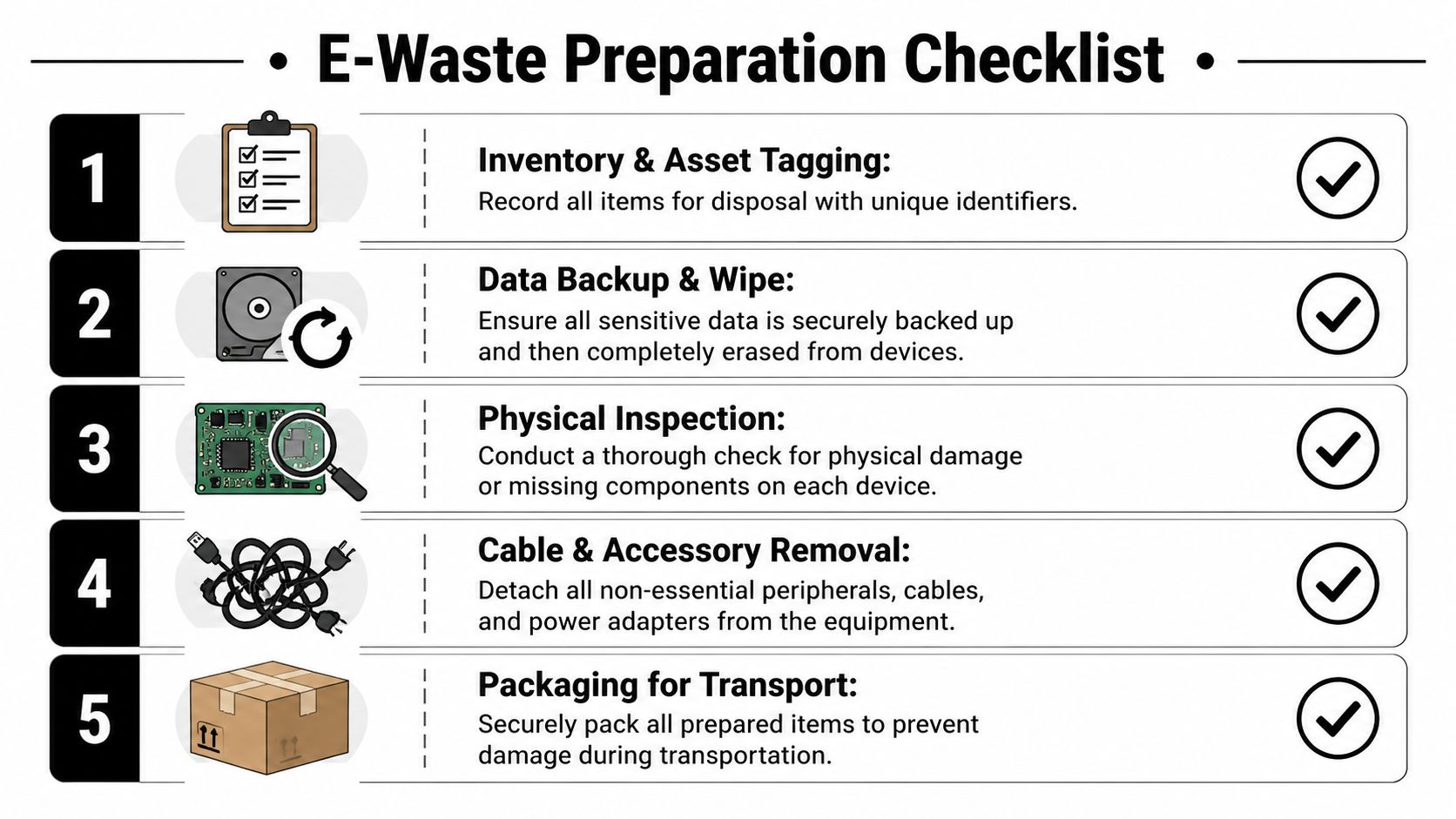
Start with a working inventory, not a perfect one. You don’t need a polished capital asset report to begin, but you do need enough detail to identify what’s leaving the building and what level of handling each item requires.
Build the inventory that auditors actually need
For organizations managing laboratory computer systems or hardware containing sensitive research or patient information, certified recyclers must provide documented chain-of-custody records and destruction certificates to satisfy regulatory requirements like HIPAA and internal governance frameworks, as outlined in this Atlanta guide to electronics waste disposal.
That paperwork starts with your internal list. At minimum, capture:
- Asset identity. Serial number, asset tag, make, and model if visible.
- Physical location. Building, room, floor, lab number, or rack position.
- Disposition type. Recycle, redeploy, destroy, or hold for review.
- Data status. Data-bearing, non-data-bearing, unknown, or failed media.
- Special handling notes. Damaged battery, broken glass, contamination concern, missing drive, or de-installation required.
The list doesn’t need to be elegant. It does need to be usable by facilities, IT, compliance, and the pickup crew.
Separate by risk before you separate by material
A common mistake is sorting by size or department first. For secure disposition, sort by risk first.
Use a simple triage model:
Data-bearing devices
Laptops, desktops, servers, tablets, phones, external drives, backup appliances, copiers, and many lab systems with embedded storage belong here.Equipment requiring decontamination review
Lab and medical devices that may have contacted biological, chemical, or pharmaceutical materials need internal sign-off before release.General non-data electronics
Monitors, keyboards, cables, power supplies, and peripherals can usually move through a more standard recycling stream.
That approach keeps your chain of custody clean and prevents a server from getting mixed in with a pallet of monitors.
Practical rule: If a device could store patient data, student records, research data, credentials, or system logs, mark it for secure handling even if the screen is dead and nobody remembers the password.
Decontamination isn’t optional for lab assets
A recurring problem for many generic electronics recyclers involves equipment readiness. A centrifuge, incubator, or benchtop instrument may be electrically dead and still not be ready for pickup. Your internal safety or lab operations team should confirm the equipment has been decontaminated to your organization’s standards before transfer.
That usually means documenting that the unit is free of hazardous residue and safe for transport, handling, and dismantling. If your lab has a formal Certificate of Decontamination process, use it. If it doesn’t, create a written release workflow with signatures from the responsible department.
A recycler can handle electronics. They shouldn’t be expected to guess whether a unit has been cleared for safe handling.
Prepare personal and mobile devices differently
Phones and tablets often get overlooked because they’re small. They still create risk. If your team is retiring company-issued mobile devices, it helps to pair your internal mobile offboarding process with a clear end-user checklist. For Apple devices, a consumer-facing guide like how to wipe an iPhone securely can help staff remove personal data and disable activation locks before devices enter the corporate disposition stream.
For laptops and desktops, physical drive removal can make staging easier when systems are headed for different outcomes. If your IT team handles that step in-house, this guide on removing a laptop hard drive for disposition is a practical reference.
Packing and staging for pickup
You don’t need retail packaging. You do need control.
A good staging area has:
- Clearly marked zones for data devices, general e-waste, and lab equipment pending clearance
- Stable palletization for loose electronics and accessories
- Protected media containers for removed drives and storage devices
- Pickup access planning so the crew isn’t waiting on freight elevators, dock keys, or after-hours escorts
The smoother your staging is, the cleaner the paperwork will be later.
Navigating Data Security and Compliance Mandates
Most disposal projects are judged on one issue first. Did you protect the data? If the answer is unclear, the rest of the recycling story doesn’t matter much.
In Atlanta, many electronics recycling listings focus on common office hardware and public drop-off options. They often don’t address the harder cases. Most search results fail to provide specific protocols for biohazard-contaminated lab equipment or instruments subject to HIPAA, creating a compliance gap for hospitals and research labs that general e-waste facilities aren’t equipped to handle, according to this review of Atlanta electronics recycling options.
Wiping versus shredding
These are not interchangeable services. They solve different problems.
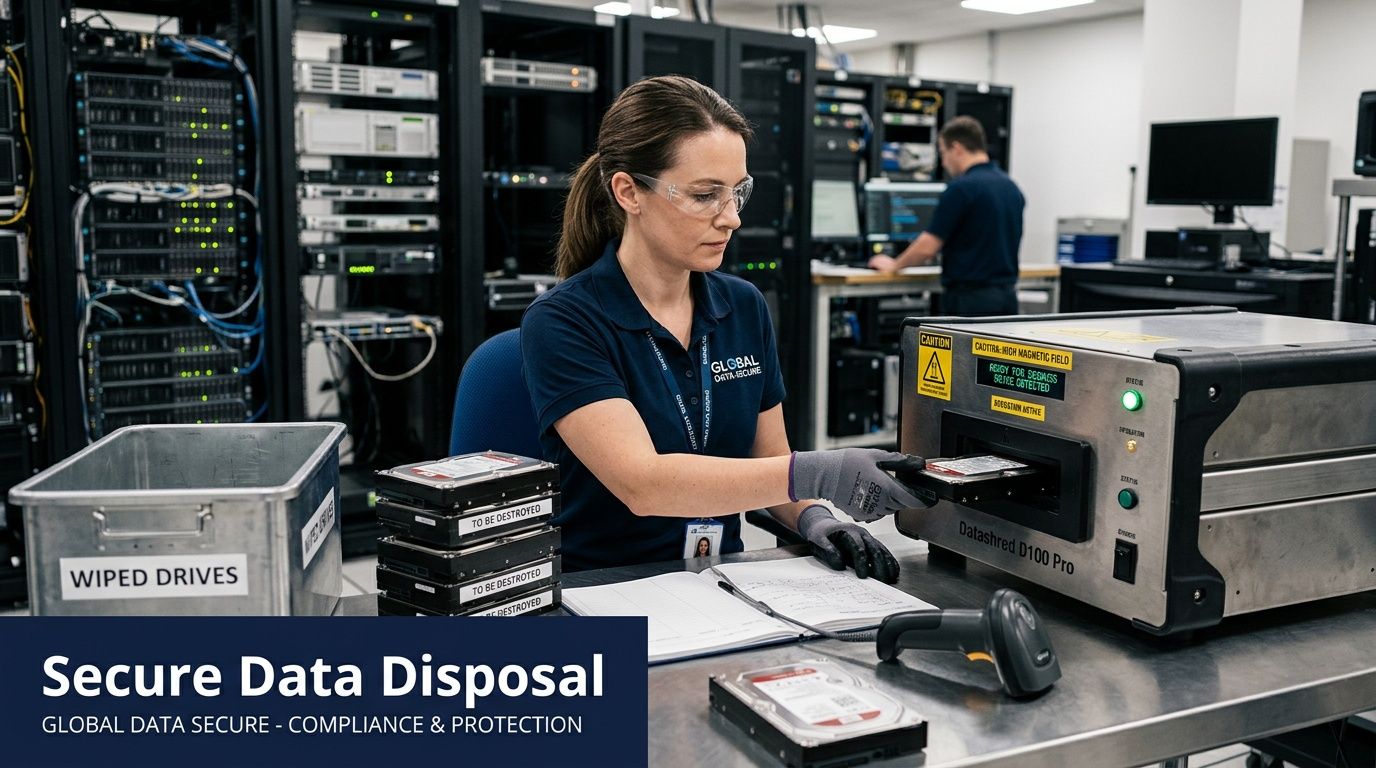
Software sanitization is used when a drive is functional and the organization wants a documented method for clearing the data before reuse or recycling. In the business context here, the referenced standard is DoD 5220.22-M 3-pass sanitization, which overwrites the drive multiple times before release.
Physical shredding is the right choice when media is failed, obsolete, damaged, encrypted but inaccessible, or too risky to trust to software alone. It also works as a second layer for organizations that want certainty over recoverability.
A simple comparison helps:
| Method | Best fit | Primary outcome | Documentation focus |
|---|---|---|---|
| Software wipe | Functional drives slated for reuse or recycling | Data sanitized while preserving the device | Asset report tied to serials and wipe status |
| Physical shredding | Failed drives, unknown drives, obsolete media | Media destroyed beyond practical recovery | Certificate of destruction and custody record |
The wrong choice usually comes from assuming every storage device should be wiped. If a drive can’t complete the process, wiping doesn’t solve the compliance question. It just delays destruction.
What regulated organizations should ask for
A recycling receipt isn’t enough for healthcare, higher education, public sector, or research environments. You need proof that links the asset you released to the method used and the final result.
Look for these deliverables:
- Chain-of-custody documentation from pickup through processing
- Asset-level reporting where feasible, including serial numbers or internal IDs
- Destruction certificates for shredded media
- Exception reporting for missing drives, damaged devices, or unreadable identifiers
- Clear handling rules for devices that arrive locked, broken, or incomplete
If a vendor can’t explain what happens when a drive is dead on arrival, you don’t yet know your true data destruction process.
How this ties to HIPAA, FERPA, and internal controls
HIPAA, FERPA, and institutional security policies don’t all use the same language, but they point toward the same operational standard. Sensitive information has to remain protected through end-of-life handling. That means your recycler’s process has to be auditable, not just plausible.
For many organizations, electronics disposal is one of the last places where security and facilities intersect. The facilities team may control access and scheduling. IT may control the asset records. Compliance may require retention of certificates. Procurement may own the vendor relationship. If those groups aren’t aligned, devices leave the site before anyone defines the evidence trail.
That’s why a security review before a disposition project can help. If your organization wants an outside perspective on endpoint exposure, access controls, and disposal gaps before a major refresh, a resource like Titanium Computing’s free cybersecurity audit can help frame the broader risk conversation.
What secure service looks like in practice
A sound process is straightforward:
- drives that still function are sanitized with a documented method
- failed or obsolete media are physically destroyed
- all items are logged against a custody record
- reports are returned in a format your compliance team can keep
For organizations that need a vendor set up for that workflow, secure data destruction services for electronics disposition describe the combination of wiping and shredding that many hospitals, labs, and institutional IT teams require.
The key is not choosing the most aggressive method for every item. The key is choosing the method you can defend later.
Understanding the Recycling Process and Logistics
Once equipment leaves your building, many organizations lose visibility. That’s where uncertainty starts. Facility managers want to know whether the assets are processed responsibly, whether data handling continues after pickup, and whether anything gets stranded in a warehouse because the paperwork wasn’t complete.
A professional e-waste project should feel like a controlled handoff, not a black box.
What happens at pickup
The logistics side is often underestimated in its importance. A truck appointment that looks simple on paper can fall apart fast if assets are spread across multiple rooms, elevators need reservations, or de-installation wasn’t included in scope.
The cleanest jobs follow a sequence:
- equipment is staged or identified in place
- crews verify counts against the pickup list
- data-bearing assets are separated and documented
- lab equipment with special handling notes is loaded with those restrictions in mind
- the shipment leaves under a defined custody record
For businesses that need that model, electronic recycling with pickup service in Atlanta is the kind of arrangement that reduces dock congestion, repeat trips, and internal labor burden.
What happens inside the facility
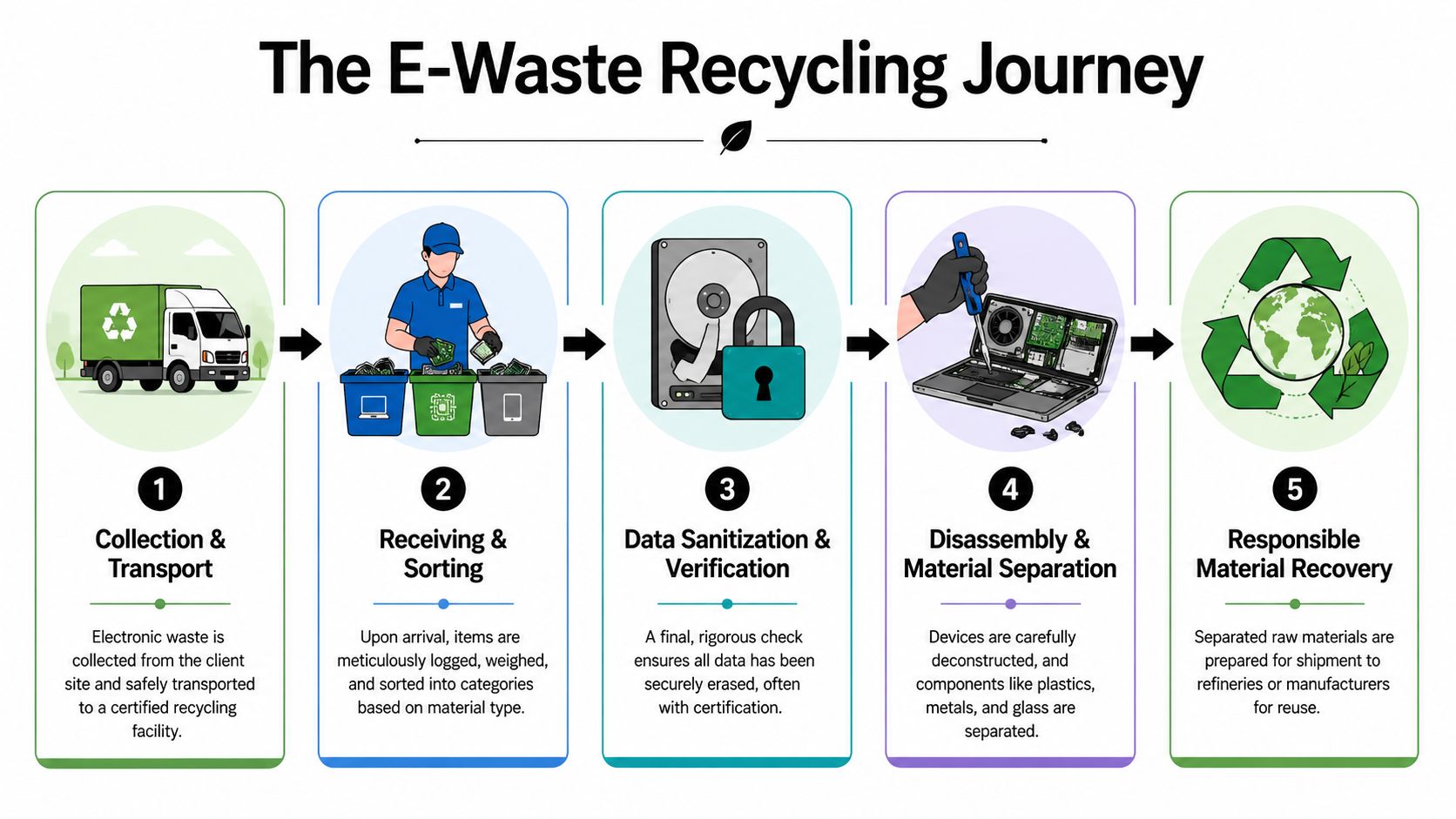
After receiving, the recycler typically logs and sorts the equipment. Devices that need data sanitization go down one path. General equipment goes down another. Items that are damaged, incomplete, or flagged for unusual handling are set aside for review.
Material recovery begins after manual dismantling. According to this overview of the e-waste recycling process, electronics are then fed through industrial shredders, and large-scale magnetic separators isolate iron and steel. That step matters for equipment like centrifuges and incubators, which contain substantial metal content and benefit from downstream separation into cleaner commodity streams.
Why downstream transparency matters
Hospitals and research institutions often ask the same question after pickup: where does this material go? That’s a fair question, and many providers don’t answer it clearly enough.
Here’s the practical distinction:
| Downstream question | Why it matters |
|---|---|
| Is the item reused or dismantled? | Reuse may preserve value and reduce waste, but it requires stronger control over data-bearing hardware. |
| Are materials sorted into commodities? | Proper separation supports responsible recovery of metals, plastics, and other components. |
| Can the vendor document the path? | ESG reporting, internal controls, and compliance reviews all depend on traceable records. |
A vague promise of “green recycling” doesn’t tell you whether devices were refurbished, shredded locally, or sent to third-party processors. Institutional clients should ask directly.
Ask what happens after the first truck unloads. If the answer stops at collection, you haven’t yet evaluated the recycling process.
Certifications and what they signal
Certification names get thrown around casually, but they aren’t all about the same thing.
- R2 is generally associated with structured electronics recycling practices and process controls.
- NAID AAA is commonly associated with secure destruction standards for information-bearing materials.
- e-Stewards may also come up in vendor discussions around electronics recycling practices and downstream accountability.
The label matters less than the operational proof behind it. Ask what the certification covers, whether it applies to the facility handling your material, and what reports you’ll receive at the end.
For specialized lab and medical assets, the strongest indicator isn’t the logo on a website. It’s whether the provider can explain de-installation, decontamination prerequisites, custody procedures, and the exact point where data destruction occurs.
Cost Considerations for E-Waste Programs in Atlanta
Most organizations start by asking the wrong question. They ask, “What does electronics recycling cost?” The better question is, “What level of handling does this project require?”
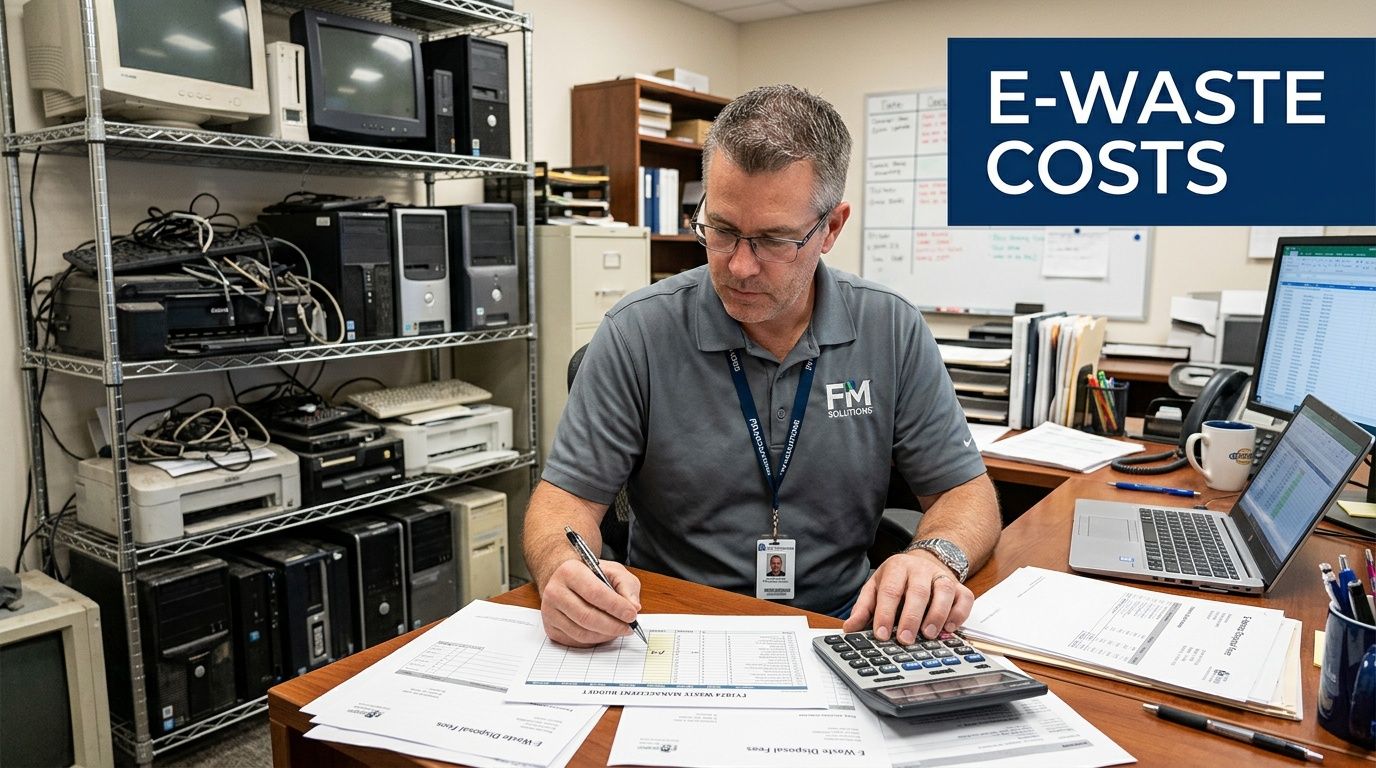
The answer changes the budget. A pallet of keyboards and monitors doesn’t price the same way as a hospital lab cleanout with storage media, documentation requirements, and loading dock restrictions. The same is true for a server room decommission versus a routine office refresh.
What usually drives cost
In practice, pricing often comes down to a handful of variables:
Labor intensity
Equipment spread across several floors, disconnected badly, or mixed with general trash takes longer to process.Security requirements
Serialized reporting, witnessed destruction, and separate handling for storage media add process steps.Specialized assets
Lab and medical devices can require review before release, more careful loading, or nonstandard dismantling.Transportation
Dock access, distance, stairs, freight elevators, and narrow corridors all affect the logistics plan.Material mix
Some assets have recoverable value. Others are expensive to process because of low-value materials or handling complexity.
Why the cheapest quote often becomes the expensive one
A low quote can hide missing services. If the vendor excludes de-installation, leaves behind accessories, doesn’t provide usable destruction records, or rejects part of the load on arrival, your internal team absorbs the difference in labor and delay.
That’s especially true in regulated environments. A disposal program isn’t just a waste line item. It’s a risk-control function. If chain of custody breaks, if patient or research data isn’t handled correctly, or if contaminated equipment is transferred without proper release, the downstream cost is far higher than the pickup invoice.
Build the business case around avoided failure
When finance asks why the project needs a specialized recycler, frame the answer around exposure reduction and operational efficiency.
A compliant program helps you:
- Reduce internal handling time because crews, scheduling, and paperwork are coordinated up front
- Limit security exposure by separating and documenting data-bearing assets properly
- Support audits and governance with destruction certificates and custody records
- Keep shutdowns on schedule by preventing day-of-pickup surprises
Some organizations can also offset part of the project through reuse or resale of suitable assets. Newer IT hardware and certain lab equipment may hold secondary market value if condition, demand, and data-handling requirements align. That won’t apply to every load, but it’s worth discussing before assuming every item is a pure disposal cost.
A practical budgeting approach
Use a short scope sheet before requesting quotes. Include:
- asset categories
- approximate volume
- number of pickup locations
- whether de-installation is needed
- whether media destruction is required
- whether any equipment needs decontamination clearance
That produces more realistic proposals and makes vendor comparisons easier. It also helps separate true recycling partners from companies that are mostly pricing scrap haul-away.
How to Choose the Right Atlanta Recycling Partner
If you’re evaluating vendors for recycling electronics in Atlanta, don’t start with the truck. Start with the questions they can answer clearly.
Globally, 50 million to 60 million tons of e-waste are produced yearly, yet only 17.4% is recycled, according to Atlanta e-waste context from Reworx Recycling. That gap is one reason vendor selection matters so much. If the downstream process is weak, equipment can disappear into opaque channels with little visibility into data handling or material recovery.
Questions worth asking before you sign
A strong screening call should cover these points:
What kinds of assets do you routinely handle?
Ask specifically about servers, storage arrays, lab instruments, medical devices, and mixed loads from active facilities.How do you handle data-bearing devices?
You want a direct explanation of when they wipe, when they shred, and what documentation follows each method.What records do you provide after pickup?
Look for chain of custody, destruction certificates, and asset-level reporting where appropriate.What are your rules for lab or medical equipment?
If the vendor can’t explain decontamination prerequisites, they may not be ready for institutional lab work.Do you perform on-site packing, de-installation, or multi-room pickups?
This matters for hospitals, campuses, and occupied buildings.
Judge clarity, not just confidence
A good vendor should make a complicated job easier to understand. If answers stay vague, that’s a warning sign. This is true for recycling and for selecting any specialized local service in Atlanta. Clear process beats broad marketing every time.
Here’s a simple comparison:
| Vendor behavior | What it usually means |
|---|---|
| Explains chain of custody in detail | They’ve built the process for regulated clients |
| Avoids specifics on downstream handling | They may rely heavily on third parties without transparency |
| Understands decontamination limits | They’ve worked with labs or medical facilities before |
| Quotes quickly without scope questions | You may get change orders, exclusions, or pickup-day surprises |
One business-to-business option in the market is an Atlanta e-waste recycling company focused on lab and electronics disposition, which is relevant when your load includes both standard IT hardware and specialized equipment.
The right partner doesn’t just remove equipment. They reduce uncertainty.
Frequently Asked Questions About Electronics Recycling
Can a small clinic or lab recycle only a few items
Yes, but the right channel depends on the equipment and the handling requirements. A few monitors or office peripherals may fit a community drop-off option. A few laptops, medical workstations, or lab devices can still require business-grade documentation if they contain sensitive data or need decontamination review.
For small-volume jobs, ask the vendor two things first. Do they have a pickup minimum, and do they accept the specific asset type you’re retiring? That avoids the common mistake of showing up with specialized equipment at a program built for consumer electronics.
What if the equipment is leased
Check the lease before you authorize wiping, shredding, dismantling, or recycling. Many lease agreements require the asset to be returned intact, and some specify how data must be removed before return. IT, procurement, and legal should align on that decision before the recycler touches the device.
If you’re unsure, separate leased assets from owned assets during inventory. That one step prevents accidental destruction of property that still belongs to a lessor.
Do recyclers accept biohazard or chemically contaminated lab equipment
Not automatically. This is one of the biggest points of confusion in the market. Electronics recyclers may accept the equipment category, but they still need confirmation that the item is safe to transport and process.
A good rule is simple. If a device has been used in a lab or clinical environment, route it through your decontamination release process before scheduling pickup. If your organization handles radioactive materials or other tightly regulated hazards, confirm those exclusions directly before any loading plan is finalized.
Are cables, accessories, and broken peripherals worth separating
Usually, yes. Loose accessories slow receiving and can complicate asset reconciliation if they’re mixed with data-bearing equipment. Keep chargers, docking stations, keyboards, mice, and cables together by category when possible.
That said, don’t let accessory sorting delay the project. Prioritize secure handling of storage media and identification of specialized equipment first.
What service area counts as Atlanta
Most business recyclers use “Atlanta” broadly and serve the larger metro, not just downtown. The practical issue isn’t the city line. It’s whether the vendor can support your building type, scheduling constraints, and pickup volume.
If you’re in an outer suburb, ask about route coverage, dock requirements, and whether they handle multi-site pickups. A provider may serve your area but only on certain schedules or only for certain project sizes.
Should we wipe devices ourselves before pickup
Sometimes yes, sometimes no. Internal wiping can work if your IT team has a documented process, time to execute it, and a way to retain records. It often doesn’t work well during moves, shutdowns, or mixed-asset cleanouts because the project starts to compete with day-to-day operations.
If your team does wipe in-house, still keep the device on the secure handling list until final disposition is complete. A wiped laptop is still a tracked asset until custody transfers and records are closed.
What documents should we keep after the job is done
Retain the same records you’d want in an audit or incident review:
- asset inventory used for pickup
- bill of lading or transfer record
- chain-of-custody documents
- destruction certificates
- final asset disposition reports
- any internal decontamination releases for lab equipment
Store them where facilities, IT, compliance, and procurement can all retrieve them later. That’s often the difference between a clean closeout and a long internal search months after the equipment is gone.
If your organization needs help disposing of lab equipment, servers, workstations, or mixed electronic loads, Scientific Equipment Disposal provides business-focused pickup, logistics, secure data handling, and compliant recycling support for Atlanta-area facilities.