Business Electronics Recycling in Lilburn Georgia: A Guide


A lot of Lilburn facility managers are dealing with the same scene right now. Old laptops are stacked under worktables, dead monitors are leaning against a wall, a retired server is still sitting in a rack because nobody wants to touch it, and a few pieces of lab equipment are waiting for someone to decide whether they’re reusable, regulated, or just scrap.
That backlog creates three immediate risks. First, data exposure. Second, compliance gaps. Third, avoidable cost, because the longer equipment sits, the harder it is to document, secure, and move efficiently.
Business Electronics Recycling in Lilburn Georgia works best when it’s handled like a controlled business process, not a junk removal job. If you manage a hospital department, university lab, government storeroom, or corporate IT closet in Gwinnett County, the right approach is straightforward. Identify what you have, separate data-bearing assets from everything else, choose a recycler that can document the chain of custody, and make sure the pickup model fits your building and your risk profile.
Why Smart Electronics Disposal in Lilburn Matters
A Lilburn facility manager usually sees the problem at the end of the quarter. IT wants old laptops gone. Operations wants the storeroom back. Finance wants retired assets off the books. If those items leave the building without a controlled plan, the company can lose resale value, miss required documentation, and pay more for pickup than necessary.
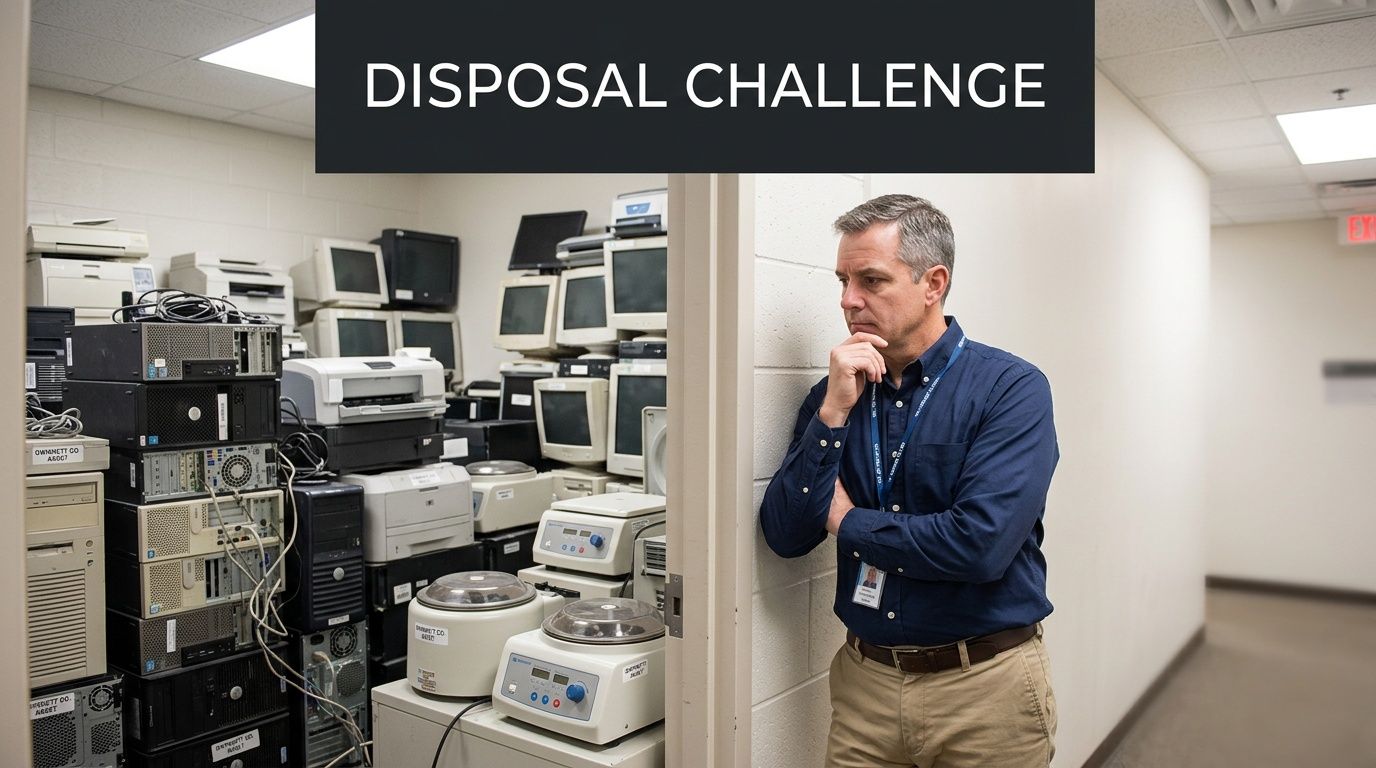
In Lilburn, smart disposal is a financial decision as much as a housekeeping one. Metro Atlanta recyclers often price jobs based on volume, access conditions, labor time, and whether the load includes equipment with resale value. That matters in Gwinnett County, where one pickup might include pallets of monitors with recycling cost, a few recent laptops with recovery value, and a server room pull that requires insured inside labor. Companies that group assets correctly and hit a free-pickup threshold can reduce out-of-pocket cost. Companies that mix everything together usually pay for that disorder.
For businesses comparing local service models, this guide to business electronics recycling in Gwinnett County GA is useful because it explains how county-level pickups, sorting, and downstream processing affect planning at a single facility.
What smart disposal actually solves
Smart disposal protects four things at once:
- Asset value. Newer laptops, network gear, and some lab electronics may offset part of the project cost if they are tested, inventoried, and separated from low-value scrap.
- Budget control. Pickup charges rise fast when a vendor finds stairs, tight loading areas, loose equipment, or mixed streams that require extra sorting on site.
- Compliance position. A documented release process matters if your legal, IT, or audit team later needs proof of what left and when.
- Security exposure. Devices with drives, flash storage, or embedded memory need a documented disposition path before anyone wheels them to a truck.
I tell facility teams to ask one question early. Is this pile all waste, or is part of it still an asset? That answer changes the economics of the job.
The timing matters too. Georgia businesses are entering a tighter compliance period for 2025 and 2026, especially around vendor documentation, downstream accountability, and data-handling expectations written into contracts, cyber policies, and internal governance rules. State law is only part of the picture. Customer agreements, industry standards, and procurement terms often create stricter disposal requirements than the statute itself.
There is also a corporate responsibility piece, but it needs to connect to operations. Amax IT's CSR guidelines are a useful example because they tie supplier oversight, environmental handling, and accountability to day-to-day business decisions instead of treating recycling as a PR exercise.
What does not work
The weak approach is hiring a general junk hauler and hoping the recycler downstream sorts everything out later. That choice can erase reuse value, break chain-of-custody records, and turn a manageable pickup into a custom labor job.
A room full of retired electronics in Lilburn is not just clutter. It is a cost-control, data-control, and documentation problem that should be handled before the first pallet is wrapped.
Understanding the Compliance Landscape for Georgia Businesses
A Lilburn office closes a floor, IT stages 60 laptops and a few network switches for pickup, and facilities adds old printers from storage to fill the truck. The job looks simple until someone asks three questions. Which items still hold data, which ones may still have resale value, and what paperwork will procurement or legal ask for six months from now?
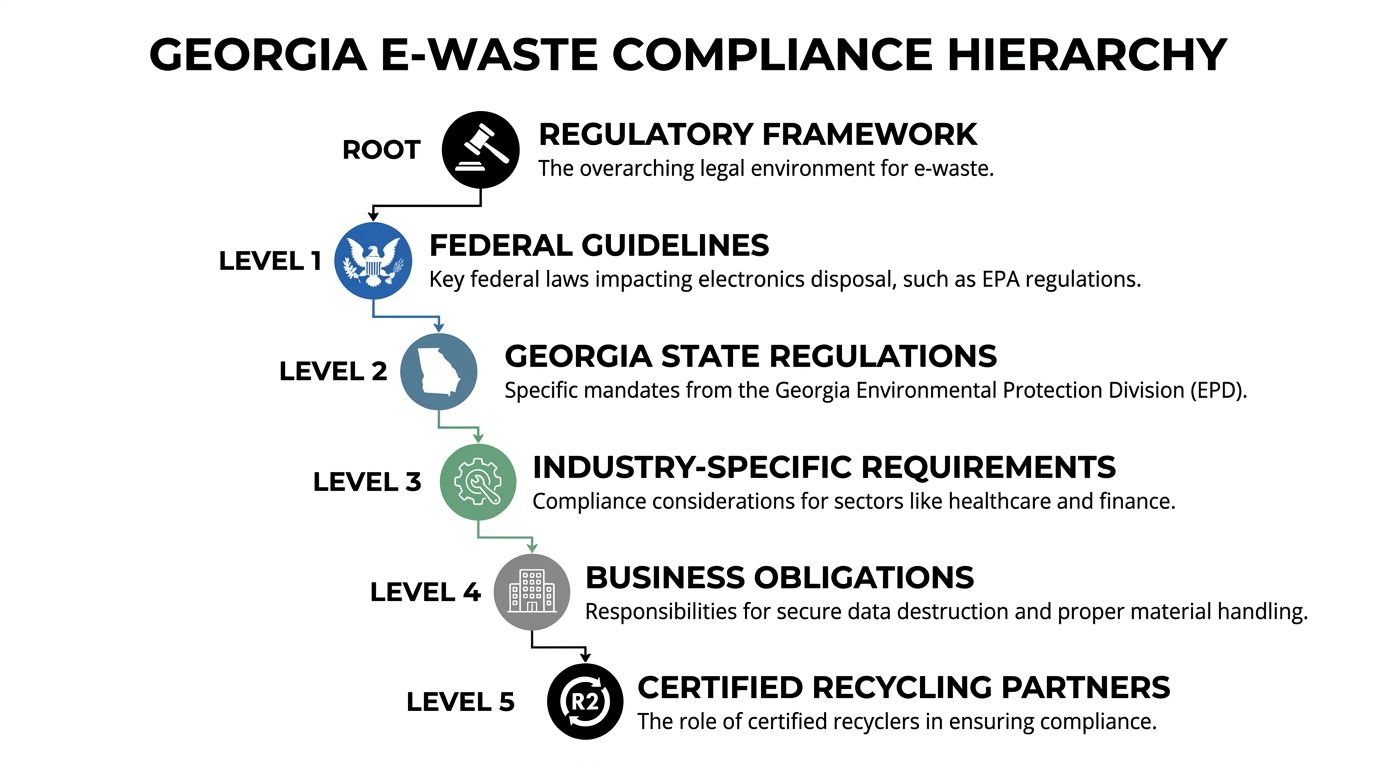
Georgia businesses deal with overlapping obligations. State disposal rules are only one layer. The actual standard usually comes from the type of data on the equipment, the contracts tied to that data, your cyber insurer, and your own retention and destruction policies. The recycler can support the process, but your company still approves the release and carries the burden of showing it was handled correctly.
The rules that usually matter most
Start with use case, not device type.
A copier in an HR office may present more risk than a warehouse desktop because the copier may store scanned employee records. A lab instrument may look like scrap metal to a hauling crew, but if it includes embedded memory or regulated components, it belongs in a controlled disposition stream. The same goes for retired firewalls, badge systems, medical carts, and multifunction printers.
For Atlanta-area facilities teams, the compliance review usually needs to cover four things:
- Data-bearing hardware such as laptops, desktops, servers, NAS units, phones, and removable media
- Embedded storage in copiers, printers, production equipment, and lab or testing instruments
- Material handling requirements for batteries, lamps, CRTs, and other components that cannot be tossed into general scrap
- Chain-of-custody records showing release, transport, receipt, data destruction method, and final processing
This is why a specialized vendor often costs less in the end. General haulers can be fine for furniture and clean metal. They are a poor fit for mixed electronics loads where value recovery, data control, and serial-level reporting all matter. If your project includes both office devices and technical equipment, this Atlanta resource on recycling services for business and lab assets shows the kind of workflow that fits those jobs.
What Georgia businesses should watch in 2025 and 2026
I would not treat 2025 and 2026 as years to wait and see. Even without pointing to one new statewide rule, the direction is clear across vendor agreements, insurer questionnaires, public-sector bid terms, and audit expectations. Buyers want more proof of downstream handling. Security teams want clearer data-destruction records. Procurement teams are asking harder questions about who receives material after pickup.
That shift affects cost. It also affects ROI.
If you separate reuse-grade assets from scrap before pickup, you have a chance to offset part of the project through resale or credit. If everything gets tossed into one gaylord and shipped as low-grade mixed e-scrap, that value is usually gone. In Lilburn and the wider Atlanta market, that distinction often determines whether a pickup qualifies for free service, reduced hauling cost, or a net charge once labor and documentation are added.
What an auditable process looks like
A facility manager should be able to answer five questions without chasing three departments for missing emails.
| Question | What your records should show |
|---|---|
| What left the site | Asset list, categories, and where possible serial-level detail |
| Who handled it | Named staff, pickup crew, and receiving party |
| How data was secured | Wiping, shredding, or other approved destruction method |
| Where materials went | Certified recycling or approved downstream handling |
| When the transfer occurred | Pickup date, custody transfer, and final processing date |
If one of those answers depends on “the vendor should have that,” the process is weak.
Common compliance failures I see in Georgia facilities
The failures are usually operational. A department cleans out a room without telling IT. Someone combines scrap-only monitors with reusable laptops and wipes out asset recovery value. A branch office uses a local metal buyer for convenience and gets no data-destruction record back. A school, clinic, or contractor turns over equipment with old property tags and drive labels still attached.
Those mistakes create two problems at once. They raise security risk and they make the job more expensive to reconstruct later.
For Business Electronics Recycling in Lilburn Georgia, the practical standard is straightforward. Use a vendor that can explain custody, destruction options, downstream processing, and reporting before pickup is scheduled. If they cannot show you how the paperwork will work, do not hand over the load.
Preparing Your Equipment for Secure and Compliant Recycling
A pickup goes sideways long before the truck misses the dock. It starts when a Lilburn office clears a storage room, mixes resale laptops with dead monitors, leaves drives in a server chassis, and expects the recycler to sort out custody, data handling, and value recovery on site. That approach creates avoidable labor charges, weakens documentation, and cuts into any asset recovery that could have offset the job.
Start with a usable inventory, not a perfect one
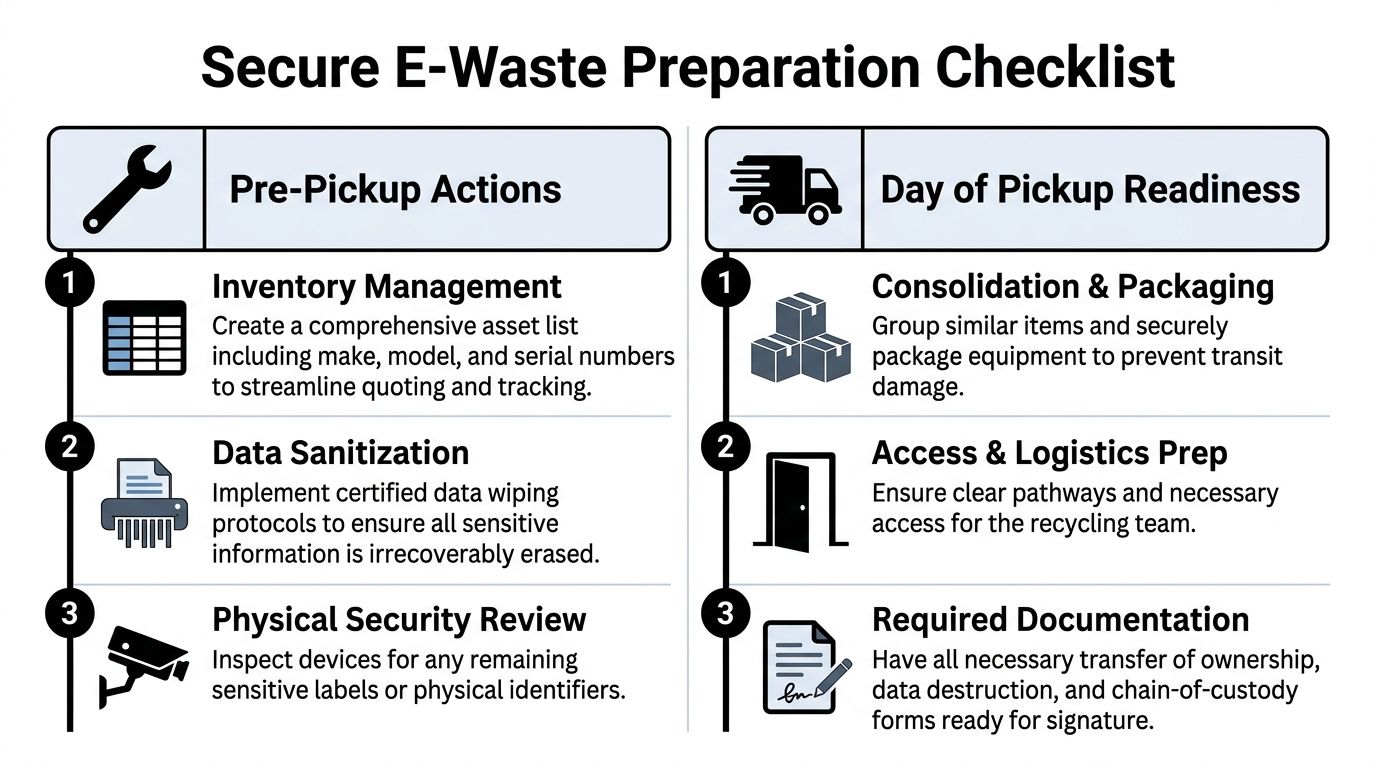
A clean handoff starts with a list your recycler and your internal team can use. For most Lilburn projects, that means a spreadsheet with asset type, brand, model, serial number, site location, and whether the device contains data. Add notes for anything that changes labor or handling, such as wall-mounted displays, UPS units, rack equipment, broken screens, or equipment that needs decontamination before removal.
That inventory affects more than paperwork. It drives crew size, truck space, wipe versus shred decisions, and whether certain items have resale value. If you want a realistic quote or want to hit a free-pickup threshold, the inventory has to separate reusable equipment from low-value scrap.
A mixed pile hides value and raises cost.
Separate data-bearing equipment before anyone starts loading
Facilities teams often stage by room. IT teams think in terms of risk. Compliance needs both groups working from the same release plan.
Create these categories before pickup day:
- Reusable devices with storage that may be wiped and remarketed
- Failed, obsolete, or high-risk media that should go to physical destruction
- Non-data peripherals such as cables, keyboards, mice, basic monitors, and similar accessories
If your staff needs a technical reference, this guide on how to completely clean a hard drive gives a practical overview of proper drive sanitization.
Factory reset is not a data-destruction record.
For working drives that still have recovery value, a documented DoD 5220.22-M 3-pass wipe can support a reuse program. For damaged drives, retired backup media, or equipment from regulated environments, shredding is usually the cleaner choice from both a risk and documentation standpoint. The mistake I see most often is indecision. A company wants resale value, but it does not isolate the reusable units, so the whole load gets treated as scrap.
Prepare lab and medical equipment as a separate release stream
Office electronics and lab equipment should not be staged the same way. If a unit handled biological material, chemicals, or clinical samples, the recycler should receive it only after your site clears it for handling, unless a specialized service agreement says the vendor is taking that work on directly.
A proper release process usually includes:
- Review by the equipment owner confirming prior use
- Surface cleaning and decontamination under site protocol
- Removal of samples, reagents, and loose hazardous contents
- A signed decontamination statement if your organization requires one
That matters for analyzers, centrifuges, incubators, freezers, and similar equipment. A device can look clean and still require a controlled release before transport.
Strip off the information people forget is there
Even after drives are addressed, the outside of the equipment still creates risk. Asset tags, user names, login notes, department labels, patient area stickers, and network information taped to a chassis all need to come off before pickup.
Use this pre-pickup check:
| Item | What to verify |
|---|---|
| Laptops and desktops | Asset tags removed if required, drives identified |
| Servers and storage arrays | Rails, drives, and loose accessories accounted for |
| Printers and copiers | Internal storage assessed, toner policy confirmed |
| Lab equipment | Decontamination status confirmed, loose contents removed |
| Boxes and pallets | Labeled by category to avoid mix-ups at loading |
For Lilburn businesses, good preparation is not just a security step. It affects the financial outcome. Sorted, clearly identified equipment gives you a better chance of recovering value from newer assets, while reducing the labor time that can push a project below a free-pickup threshold. It also puts you in a stronger position for the tighter documentation and handling expectations many Georgia businesses will be dealing with in 2025 and 2026. Sort the load early, decide wipe versus shred before pickup, and release only what your records can support.
Navigating Pickup Logistics and Costs in Lilburn
Cost questions usually show up late, after the inventory is built and the space is already overdue for cleanup. That’s backwards. In Lilburn, logistics and pricing should be discussed early because they’re tied to building access, asset mix, and labor requirements just as much as material volume.
What actually drives cost
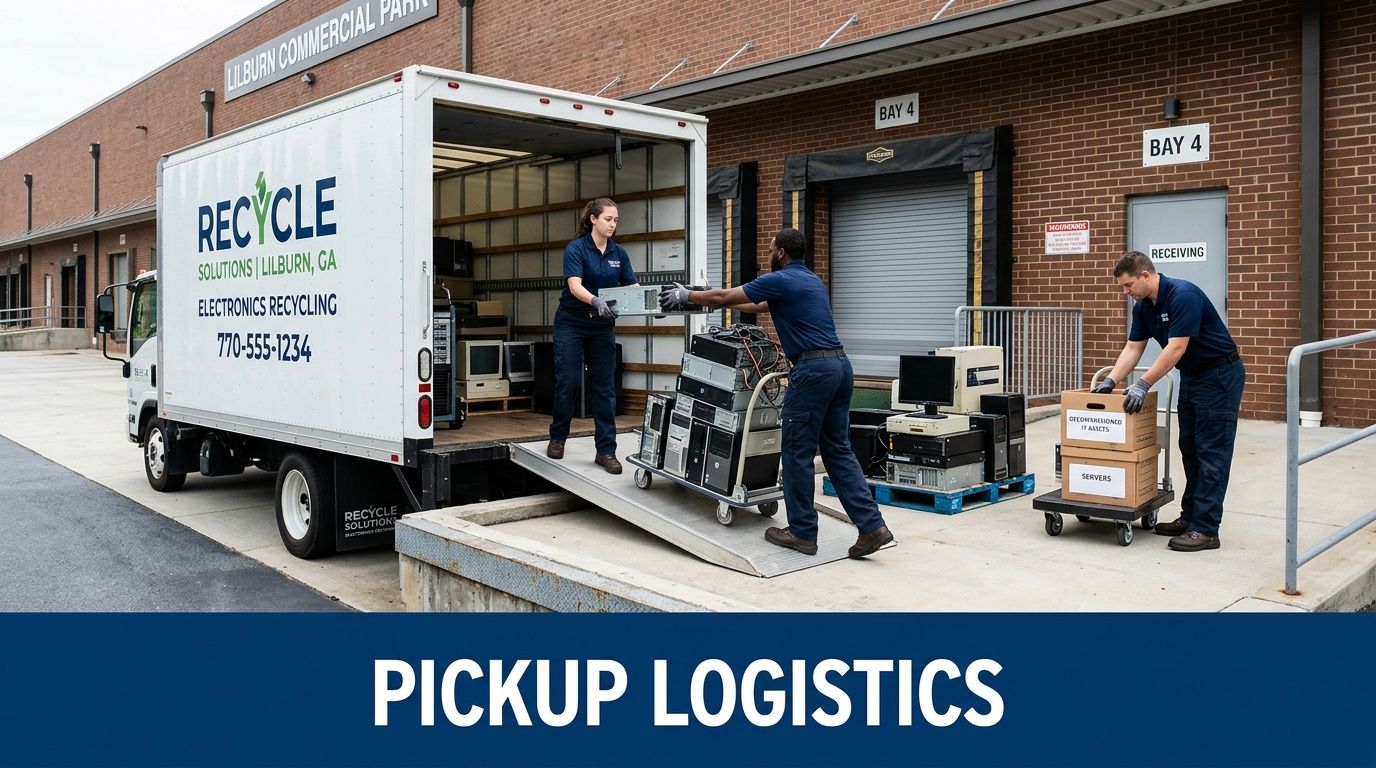
The cheapest projects are simple dock pickups with sorted material, easy trailer access, and minimal handling. Costs rise when crews have to work inside active spaces, break down workstations, pull rack gear, use elevators, or remove equipment from upper floors without staging support.
The variables that matter most are usually these:
- Volume and density of material, especially mixed loads
- Access conditions such as stairs, elevators, narrow hallways, or no dock
- Service scope, including de-installation, packing, palletizing, and cleanup
- Security requirements like on-site witness destruction or controlled chain of custody
- Asset value potential if some equipment still has reuse or commodity value
A lot of businesses ask about free pickup. That’s reasonable, but the important question isn’t whether a provider advertises it. The important question is what conditions make it possible. Some loads can support no-charge pickup because the material mix has recoverable value or the logistics are efficient. Others can’t, even if the total pile looks large.
For readers comparing options, this local guide to free business electronics pickup in Gwinnett County GA is useful because it explains why “free” often depends on asset type and site conditions, not just whether a vendor wants the job.
A practical way to review quotes
When you compare recyclers, don’t stop at the pickup line item. Ask what is included.
A strong quote should clarify:
| Quote item | What to confirm |
|---|---|
| Pickup scope | Dock pickup only, or inside removal and de-installation |
| Data handling | Wiping, shredding, witness options, and certificates |
| Packaging | Who supplies pallets, gaylords, shrink wrap, or bins |
| Labor assumptions | Crew size, access assumptions, and wait-time exposure |
| Final reporting | Asset lists, destruction records, recycling certificates |
Free pickup isn’t the same as low total cost
A no-charge pickup can still become an expensive project if the provider adds labor charges on site, excludes data destruction, or leaves your team to do all staging and disconnection. The opposite is also true. A paid service can be the lower-risk choice if it includes packing, chain of custody, and complete reporting.
Ask one direct question before approving any job: “What will cause this quote to change once your crew is on site?”
That question surfaces hidden assumptions quickly.
Where Lilburn has a real advantage
Lilburn businesses benefit from local infrastructure that supports pickup and decommissioning work in the Atlanta metro. According to Widenation Recycling, local Lilburn infrastructure plays a key role in the region’s ability to manage e-waste, and that network supports full-service providers operating their own box-truck fleets for on-site pickups and swift lab decommissions.
That matters in practical terms. Local fleets can respond faster, handle phased removals, and support jobs that don’t fit a simple pallet-at-the-dock model. If you’re clearing a lab suite, renovating an academic building, or replacing equipment across multiple departments, that flexibility is often more valuable than chasing the lowest headline price.
For Business Electronics Recycling in Lilburn Georgia, the best financial result usually comes from matching the service level to the asset mix. Don’t overbuy a decommissioning package for a clean dock pickup. Don’t underbuy a simple truck call when you need secure removal, labor, and documentation.
What to Expect During the Decommissioning Process
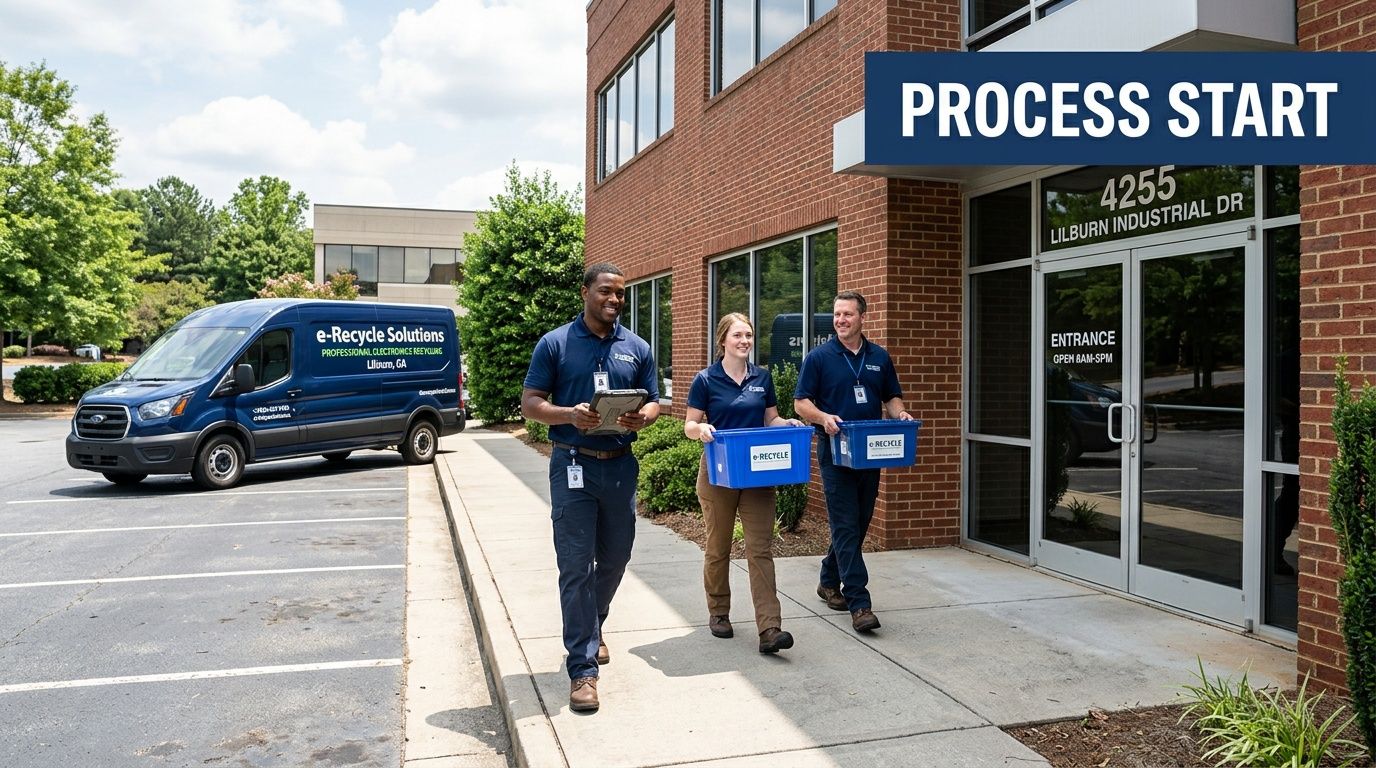
On service day, a professional decommissioning crew should make the job feel controlled from the first few minutes. You shouldn’t see confusion about what’s being removed, where the truck is staging, or who is authorizing release.
Arrival and site setup
Most smooth jobs start the same way. The crew checks in with the site contact, confirms the scope against the approved list, reviews access points, and identifies any restricted areas. In hospitals, schools, and active offices, that early coordination matters because the team has to work around staff, patients, students, or ongoing research activity.
If the project includes de-installation, the crew should move in a sequence that avoids disruption. Disconnect first, sort second, stage third, load last. That prevents hallways and loading areas from turning into temporary storage zones.
How the work usually unfolds
A well-run decommissioning process often looks like this:
- Area verification. The site contact confirms which rooms, racks, benches, or storage areas are in scope.
- Asset check. The crew compares visible equipment to the working inventory and flags any mismatch.
- Disconnection and handling. Cables, peripherals, and mounted components are removed in a controlled order.
- Staging and packaging. Equipment is grouped by type, palletized if needed, and secured for transport.
- Loadout and sweep. The team clears the area, removes residual packaging, and confirms nothing in scope was left behind.
Experienced crews separate themselves from general labor. They know that a rack server, a benchtop instrument, and a copier each need different handling. They also know when to stop and ask questions instead of improvising around a questionable asset.
“If something on site doesn’t match the release paperwork, pause the loadout and resolve it before the truck door closes.”
That discipline protects both sides.
Minimal disruption is part of the service
In active facilities, the quality of the project isn’t measured only by whether the assets leave. It’s measured by how little disruption the removal causes. Good crews keep pathways clear, avoid blocking operations, and work in a way that doesn’t create a second cleanup job for your staff.
For labs and technical environments, that usually means tighter coordination around benches, utilities, carts, and room access. For office environments, it means moving quickly, keeping noise controlled, and not tying up elevators or dock space longer than necessary.
What the client should have ready
The cleanest decommissioning days happen when the client has four things ready:
- A single point of contact who can approve scope questions
- Access credentials or escorts for restricted areas
- A final asset release list with any late changes marked clearly
- Internal stakeholders aligned so IT, facilities, and compliance aren’t giving conflicting directions
If those pieces are in place, even a large mixed-asset project can move calmly. If they aren’t, the crew spends time waiting, clarifying, and reworking decisions that should have been settled before arrival.
The best decommissioning projects feel uneventful. That’s a sign the planning was right.
Finalizing the Process with Essential Documentation
The truck leaving your site is not the end of the job. The end of the job is when your organization has the documentation to prove what happened.
For business electronics disposal, two documents matter more than anything else. The Certificate of Destruction and the Certificate of Recycling. The exact formatting varies by provider, but the purpose doesn’t. One confirms that data-bearing media or designated assets were destroyed or sanitized according to the agreed method. The other confirms that the material entered a legitimate recycling stream rather than an undocumented disposal path.
What these documents should include
A usable documentation package should identify the client, the pickup or processing date, and the scope of material covered. For data-bearing devices, it should also identify the sanitization or destruction method used. If the project was tracked at serial level, that detail should be reflected in the record.
The most defensible paperwork usually includes:
- Client identification and service date
- Asset categories and, where applicable, serial references
- Method of disposition such as wiping, shredding, or recycling
- Chain-of-custody confirmation tied to the transfer event
- Authorized signoff from the service provider
If your team needs a benchmark for what this paperwork should accomplish, this resource on a certificate of destruction is a useful reference point.
Why paperwork is a liability shield
Without final documentation, your organization is relying on verbal assurances. That’s weak protection during audits, internal investigations, insurance reviews, or vendor disputes. Good records turn disposal into a closed transaction. Bad records leave the burden on your staff to reconstruct events later from emails, dock logs, and memory.
One more point matters. Documentation shouldn’t be an afterthought generated only when a client asks. It should be part of the normal workflow, issued consistently, and easy for legal, procurement, compliance, or IT to retrieve later.
The safest assumption is this: if you can’t produce the record, an auditor may treat the event as if it wasn’t controlled.
For Business Electronics Recycling in Lilburn Georgia, that’s the standard worth holding. Secure removal matters. Responsible recycling matters. But the process isn’t complete until the paperwork is in hand and your team can prove the chain of custody from release to final disposition.
If your organization needs a reliable Atlanta-area partner for electronics recycling, lab decommissioning, secure hard-drive handling, and documented asset disposition, Scientific Equipment Disposal provides business-focused pickup, logistics, and compliance support for hospitals, universities, government agencies, and corporate facilities throughout the region.