A Modern Guide to Managing E Waste for US Organizations

Properly managing e waste is more than just getting rid of old electronics. It’s about building a secure, compliant program that turns a pile of potential liabilities into managed assets. For specialized environments like labs, hospitals, and data centers across the US, a formal strategy for data destruction, certified recycling, and documented disposal isn't just good practice—it's a critical part of your risk management.
The Growing Challenge of Managing E Waste
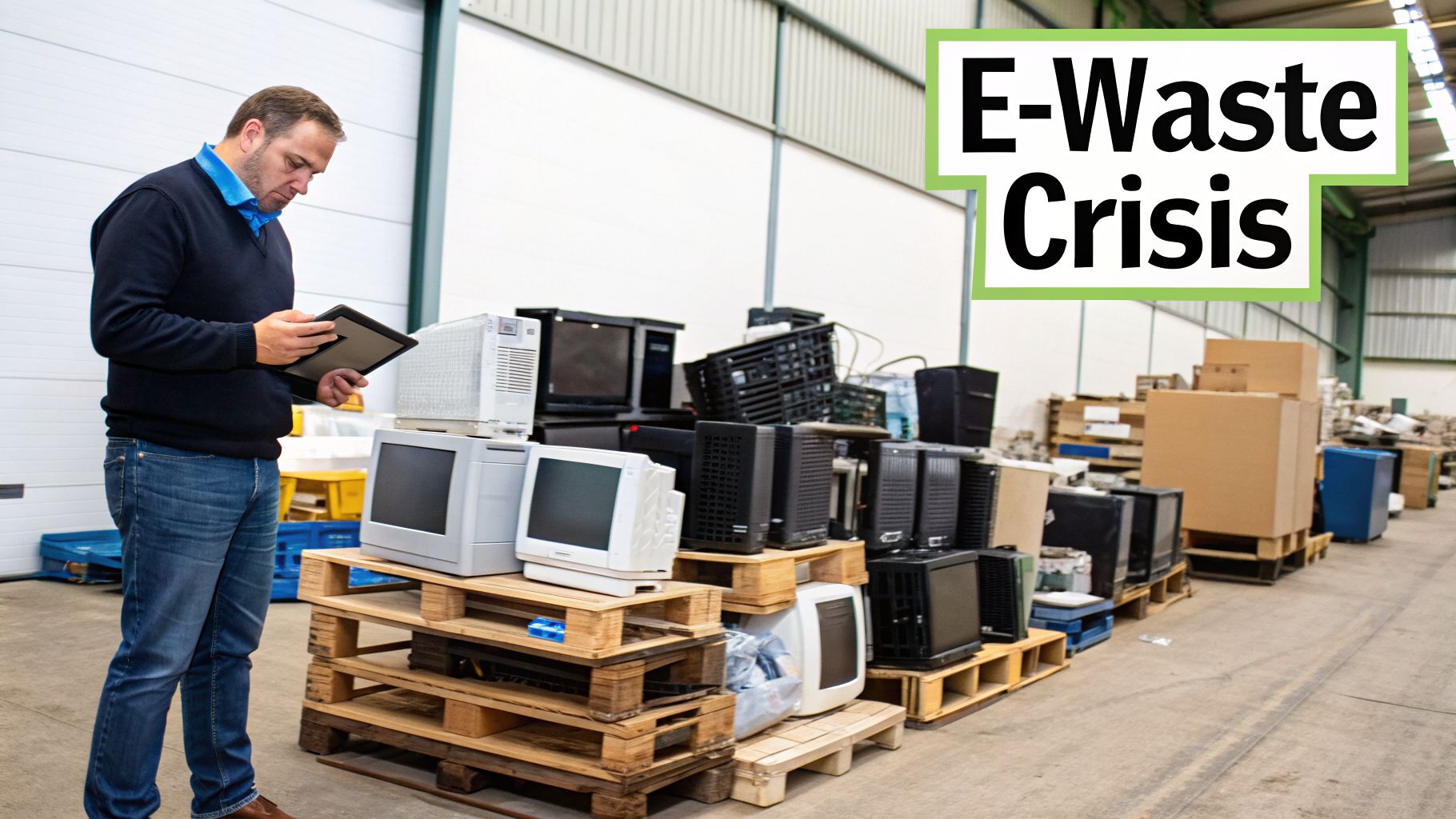
The mountain of old electronics is growing faster than we can handle it, creating serious environmental and security headaches for organizations everywhere. This isn’t some far-off problem; it has real, tangible consequences for facilities from research labs in Atlanta to hospitals across the country.
Every outdated server, decommissioned lab instrument, and retired employee laptop represents a point of failure. If you don't handle them correctly, you're looking at major data breach risks and staggering regulatory fines. Yesterday's assets can quickly become today's biggest liabilities.
The Real Costs of Improper E Waste Disposal
The issue goes way beyond just making space in a storage closet. Without a structured disposal plan, your organization is exposed to a whole host of problems:
- Data Security Breaches: It only takes one hard drive tossed in a dumpster to expose sensitive corporate, patient (PHI), or customer (PII) data, leading to a catastrophic breach.
- Regulatory Fines: Non-compliance with HIPAA, state laws, or environmental regulations can bring crippling penalties and legal trouble.
- Environmental Harm: Dumping electronics in landfills releases toxic heavy metals, polluting ecosystems and tarnishing your organization's reputation.
- Lost Value: A lot of electronic equipment still has value. Whether through component recovery or resale, improper disposal means that money is lost for good.
The scale of the e-waste problem is almost hard to believe. In 2022, the world generated 62 million tonnes of e-waste, which is an 82% increase from 2010. Experts predict that number will hit 82 million tonnes by 2030, and recycling is nowhere near keeping up.
Why You Need a Proactive Strategy
For highly regulated sectors like healthcare, research, and data management, having a proactive plan for managing e waste isn't optional anymore. It's a fundamental part of operations and risk management. This guide is your roadmap to turning that chaotic pile of old equipment into a secure, streamlined, and sustainable process.
Partnering with a specialist like Scientific Equipment Disposal (S.E.D.) helps organizations in Atlanta and nationwide navigate this complex field. We provide the framework to ensure every single device is handled securely, from on-site decommissioning to certified data destruction and responsible recycling. Our guide on electronic waste recycling provides more detail on these critical steps.
Ultimately, a strong e-waste program protects your data, keeps you compliant, and supports your financial and environmental goals. It’s a necessary investment in your organization's security and reputation.
Building Your E-Waste Program Foundation
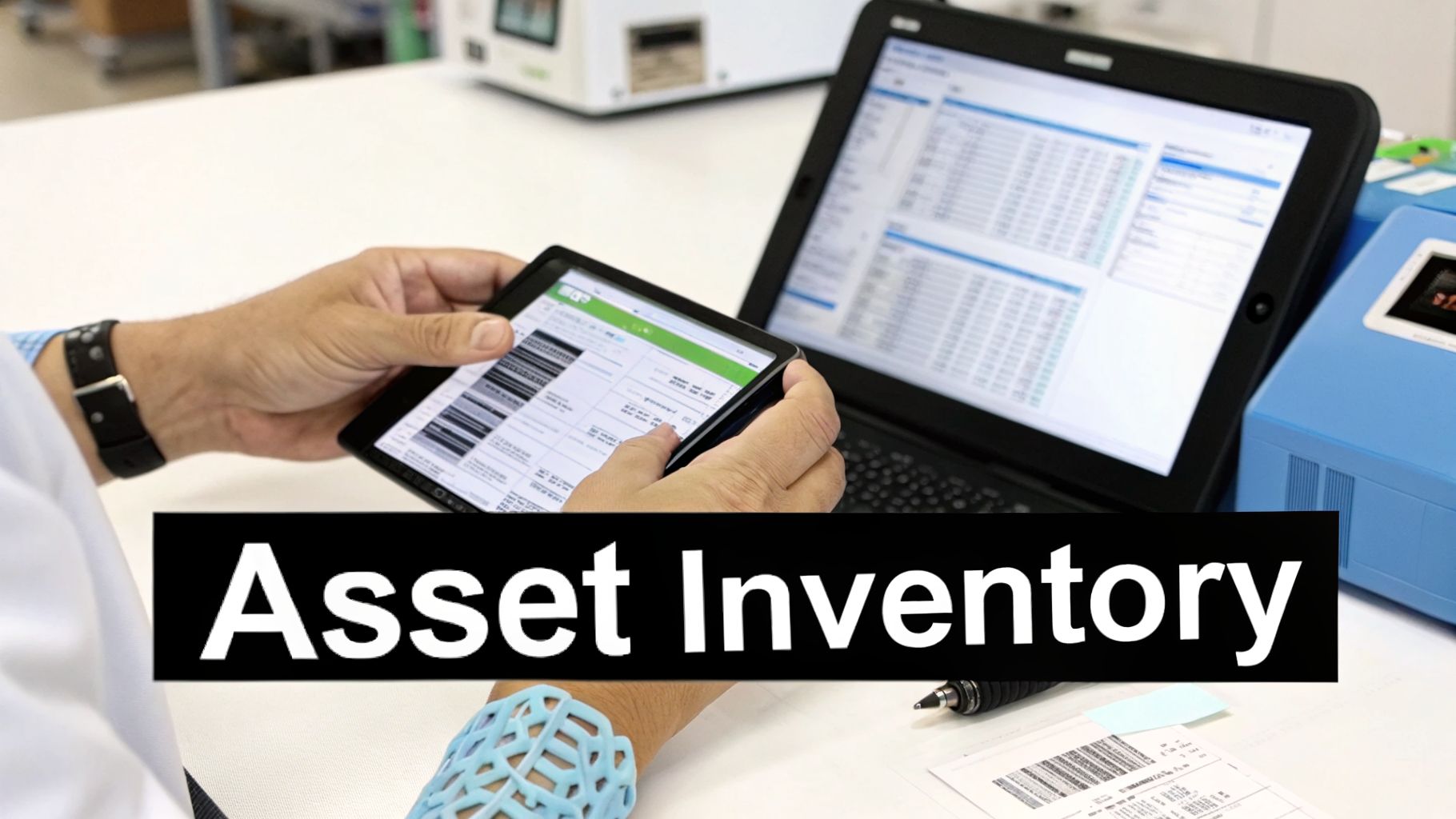
Before you think about recycling a single server or old lab instrument, you have to lay the groundwork. A smart strategy for managing e-waste doesn’t start with a pickup truck; it starts with an Excel sheet or, better yet, a dedicated asset management system. This is all about creating a complete inventory of every electronic device your organization owns.
Think of it as building the intelligence you need to make compliant, secure, and cost-effective decisions down the road. You’re essentially creating a detailed map of your electronic assets before you decide where anything is going. Without that map, you’re flying blind.
Performing a Comprehensive Asset Inventory
First things first: you need to identify and log every single piece of electronic equipment. This isn't just a headcount; it's a detailed audit. For a national tech company, that means tracking thousands of laptops and servers across all its US locations. For a hospital in Atlanta, it includes everything from patient monitors and infusion pumps to bulky MRI components and the PCs at the nurses' stations.
Don't forget the "ghost" electronics. We've all seen them—piled up in storage closets, stashed under desks, or packed away after a lab cleanout. These forgotten devices carry the same data security risks as the equipment humming away in your primary data center.
A solid inventory should capture a few key data points for every single asset:
- Asset Tag/Serial Number: The unique identifier for all tracking.
- Device Type: (e.g., laptop, server, centrifuge, spectrophotometer).
- Location: The specific department, lab, room, or data center rack.
- Status: (e.g., active, in storage, pending disposal).
- Purchase Date & Age: This helps figure out its potential for resale or reuse.
This detailed log becomes the absolute backbone of your e-waste program. It ensures nothing slips through the cracks and is the first step toward a bulletproof chain of custody.
Building Your Asset Tracking System
Once you've got that initial inventory, your next move is to set up an ongoing asset tracking system. This isn't a one-and-done project; it’s a living process. A simple spreadsheet might cut it for a small office, but for larger organizations like universities or companies with multiple sites nationwide, dedicated IT Asset Management (ITAM) software is the way to go.
This system is your single source of truth for all electronic hardware. It needs to be updated whenever a new device is bought, an old one is decommissioned, or an employee exits the company.
A robust tracking system is your best defense against "ghost assets"—devices that are on the books but physically missing. It also gives you the proof you need to show exactly what was sent for disposal, which is a critical piece for HIPAA and other compliance audits.
To make this truly effective, you have to weave it into your daily operations. For instance, when a lab is getting a renovation or a national data center migration is on the docket, the asset tracking system should be the first place you look. This simple step prevents old equipment from being accidentally abandoned or thrown out improperly in the rush to get new gear online. You can learn more about how this structured process helps with compliance in our guide on IT asset disposal.
Gathering Intelligence for Smart Decisions
Your asset inventory is much more than a simple list—it's a powerful tool for making decisions. By adding just a couple more layers of information, you can turn a basic spreadsheet into a strategic asset.
Essential Data to Add:
- Data Sensitivity: Classify each device by the type of data it stores (e.g., PHI, PII, financial data, R&D). A server from a hospital’s records department requires a much different data destruction approach than an office printer.
- Potential for Reuse or Remarketing: Make a note of devices that are relatively new or still hold some value. A three-year-old server might be outdated for your data center, but it could be a perfect fit for another organization.
- Recycling Pathway: Identify the material makeup. Specialized lab equipment can contain unique materials or chemicals that need specific handling, completely separate from your standard IT e-waste.
Let's say a university lab cleanout turns up a mix of gear: ten-year-old centrifuges headed for certified recycling, five-year-old computers that can be securely wiped and donated, and two-year-old servers with valuable components that are perfect for remarketing. Your inventory gives you the clarity to make these calls, maximizing value while guaranteeing total data security and environmental compliance.
Navigating the E Waste Regulatory Maze
When you're dealing with electronic assets—especially in a lab, hospital, or data center—compliance isn't a suggestion. It’s a legal and ethical mandate. One wrong move disposing of a device with sensitive information can trigger massive penalties, and the web of e-waste regulations is a tricky one to navigate.
These rules exist for two big reasons: keeping hazardous materials out of our environment and protecting people from devastating data breaches. Getting a firm grip on your obligations is the only way to build an e-waste program that will hold up under scrutiny.
Federal and State-Level Environmental Laws
On the federal level, the Environmental Protection Agency (EPA) lays down the law with the Resource Conservation and Recovery Act (RCRA). This act governs how solid and hazardous waste gets handled. Many of your electronics, from old CRT monitors packed with lead to circuit boards containing mercury, fall squarely into the hazardous waste category. That makes dumping them in a standard landfill completely illegal.
But it doesn't stop there. Many states, from California to New York, have their own e-waste laws layered on top of federal rules. If your organization is in Georgia, for example, you have to follow specific state-level environmental protections for handling electronics. For any company with a national footprint, this means a one-size-fits-all plan for e-waste just won't cut it. You have to know the rules for every state you operate in.
Key Takeaway: You can't plead ignorance when the regulators come knocking. Fines for improper disposal can be crippling, and enforcement is getting tougher. A single piece of equipment tossed in the wrong dumpster can lead to an audit and serious financial pain.
Working with a disposal partner who lives and breathes these rules is non-negotiable. To see what that looks like in practice, take a look at our guide on EPA-compliant laboratory equipment disposal.
Industry-Specific Mandates for Data Protection
As important as environmental laws are, the rules around data privacy are often even more strict. If you're in healthcare, the Health Insurance Portability and Accountability Act (HIPAA) is the big one.
HIPAA’s Security Rule demands that you protect electronic Protected Health Information (ePHI) from creation to destruction. Just dragging files to the trash bin on a computer is nowhere near good enough to meet the standard.
This same idea applies to all kinds of sensitive information:
- Personally Identifiable Information (PII): Think Social Security numbers, financial details, and addresses—all protected by a patchwork of state and federal laws across the U.S.
- Corporate Intellectual Property (IP): Your R&D data, proprietary formulas, and strategic plans have to be permanently destroyed to prevent them from falling into the wrong hands.
For organizations that operate internationally, a solid understanding of the compliant disposal of WEEE is also critical. No matter where you are, the fundamental responsibility is the same: you must make absolutely sure that data is gone for good.
A Real-World Scenario: The Atlanta Hospital
Let's put this into perspective. Picture a large hospital in Atlanta that's upgrading an entire wing. They're getting rid of dozens of patient monitors, imaging machines, and the computers that run them—all loaded with years of sensitive ePHI. The hospital’s compliance officer knows that a single slip-up could mean a multi-million dollar HIPAA fine and a public relations nightmare.
To do it right, they bring in a specialized e-waste vendor like S.E.D. Here’s what a compliant, defensible process actually looks like on the ground:
- On-Site Inventory and Tagging: Our team arrives and immediately starts inventorying and tagging every single asset, matching serial numbers against the hospital’s master list.
- Secure Chain of Custody: The equipment is securely packed and moved onto our own trucks, driven by our own background-checked employees. We document every handoff, from the moment it leaves the hospital floor.
- Certified Data Destruction: Back at our secure facility, every hard drive and storage device is physically destroyed, meeting HIPAA’s stringent requirements.
- Certificate of Destruction: The hospital receives a serialized Certificate of Destruction. This is their auditable proof that they did their due diligence and protected their patients' data.
This documented, transparent process is the only way to turn a high-risk liability into a managed, compliant, and fully defensible operation.
Choosing Your Data Destruction Method
Alright, you've got your inventory list. Now for the most critical part: making sure the data on those devices is gone for good. And I don't mean just dragging files to the trash can or hitting "factory reset." That’s a rookie mistake that can easily lead to a data breach.
When it comes to protecting your organization, there are really only two defensible methods: secure data sanitization (wiping the drives) and physical destruction (shredding them into tiny pieces). The right choice depends on your assets, your budget, and your security policies. Let's break down which one to use and when.
Secure Data Sanitization: The Wiping Method
Data sanitization, or wiping, is a software-based process where we overwrite every single sector of a hard drive with random, meaningless data. This process doesn't physically harm the drive, which is a huge plus if you plan to remarket or donate the equipment.
Think of it this way: deleting a file is like ripping the table of contents out of a book. The pages are still there, someone just has to work a little harder to find the information. Wiping, on the other hand, is like methodically going through and scribbling over every single word on every single page until nothing is left but gibberish. The original text is impossible to recover.
The gold standard for this process is the DoD 5220.22-M 3-pass wipe. This protocol overwrites the drive three separate times, a method that satisfies most compliance regulations and provides a very high level of security.
The biggest advantage of wiping is preserving value. A working hard drive that has been professionally sanitized can be resold. This helps offset the cost of your e-waste program and is a much more sustainable option for functional, newer assets.
You can learn more about how this fits into a complete security plan in our guide on secure data destruction services. Wiping is perfect for IT refreshes where you have laptops, servers, and PCs that are still in good working condition.
Physical Destruction: The Shredding Method
Sometimes, wiping just isn't practical or doesn't satisfy your internal security mandate. That's when we turn to physical destruction. This involves feeding hard drives, SSDs, backup tapes, and other media into an industrial shredder that grinds them into tiny, confetti-like fragments.
This method provides absolute, indisputable proof that the data is gone forever. Why? Because the device it was stored on has been completely obliterated. There is no recovery from shredding—period.
Shredding is the only real option when:
- Drives are broken or won't power on. You can't run wiping software on a dead drive. Shredding is the only way to guarantee the data on a failed device is destroyed.
- Your internal policies demand it. Many government, defense, and financial organizations have strict rules that require physical destruction for all data-bearing media, no matter its condition.
- You're dealing with older media. Things like backup tapes, floppy disks, and CDs can't be reliably wiped. They have to be shredded.
Data Sanitization vs. Physical Destruction
Deciding between wiping and shredding means balancing security requirements, potential for value recovery, and sustainability goals. It's a key decision for any IT manager or compliance officer trying to properly manage e-waste.
This table breaks down the two methods to help you figure out the best approach for the assets in your inventory.
| Attribute | Data Sanitization (Wiping) | Physical Destruction (Shredding) |
|---|---|---|
| Asset Condition | Requires functional, working drives. | Ideal for non-functional, damaged, or obsolete media. |
| Value Recovery | High. Preserves the asset for resale or donation. | None. The asset is destroyed and has only scrap value. |
| Security Level | High. Meets DoD standards and most compliance needs. | Absolute. Provides complete, irreversible destruction. |
| Best For | IT refreshes, functional laptops, servers, and remarketing. | End-of-life assets, damaged drives, and high-security mandates. |
| Documentation | Certificate of Data Sanitization with drive serial numbers. | Certificate of Destruction with serialized inventory. |
In my experience, most organizations benefit from a hybrid strategy. You can wipe newer, functional devices to recover some of their value, while shredding any older, damaged, or highly sensitive drives to completely eliminate risk. This balanced approach ensures you're secure, compliant, and making the most financially responsible decision.
Putting Your E-Waste Logistics Plan into Motion
Once you’ve done the paperwork and planning, it’s time for the real work to begin. This is where your e-waste strategy moves off the spreadsheet and into the physical world of decommissioning, packing, and shipping your old assets. For places like labs, hospitals, and data centers, getting the logistics right is everything.
Success here comes down to precision and partnership. You need to get those assets out of your facility without disrupting your team's work, all while keeping a perfect record of where everything goes.
Coordinating On-Site Decommissioning and Pickup
The first step is handling the equipment on-site. If you’re clearing out a university lab in Boston or upgrading a data center in Dallas, this has to run like clockwork. A specialized e-waste partner will manage this whole process, starting the moment they walk in the door.
Their crew will show up with your inventory list in hand, ready to tag and verify every single device. This is where a professional touch really matters, especially when you're dealing with bulky lab instruments or sensitive server racks that need expert handling.
A crucial, and often overlooked, part of the process is safely managing batteries. You must follow all lithium battery shipping requirements to the letter. This isn’t just about compliance; it's about preventing fires and ensuring everyone stays safe during transport.
After everything is securely packed, a good partner coordinates the pickup with their own trucks and trained staff, which is a huge advantage over hiring a generic freight company. Using a dedicated fleet means:
- Minimal Disruption: They can schedule pickups during off-hours, so you don’t have trucks blocking entrances during peak hospital visiting hours or class changes on campus.
- Tighter Security: Your assets are handled exclusively by background-checked employees from start to finish. This dramatically cuts the risk of equipment getting lost or stolen.
- Expert Handling: The crew knows exactly how to move heavy, awkward, or delicate equipment without causing damage to your facility or the assets themselves.
Why Certified Recycling Partners Are Non-Negotiable
Your logistics plan is only as good as the recycler you entrust with your equipment. When you're managing e waste, choosing a partner with top-tier certifications isn't just a good idea—it’s an absolute must for limiting your organization's risk. The two big ones to look for are R2v3 and e-Stewards.
These certifications are proof that a recycler meets the highest industry standards for data security, environmental responsibility, and worker safety. To get certified, a facility has to pass rigorous third-party audits confirming that they:
- Don’t illegally export hazardous e-waste to developing countries.
- Maintain a secure and unbroken chain of custody for every asset.
- Provide a safe environment for their employees handling the equipment.
Choosing a certified recycler is your best defense against downstream liability. If your uncertified vendor improperly disposes of your assets, your organization could still be held legally and financially responsible for the environmental cleanup and data breaches that follow.
This infographic shows the two primary paths for data-bearing assets after they arrive at a certified facility.
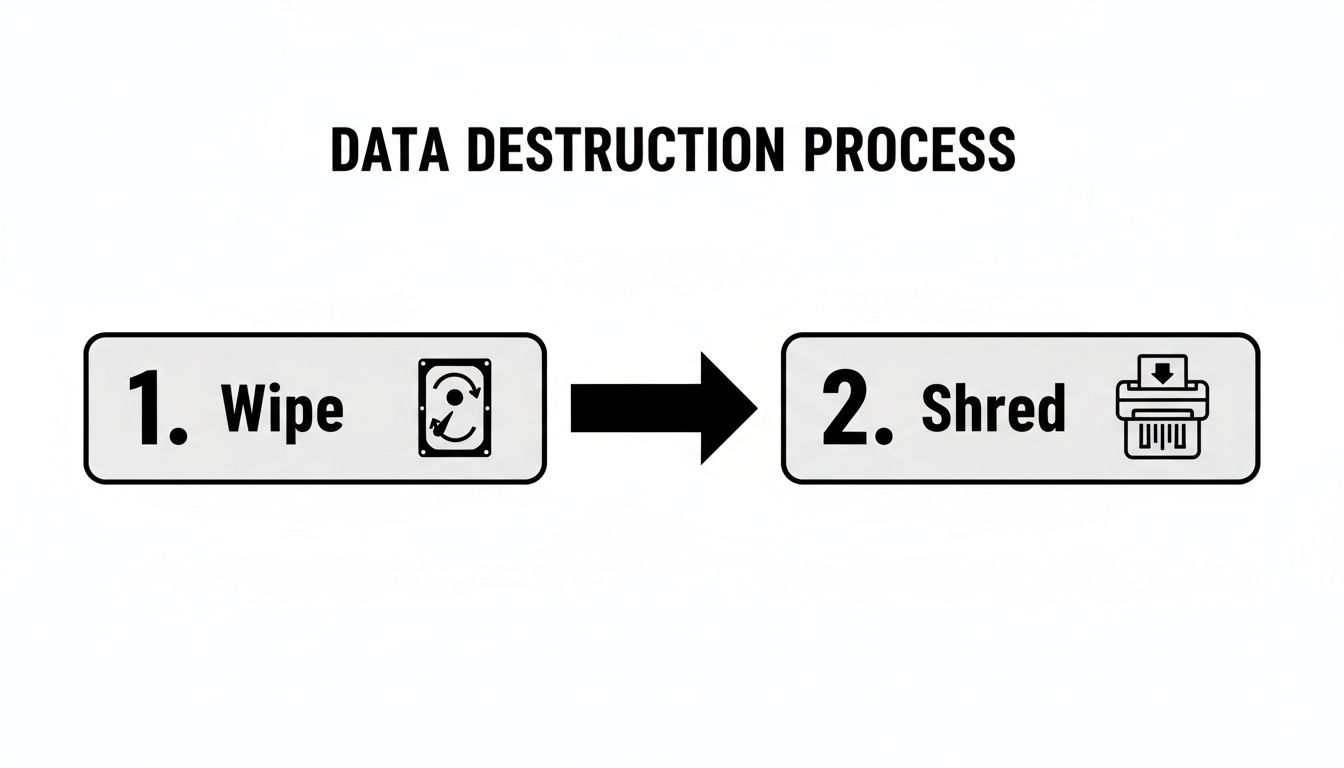
As you can see, you have a choice: preserve the asset's value through wiping, or guarantee total data elimination by shredding it. That decision directly impacts your security and your budget.
Understanding Cost Structures and Budgeting
Finally, executing your plan means knowing what it's going to cost. A transparent quote from a reputable vendor should break everything down so there are no surprises. While every project is unique, the cost of managing e waste usually comes down to a few key things.
Factors That Impact Your Quote:
- Volume and Weight: More is often less. The more e-waste you have, the lower your per-pound cost will likely be, since bulk projects are more efficient to process.
- Asset Type: Standard office IT gear is typically straightforward. Specialized lab or medical equipment, however, might contain hazardous materials that require special handling and drive up the cost.
- Logistical Complexity: The amount of on-site labor matters. If the job involves de-installing servers, navigating tight corridors, or using specialized packing materials, those factors will influence the final price.
- Data Destruction Method: As we've covered, data wiping (sanitization) often has a lower net cost because it keeps the asset intact for resale. Physical shredding gives you absolute peace of mind but eliminates any potential return and can come with a higher service fee.
A good partner will work with you to find the most cost-effective approach. For instance, we often provide services like DoD-standard hard drive wiping for free and can even share the profits from remarketed equipment, which helps offset your total disposal costs. To see how a specialized partner can build a program for you, learn more about what a dedicated e-waste recycling company can do.
Your E-Waste Questions, Answered
When you're dealing with old electronics, questions come up. Whether you're a lab manager in Atlanta or an IT director overseeing a national operation, you need clear answers to build a program that's secure and compliant. We hear the same questions all the time from organizations just like yours.
Here are the straight answers.
What Does E-Waste Recycling Cost?
This is always the first question, and for good reason. The honest answer is that there’s no single price tag for e-waste disposal because every project is different. Understanding what drives the cost will help you budget and avoid any surprises.
The final quote really comes down to a few key things. The volume and weight of your equipment is a big one; a full truckload from a data center will have a lower per-pound cost than a few pallets from a small office. That’s just logistics.
The type of equipment also matters. Standard office PCs and servers are easy. But specialized scientific or medical equipment might have hazardous components that need special handling, which can add to the cost. We also look at the amount of on-site work needed, like de-installing server racks or carefully packing delicate lab gear.
Finally, your data destruction choice plays a role. Physical shredding often costs more upfront than software wiping, but you have to weigh that against the value you might get back from the hardware.
A word of caution: going with the cheapest, non-certified vendor might look good on paper, but it’s a massive risk. A single data breach or environmental fine from improper disposal can cost millions, making that initial "savings" disappear in an instant.
Can We Actually Make Money from Our Old Electronics?
Yes, absolutely. Turning old assets into revenue is a core part of a smart e-waste program. This is what we call IT Asset Value Recovery (ITAVR), and it can often offset or even completely cover the cost of your disposal project.
There are two main ways we get value back for you:
- Remarketing: If you have functional equipment that's less than five years old—think servers, laptops, networking gear—it can be securely sanitized and resold. This is where the most value is.
- Component Harvesting: For older or broken devices, there's still value in the parts. We can harvest components like processors and RAM, not to mention the precious metals inside, and sell them as commodities.
To make this happen, you need a partner with a strong, established network for reselling this equipment. They'll get the best possible return, which they can then pass back to you.
What’s the Difference Between R2 and E-Stewards?
Think of R2 (Responsible Recycling) and e-Stewards as the gold standards in our industry. If a recycler has one of these, you know they're committed to the highest level of security and ethics. Choosing a certified partner is non-negotiable for managing your risk.
They both aim for the same goal, but there are some slight differences in their approach.
- R2v3: This is the newest version of the R2 standard and the one you'll see most often. It’s a bit more flexible, focusing on the entire asset lifecycle, including repair and reuse.
- e-Stewards: This certification is known for being extremely strict. It has a zero-tolerance policy for exporting hazardous e-waste to developing nations and for the use of prison labor.
Honestly, for most companies, a recycler with a valid R2v3 or e-Stewards certification gives you the peace of mind you need. The most important thing is to just ask for their certificate and verify that it’s current.
How Do We Handle E-Waste from Multiple Locations Nationwide?
If you have a national footprint, you need a national partner. Trying to manage different vendors for your lab in California and your office in Georgia is a recipe for compliance headaches.
The key is a single point of contact who can ensure every location follows the same secure process. A good national provider will handle everything—scheduling pickups, coordinating with your local teams, and consolidating all your documentation. You should get one simple report with all your Certificates of Destruction, making audits a breeze. It's the only way to guarantee every site is meeting the same high standard.
Ready to make your e-waste management simple and secure? Scientific Equipment Disposal offers compliant and sustainable solutions for labs, hospitals, and data centers across the Atlanta area and nationwide. We handle everything from on-site logistics to certified data destruction, all with transparent reporting. Let us turn your e-waste problem into a solved problem. Visit us at https://www.scientificequipmentdisposal.com to get started.