A Nationwide Guide to Lab Equipment Disposal for Local Facilities

If you’re a lab director, you know the cycle. New technology comes in, and old equipment gets pushed to a corner. Before you know it, you’re dealing with a mountain of surplus assets—an old centrifuge here, a broken incubator there, maybe even a whole server rack from a recent upgrade. It feels like a logistical nightmare, but it’s a lot more than just a space issue. Whether you're in a major research hub like Atlanta or a smaller city, managing end-of-life lab equipment requires a nationwide strategy with a local focus.
Managing Your End-of-Life Lab Equipment
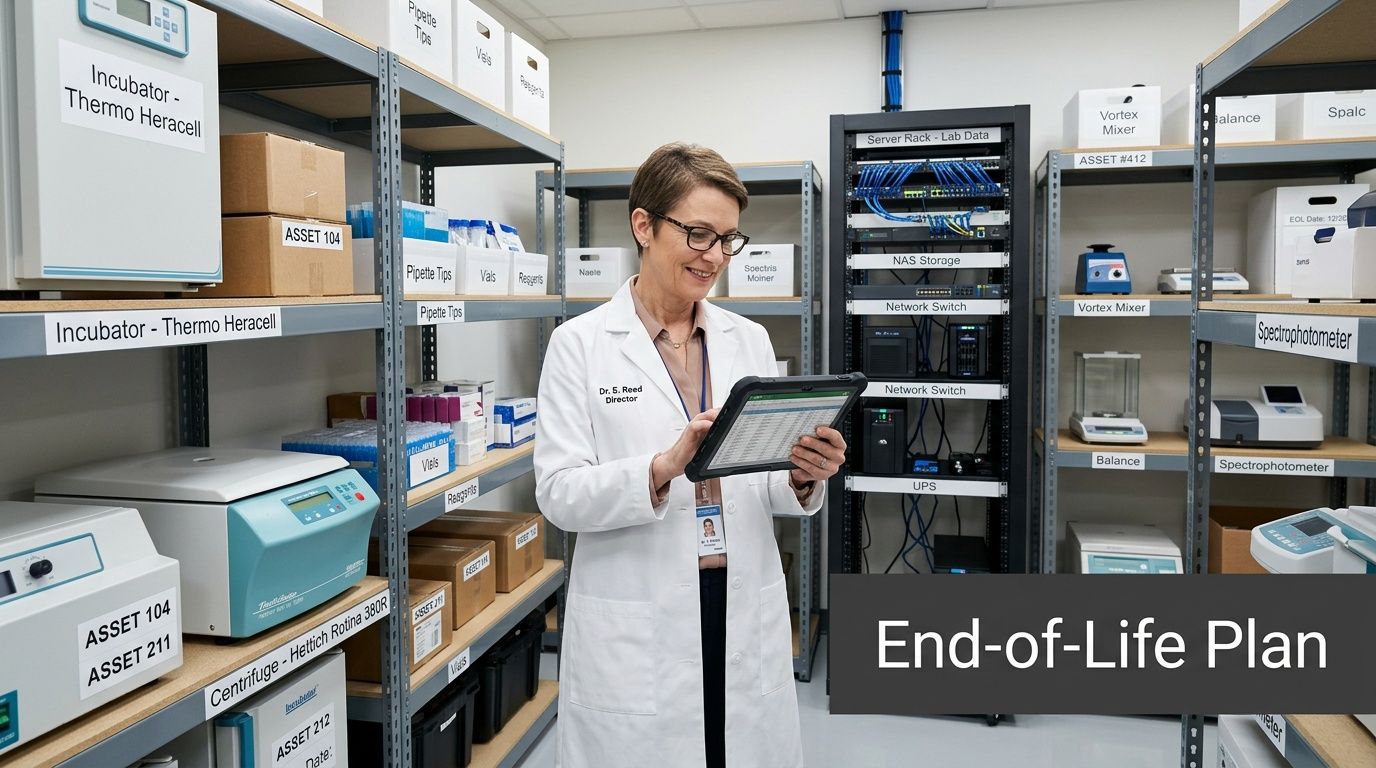
When your scientific instruments are past their prime, you have to make a choice. And just tossing them out is not one of the options. Trying to do so can open you up to serious environmental risks and painful regulatory fines, turning what should be a simple clear-out into a major liability for facilities anywhere in the USA.
The trick is to stop thinking of it as a headache and start seeing it as a strategic process. A solid disposition plan protects your organization, pulls value out of retired assets, and shows a real commitment to sustainability. This applies to everything from big analytical machines down to basic tools and even specialized containers like a liquid nitrogen dewar.
The Core Challenge of Surplus Assets
The sheer amount of equipment turnover makes this a constant problem for labs nationwide. Take the centrifuge, a workhorse in almost any lab. While its history goes back centuries, modern labs are in a constant state of upgrading to faster, better models.
It’s not uncommon for major research universities and hospitals to turn over 20-30% of their entire equipment inventory every single year.
For hospitals and universities, from Boston to San Francisco, managing that turnover the right way is non-negotiable. Landfilling an old centrifuge could contaminate local soil with heavy metals. But when handled correctly, you can recover up to 95% of the valuable materials like aluminum and steel from that same machine, turning waste back into a resource.
The goal is to transform equipment disposal from a reactive burden into a proactive strategy. It’s about ensuring your focus remains on science and patient care, not on the complex logistics of asset removal.
Finding a Path Forward
You’ve got a few options for your retired lab equipment, and each comes with its own set of rules and benefits. Your main choices are:
- Selling: A good way to recover some of your initial investment, especially for equipment that’s still in decent shape or high demand.
- Donating: A great option for supporting schools or smaller labs, but it requires careful documentation to do it right.
- Recycling: This is the most common and often necessary route for equipment that’s broken, outdated, or no longer compliant.
Picking the best option depends on the equipment's condition, its market value, and all the regulatory strings attached. This is where partnering with a specialist can save you a world of trouble. A dedicated provider knows how to navigate the complexities of compliance, data security, and logistics, giving you a clear, secure path forward. To get a better sense of what to look for, check out our guide on choosing certified scientific equipment disposal providers.
This ensures your organization, whether you’re in a bustling biotech corridor or a regional medical center, makes a choice that’s secure, compliant, and sustainable.
Sell, Donate, Or Recycle? Choosing The Right Path For Your Old Lab Equipment
When a piece of lab equipment reaches the end of its road, you're at a crossroads. Every facility, from a small local clinic to a national research institution, has to figure out what to do next. It's a decision with real financial, logistical, and even environmental weight across the United States.
There are three main paths: selling, donating, or recycling. Each one has its place, and knowing which to choose is key. Think of it like managing a fleet of company cars. A high-demand, low-mileage model can be sold for a great return. An older but reliable workhorse might be perfect for a nonprofit just starting out. But for the broken-down, end-of-life vehicles, a professional recycler is the only responsible answer. Your lab instruments are no different.
Let's break down each option so you can build a smart strategy for your surplus assets.
Selling Your Used Lab Equipment
Selling used equipment seems like a no-brainer. If an instrument is still functional, in demand, and not too old, you can absolutely recover part of your initial investment. That cash can be a welcome boost for new purchases or other operational needs.
But turning that old gear into cash isn't as simple as posting an ad. It demands a serious commitment of time and internal resources.
- Valuation: You have to figure out what it's actually worth. This means researching the market based on its age, condition, and current demand.
- Finding a Buyer: This could mean listing it on specialty sites, calling other labs, or finding a used equipment dealer you can trust.
- Handling the Logistics: Once it's sold, you’re on the hook for coordinating payment, packing it securely, and shipping it out—a major headache for large or delicate instruments.
For most labs nationwide, the time and effort it takes to sell common, older, or non-functional items simply isn't worth the potential return. Every hour your team spends trying to be a used equipment broker is an hour they aren't spending on research.
Donating For a Second Life
Donating functional lab equipment can be a fantastic way to support schools, non-profits, or startups that are operating on a shoestring budget. Not only does this give your assets a second life, but it also builds goodwill for your organization and can offer some nice tax benefits.
Donating equipment is a win-win, but you have to do it right. Good documentation is non-negotiable for a smooth transfer and to keep your own records straight.
Before you hand anything over, make sure the recipient actually has the space, expertise, and resources to use and maintain it. You'll also want a clear paper trail, like a deed of gift, to officially transfer ownership and liability. This protects you and the organization receiving the gear.
Recycling: The Smart and Responsible Choice
For the vast majority of retired equipment—the broken, the obsolete, the stuff with no real resale value—professional recycling is the most efficient and responsible choice. This goes way beyond just keeping it out of a landfill. It's a secure process that protects your organization from liability.
A certified recycling partner knows how to handle scientific instruments. They make sure hazardous materials are managed safely and that valuable commodities like metals and plastics are recovered. We cover this process in-depth in our guide on what happens to old laboratory equipment after it leaves your facility.
The table below gives you a quick side-by-side comparison to help you make the right call, whether you're managing labs in a single city or across the country.
Comparing Your Lab Equipment Disposal Options
| Disposal Option | Potential Return | Logistical Effort | Best For |
|---|---|---|---|
| Selling | High Financial | High | Newer, functional, and high-demand equipment with a clear market value. |
| Donating | Goodwill & Tax Benefits | Medium | Functional equipment that can support under-resourced schools or non-profits. |
| Recycling | Compliance & Sustainability | Low | Broken, obsolete, or low-value equipment requiring secure and certified disposal. |
Ultimately, choosing the right path isn't just about getting rid of old stuff. It's a strategic decision that can help you recover value, support your community, and prove your commitment to doing things the right way.
Navigating Data Security and Regulatory Compliance
Getting rid of old lab equipment isn't just about making space; it's a serious task loaded with legal and security responsibilities. For anyone in healthcare, research, or academia—especially in a hub like Atlanta but also in smaller towns—one mistake can lead to crippling fines, a ruined reputation, and data breaches that are impossible to undo. It's a critical part of doing science in the modern world.
Think about it this way: you’d never just toss a filing cabinet full of patient records into a dumpster, right? Well, today’s lab instruments are just digital filing cabinets. Every machine with a screen or a hard drive is a potential liability, and it has to be wiped clean, permanently and professionally, before it ever leaves your building.
The HIPAA Mandate For Medical Lab Equipment
If your organization handles any Protected Health Information (PHI), then the Health Insurance Portability and Accountability Act (HIPAA) is your rulebook. That rulebook applies directly to the lab equipment that creates, stores, or even just shows patient data. When it’s time to retire one of these devices, hitting "delete" is nowhere near good enough.
HIPAA demands that all PHI be made completely unreadable and impossible to piece back together. Failing to do this during disposal is a direct violation, and the penalties can easily run into the millions. Any machine that holds patient data—from a diagnostic imager to a simple terminal—needs its data forensically destroyed.
A data breach from an improperly disposed device can cost a company an average of $4.45 million. That staggering number doesn't even touch on the loss of patient trust and the long-term damage to your name that always follows.
This is where having a professional process is non-negotiable. You need an airtight, auditable paper trail proving you did everything right to protect that data. This is why solid Data Security Management isn't just a good idea; it's essential when dealing with the sensitive information on your lab equipment.
Digital Shredding and Data Wiping Standards
So, how do you truly erase data for good? The gold standard for wiping data with software is the DoD 5220.22-M 3-pass wiping standard. The easiest way to think about it is like a digital shredder for your hard drives.
Instead of just deleting a file's location marker, this process completely overwrites the drive with random data, not once, but three times:
- Pass 1: It writes a pattern of ones and zeros across the entire drive.
- Pass 2: It follows up with a different, complementary pattern.
- Pass 3: It writes another random pattern and then verifies the whole drive is wiped clean.
This triple-pass method makes the original information impossible to recover, even with forensic tools. For drives that are broken or can't be wiped, physical destruction—literally shredding them to pieces—is the only other safe bet. A certified partner can handle this and give you a Certificate of Data Destruction for your records. If you're managing multiple devices, it's worth learning how to protect your data with secure destruction services to stay compliant.
Environmental Compliance and Hazardous Materials
Data isn't the only thing you have to worry about. Lab equipment is often full of materials regulated by the Environmental Protection Agency (EPA). Tossing old electronics into a landfill is a recipe for environmental trouble, as many contain hazardous substances.
- Lead: You’ll find this in old CRT monitors and solder.
- Mercury: Commonly used in switches and the backlights of fluorescent screens.
- Cadmium: Often found in rechargeable batteries and certain plastics.
- Circuit Boards: These can be a cocktail of different heavy metals.
Simply dumping these items isn't just irresponsible—it's illegal. A certified recycling partner knows exactly how to identify, handle, and process these materials according to every federal, state, and local rule. They become your compliance shield, making sure your disposal is not only secure but also sustainable and giving you a clear audit trail for both data and environmental protection.
Your Step-by-Step Lab Decommissioning Checklist
Whether you're upgrading your lab, clearing out a single room, or shutting down an entire facility, a solid plan is non-negotiable. Without one, you're opening the door to security breaches, compliance violations, and logistical chaos. The right way to think about it is as an organized, professional move—not a last-minute cleanup.
We've broken down the entire decommissioning process into four manageable phases. Following these steps gives labs in cities nationwide a proven method for retiring old lab equipment safely and efficiently.
The whole process really comes down to a few critical steps you simply can't skip. This diagram shows the core workflow for any piece of equipment that holds data or might have contaminants.
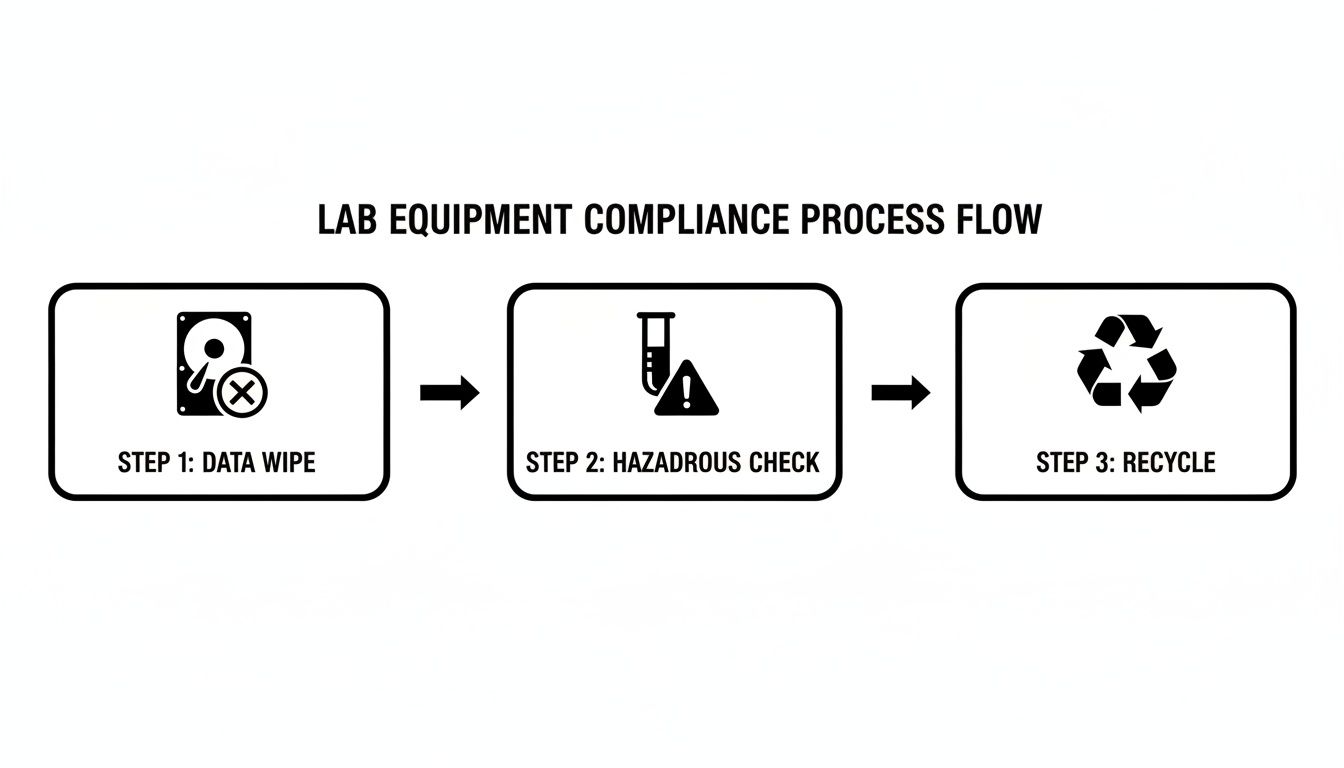
As you can see, tackling data security and hazardous materials has to happen before an asset goes anywhere near a recycling truck. It's the only way to ensure a safe, compliant end-of-life journey for your equipment.
Phase 1: Inventory and Triage
You can’t get a handle on the project until you know exactly what you’re dealing with. The first step is to build a complete inventory of every single asset you plan to remove. Walk through your facility and catalog everything, from the big analytical instruments down to the small benchtop devices and IT gear.
With your list in hand, it’s time to triage. Just like in an ER, you need to sort each item to decide what happens next. Assign every piece of lab equipment to one of these three buckets:
- Sell: Newer, fully functional assets that are still in demand.
- Donate: Working equipment you no longer need but could be a huge help to a school or a nonprofit.
- Recycle/Dispose: This is where most assets will end up. It includes anything broken, obsolete, contaminated, or simply too old to have any resale value.
This initial sorting is the foundation for your entire project. It's what determines your budget, your timeline, and who you'll need to call for help.
Phase 2: Decontamination and Data Destruction
This is where the serious legal and security responsibilities kick in. Before any equipment leaves your doors, it has to be made biologically safe and digitally secure. These aren't just suggestions—they are absolute legal requirements.
First, handle the biological and chemical safety. Any instrument that ever touched hazardous materials needs a thorough decontamination based on established safety protocols. You must then fill out and attach a Certificate of Decontamination to each item. This document is your official proof that the equipment is safe to be handled and moved.
A vendor can, and absolutely should, refuse to pick up any equipment that isn't certified as clean. It's a massive liability and poses a real risk to their team and the public. Don't skip this.
Next up is data security. Every single device with a hard drive or memory—that includes computers, servers, and many modern scientific instruments—must have its data professionally destroyed. This is non-negotiable for protecting patient data under HIPAA and your own proprietary research. Insist on a certified service that provides either DoD 5220.22-M 3-pass wiping or physical shredding for any failed drives.
Phase 3: Logistics and Scheduling
Once your assets are sorted, cleaned, and secured, it’s time to plan the actual removal. This is where close coordination with your disposal partner is absolutely critical. A well-planned pickup prevents your own operations from grinding to a halt.
Work with your vendor to lock in a clear schedule. This should include:
- Scheduling an On-Site Assessment: For bigger jobs, have the vendor come out to see the scope of work firsthand, especially for large-scale research facility equipment removal services.
- Confirming Pickup Dates: Set a date and time that causes the least amount of disruption to your team's work.
- Arranging De-installation: If you have large or hard-wired equipment, confirm whether your vendor will handle the de-installation and packing.
- Clearing Pathways: On pickup day, make sure hallways, loading docks, and elevators are clear. This makes the removal process faster and safer for everyone.
Good communication is everything here. A professional partner will work with you to build a timeline that makes sense for your lab, whether it’s a weekend clear-out or a complex, multi-day shutdown.
Phase 4: Final Documentation and Reporting
The job isn't done when the truck pulls away. Your last step is to gather all the documentation to create a complete, auditable record of the entire process. This paperwork is your proof of compliance.
Your disposal partner must provide you with a full documentation package that includes:
- A Bill of Lading: A detailed, itemized list of every asset that was taken from your facility.
- Certificates of Recycling: Official documents confirming all materials were processed in an environmentally sound manner.
- Certificates of Data Destruction: Your proof that all hard drives and media were properly wiped or physically destroyed.
File these documents securely with your internal records. If an auditor ever comes knocking, this paper trail is your evidence that you handled the disposal of your old lab equipment securely, compliantly, and responsibly.
Figuring Out the Logistics and Costs of Disposal
You’ve sorted, cleaned, and secured all your retired lab equipment. Now you're facing two big questions: who's going to do all the heavy lifting, and how much is this going to cost? This is where many labs get stuck, but understanding the financial and logistical side of disposal gives you a clear path forward.
It’s about a lot more than just getting a quote. The right partner can take on the entire physical process, freeing up your staff to focus on their actual jobs. For facilities nationwide, this is a critical piece of the puzzle. It turns what could be a disruptive, labor-intensive project into a predictable, professionally managed task.
The Logistics: Removal and Transport
One of the biggest headaches in any lab cleanout is the physical removal of the equipment itself. We're not talking about a few old computers. You’re often dealing with heavy, awkward, and delicate instruments that are a real challenge to move without the right tools and know-how.
A specialized disposal partner with its own fleet of trucks is a complete game-changer here. Instead of your team spending days trying to de-install, pack, and haul heavy machinery to the loading dock, a professional crew can come in and handle everything.
This on-site service is a huge operational advantage. It takes a major burden off your staff, helps prevent workplace injuries, and makes sure the lab equipment is packed and transported securely from the moment it leaves your building.
For organizations nationwide, working with a partner who has their own fleet means you get faster scheduling and quicker pickups, no matter your location. This is especially important during time-sensitive lab decommissions or shutdowns where every single day counts.
How Disposal Quotes Are Calculated
Pricing for equipment disposal isn't one-size-fits-all. A reputable vendor will give you a transparent quote based on the specific scope of your project. This helps you avoid surprise charges and budget accurately from the start.
Typically, quotes are built using one of three main models:
- By Weight: This is common for large volumes of mixed e-waste and electronics. The cost is simply determined by the total weight of the materials being recycled.
- By Item Count: This method is often used for specific, high-value, or difficult-to-handle items, like large fume hoods or complex analytical instruments that require special care.
- By Project Scope: For major cleanouts, like a full lab decommissioning, vendors will often provide a single project-based price that covers all labor, transport, and processing.
It’s also critical to watch out for hidden fees. Always ask a potential vendor if their quote includes things like fuel surcharges, labor for de-installation, and the cost for certificates of destruction and recycling. A trustworthy partner will provide all-inclusive, transparent pricing.
Landfill vs. Certified Recycling: The True Cost
At first glance, hauling old lab equipment to a landfill might seem like the cheapest and easiest route. This is a dangerously short-sighted view. The true cost of landfilling is incredibly high, both for your bottom line and the environment.
First, you have the penalties. Improperly dumping electronics that contain hazardous materials like lead and mercury can lead to massive EPA fines. For healthcare facilities, a data breach from a single discarded hard drive can trigger HIPAA fines that easily run into the millions.
Landfilling also carries a steep environmental price. Up to 95% of the materials in old lab electronics—including valuable metals like steel, aluminum, and copper—can be recovered and reused. Throwing them away is a permanent waste of resources.
In contrast, certified recycling offers a secure and surprisingly cost-effective solution. Professional recyclers have the right infrastructure to safely handle hazardous materials and efficiently recover valuable commodities. This process not only ensures you're compliant but also turns potential waste back into a resource, making it the most responsible choice both financially and ethically.
Why You Need a Specialized Disposal Partner
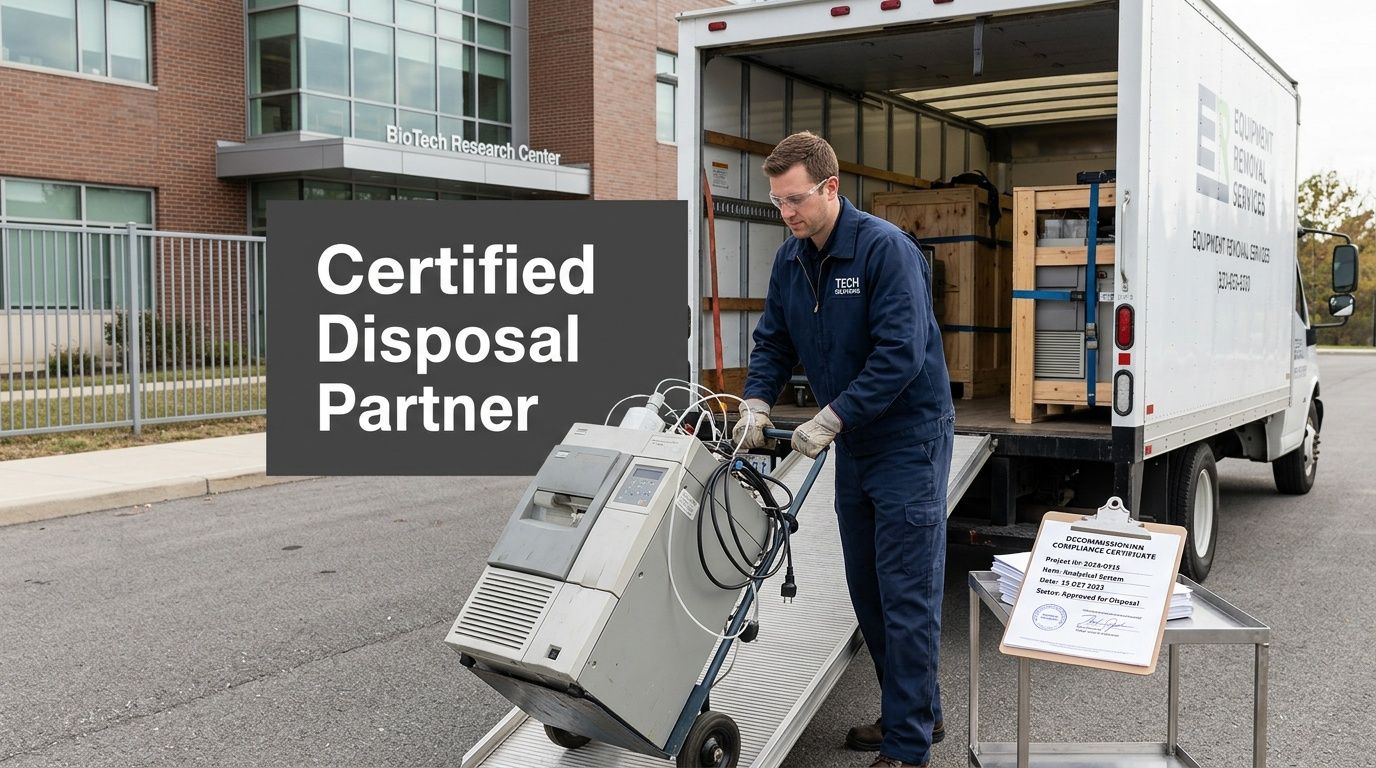
Thinking about calling a standard junk removal service for your old lab equipment? It might seem like the quickest way to clear out space, but it's a move loaded with risk. Those general-purpose companies just don't have the training to handle scientific instruments, which are often tangled in strict rules for data security and hazardous materials.
Proper disposal isn't about having a truck and a dolly; it's about navigating a complex world of regulations. A specialized partner gets it. We serve as your single point of contact for everything—from centrifuges and fume hoods to IT servers and computers—making sure every single asset is handled the right way. For any lab in the Atlanta metro area or across the nation, a specialist means fast, reliable service from people who understand the unique needs of hospitals, universities, and biotech firms.
Guaranteed Compliance and Data Security
When you work with a specialist, you’re not just hiring a removal crew; you're bringing on a compliance expert. They provide certified services that meet strict EPA and HIPAA standards, shielding your organization from massive fines and a damaged reputation. This isn't just a side service for them—it's their entire business.
You'll get a complete, auditable paper trail for every item that leaves your facility. This includes Certificates of Recycling and, critically, Certificates of Data Destruction. This is your proof that all sensitive information was wiped clean using forensic methods like the DoD 5220.22-M standard.
A dedicated partner acts as your compliance shield, ensuring that every piece of retired lab equipment is disposed of in a way that is legally sound, environmentally responsible, and completely secure.
The Value of a Single-Source Solution
A lab cleanout can feel like you're juggling a dozen different vendors—one for IT assets, another for scientific instruments, and yet another for potential e-waste. It's a logistical nightmare. A specialized lab equipment disposal partner cuts through that chaos by offering a comprehensive, single-source solution for every type of asset in your lab.
Having one team handle it all gives you:
- Simplified Logistics: One phone call is all it takes for scheduling, pickup, and all your documentation.
- Consistent Processes: Whether it's a microscope or a server rack, every piece of equipment is processed with the same high standards for security and compliance.
- Total Accountability: One partner is fully responsible for the entire process, from your door to final disposition.
For labs across the country, having an expert partner simplifies things immensely. While local service is key, a provider with a national reach can coordinate disposals across multiple sites with a single point of contact. To see how our local team can help in Georgia, learn more about professional lab equipment recycling in Atlanta on our dedicated page. For any lab that takes security and peace of mind seriously, choosing a specialist is the only move that makes sense.
Answers to Your Lab Equipment Disposal Questions
When it's time to clear out old lab equipment, a lot of questions come up. We get it. Whether you're a facility director in a major city or a lab manager in a more remote area, you're dealing with the same core challenges: compliance, cost, and logistics. Here are some straightforward answers to the questions we hear most often from labs nationwide.
What Kinds of Lab Equipment Can You Recycle?
A good, certified partner should be able to take almost everything off your hands. This means all the general workhorses—centrifuges, incubators, shakers—but also the more complex analytical instruments.
Crucially, this also includes all the IT gear that runs a modern lab. We're talking about the computers, servers, and monitors tied to your instruments. The whole point is to have a single-source solution, so one call handles the entire cleanout and you know everything is being managed to the same high standard.
Is My Old Lab Equipment Worth Any Money?
It depends. Newer, fully functional instruments from a top brand might have some resale value on the secondary market. We can help you figure that out.
But for most common equipment that's old, broken, or simply outdated, the time and effort you'd spend trying to find a buyer just isn't worth the small return. For those assets, professional, certified recycling is by far the most efficient and secure way to go.
How Can I Be Sure the Data on Lab Computers Is Destroyed?
This is a big one, especially for meeting standards like HIPAA. You absolutely must use a certified service that gives you proof. Look for a partner that offers DoD 5220.22-M data wiping, which is a multi-pass process that cleans functional hard drives so no data can ever be recovered.
For hard drives that are already dead or in devices where you can't wipe them with software, physical shredding is the only guaranteed method. Always insist on a Certificate of Data Destruction for every single device. This is your paper trail for compliance and your best defense against a data breach.
Do We Need to Decontaminate Equipment Before You Pick It Up?
Yes, absolutely. This is a non-negotiable safety step.
Any equipment that has been used with or exposed to biological, chemical, or radiological materials has to be properly decontaminated before our team can touch it. Your own EHS (Environmental Health and Safety) team will have protocols for this. You'll then need to certify that it's clean and safe for us to handle. This protects your staff, our drivers, and everyone down the line.
Ready to simplify your lab decommissioning with a trusted partner? Scientific Equipment Disposal offers secure, compliant, and sustainable solutions for labs throughout the United States. Contact us today to get started at https://www.scientificequipmentdisposal.com.