Best Computer Recycling Company in Grayson, Georgia

A lot of Grayson organizations have the same problem hiding in plain sight. Old laptops are stacked under a counter. Retired desktops are lined up in a back office. A server from the last upgrade is still sitting on a shelf because nobody wants to guess what data is still on it, who has to sign off on disposal, or whether recycling it the wrong way creates a compliance problem.
That pile gets more complicated in healthcare, higher education, research, and government environments. A forgotten hard drive can become a records issue. A misplaced lab workstation can create a chain-of-custody gap. A quick office cleanout can turn into a legal and environmental mess if the recycler only knows how to pick up boxes and not how to document secure disposition.
In the Grayson market, that gap is real. Local content about electronics pickup often stays at the consumer level and doesn't explain the data-security side for regulated organizations. One Grayson-area review of local recycling content notes that providers generally don't spell out standards like DoD 5220.22-M 3-pass sanitization or HIPAA-focused hard drive wiping, leaving business clients exposed if they assume “secure recycling” means documented compliance in this Grayson recycling market analysis. That’s where a serious Computer Recycling Company in Grayson Georgia has to be different.
If you’re sorting through older Apple devices in that stack, timing matters too. Support changes often drive replacement cycles long before hardware physically fails, which is why this overview of Understanding Apple's Mac support policy shifts is useful context when deciding what to redeploy, what to hold, and what to retire.
The Hidden Risks in Your Grayson Facility's Storage Closet
A storage closet full of retired tech usually starts as a temporary decision. IT swaps out a floor of workstations. A clinic upgrades exam room PCs. A university lab replaces aging towers attached to instruments. Everything goes into a side room “for later.”
Later is where risk starts.
What sits in that room isn't just scrap
A desktop that looks obsolete may still contain patient schedules, HR files, procurement records, student information, research notes, saved browser credentials, or local exports from a line-of-business system. Staff often assume the machine was “wiped” when it was unplugged from the network. In practice, many organizations don't have a defensible record showing what happened to the drive, who handled it, and when destruction was completed.
That matters because regulated disposal isn't about intent. It's about proof.
Practical rule: If you can't produce a chain of custody and destruction record for a data-bearing asset, you should assume your audit position is weak.
The operational problem gets bigger fast
Small cleanouts become complicated when equipment is spread across departments. Facilities may have to coordinate loading docks, elevators, after-hours access, lab shutdown windows, and signoff from compliance, IT, and department heads. Generic junk-haul style pickup doesn't solve that. It just moves the uncertainty offsite.
For Grayson businesses and institutions, the primary concern isn't whether someone can remove old electronics. It’s whether the provider can handle a business-grade disposition process that protects data, documents what happened, and aligns with internal policy.
A strong Computer Recycling Company in Grayson Georgia should treat old equipment as controlled assets from the minute collection begins. That means inventory discipline, secure handling, and clear documentation, not vague promises about “responsible recycling.”
Why Professional Computer Recycling Is Non-Negotiable
Plenty of organizations still treat electronics recycling like a housekeeping task. It isn't. For business and institutional clients, it's a risk management function.
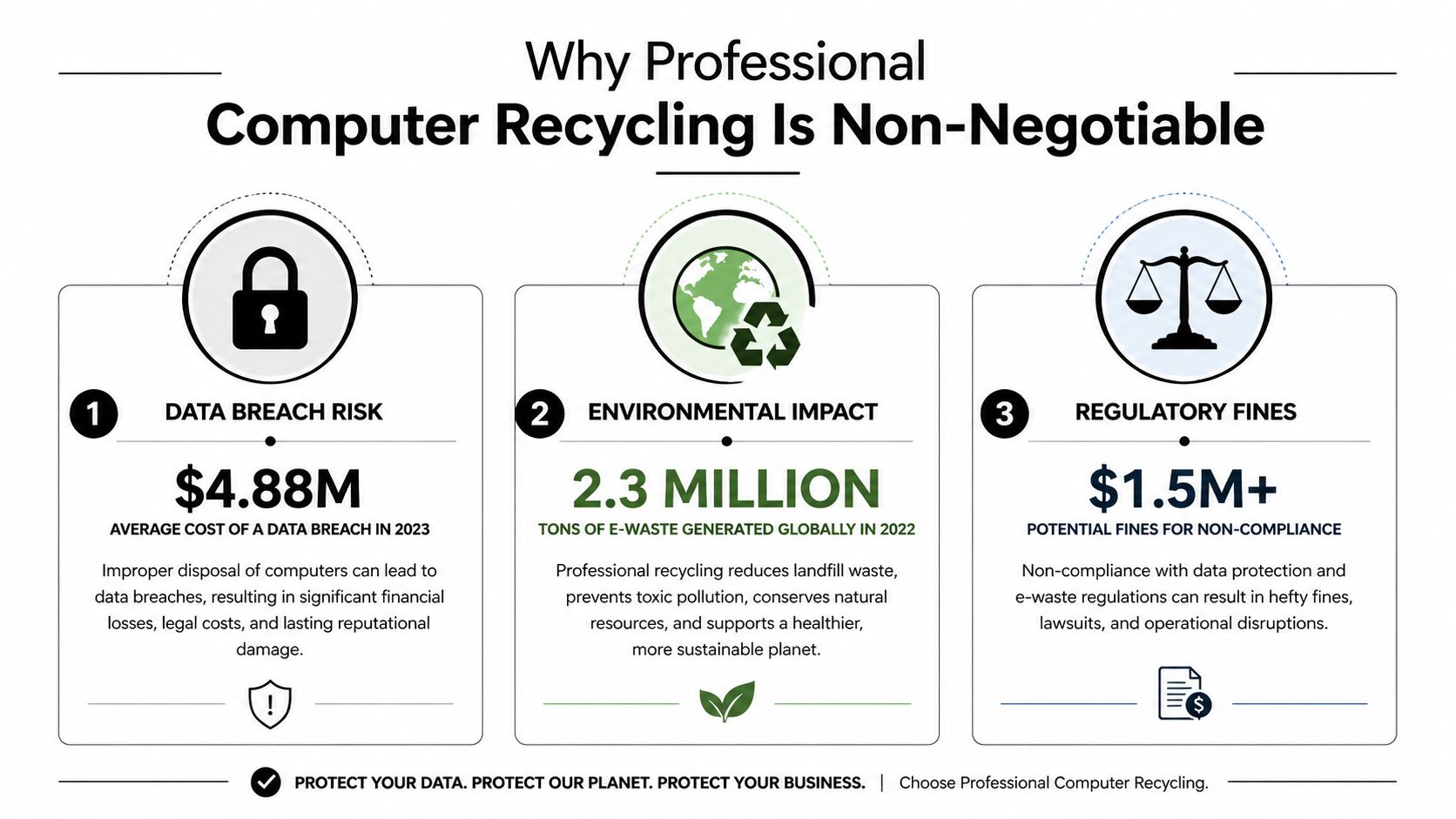
Data risk is the first reason
Every device with storage has to be treated as a records container. That includes obvious items like desktops and servers, but also laptops, backup media, and some lab-adjacent systems. If a recycler can't explain exactly how media is sanitized or destroyed, the client is taking the risk, not the vendor.
Professional recyclers build their process around controlled handling and verifiable outcomes. That is what separates compliant asset disposition from simple removal.
Environmental responsibility isn't abstract
Responsible recycling also matters because the material footprint of new hardware is substantial. According to Reworx Recycling’s Grayson-area materials, a professional recycler can divert over 99% of e-waste from landfills, and producing a single new desktop computer requires over 530 pounds of fossil fuels, 48 pounds of chemicals, and a ton of water as described in this Grayson computer recycling overview. For organizations replacing fleets of equipment, disposal decisions are tied directly to resource conservation.
That doesn't mean every old device should be resold. It means every asset deserves a proper disposition decision: reuse, refurbishment, parts recovery, or compliant recycling.
Compliance exposure is the third reason
For healthcare, finance, education, and government, disposal has to stand up to scrutiny after the fact. If legal, internal audit, or a regulator asks what happened to retired equipment, “we dropped it off” isn't an acceptable answer.
Use this as a simple screening framework when comparing vendors:
- Ask about documentation: A serious provider should explain what records you'll receive and when.
- Ask about media handling: If they can't distinguish between sanitization and physical destruction, keep looking.
- Ask about logistics: Pickup without controlled inventory creates avoidable gaps.
- Ask about downstream processing: You need to know whether the vendor manages assets for reuse, material recovery, or both.
A helpful starting point is this guide on how to choose an electronic recycling center, especially if you're vetting vendors for a clinic, campus, or corporate IT refresh.
The cheapest pickup is often the most expensive mistake if it leaves you with no defensible record of what happened to the drives.
The Full Lifecycle of Business Computer Recycling
Most clients relax once they understand the process. Business recycling feels complicated when it's vague. It becomes manageable when each handoff is defined.
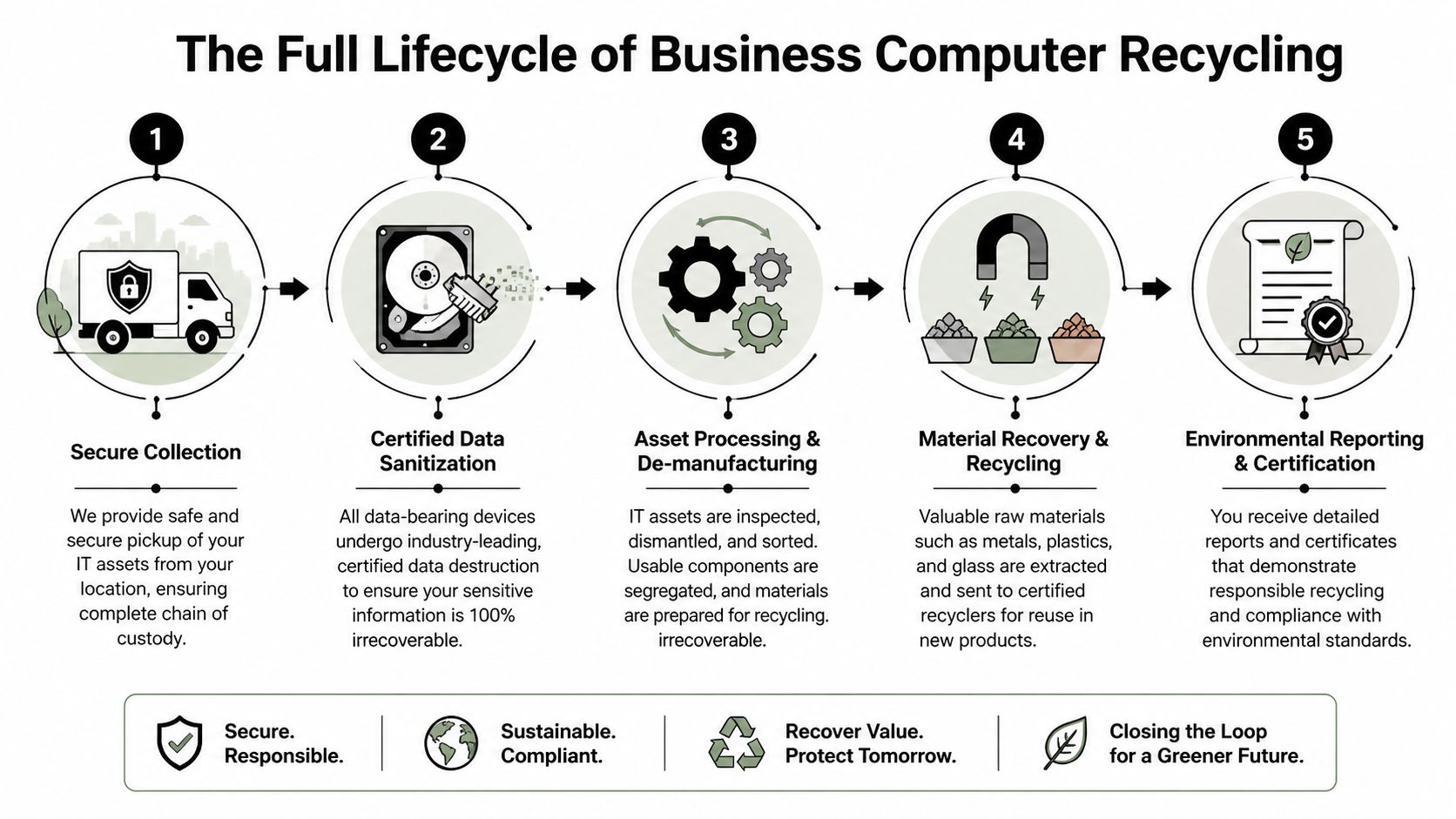
Step one starts before the truck arrives
The first conversation should identify what’s being removed, where it sits, whether any assets require de-installation, and who must approve release. That matters in hospitals, labs, and campuses where equipment isn't all sitting in one room and access may be restricted.
A good provider plans the move like a controlled project, not a casual pickup. Loading constraints, internal escorts, packing needs, and timing windows should be clear before the team arrives.
Collection should feel like a managed relocation
The easiest way to explain professional pickup is this. It’s a white-glove moving service for retired tech, except the contents may contain regulated data and the paperwork matters as much as the labor.
On site, teams should separate categories of equipment, document what is being removed, and package it in a way that protects both the equipment and the custody trail. That can include palletizing, boxed collection, room-by-room consolidation, or direct removal from offices, server rooms, and labs.
What the workflow usually looks like
- Site review and scope confirmation: The vendor confirms asset types, access requirements, and any special handling needs.
- On-site de-installation when required: Staff disconnect workstations, remove rack gear, or clear equipment from labs and offices.
- Packing and inventory capture: Assets are grouped, labeled, and logged for transport.
- Secure transport: Equipment moves through a controlled logistics process rather than ad hoc hauling.
- Disposition routing: Each item is evaluated for sanitization, refurbishment, parts recovery, or material recycling.
- Final reporting: The client receives the records needed for internal closeout.
The key trade-off is speed versus control
Some organizations want everything gone in one day. That’s understandable during a move, merger, or decommission. But speed without structure creates downstream trouble. If nobody verified serials, segregated data-bearing devices, or documented release, the project may be “finished” operationally while remaining unresolved from a compliance standpoint.
Here’s the better approach:
| Project need | What works | What fails |
|---|---|---|
| Office cleanout | Pre-sorted pickup windows with inventory discipline | Mixed piles loaded with no asset record |
| Server retirement | Controlled removal and clear media handling | Disconnecting gear fast and figuring out storage later |
| Lab shutdown | Coordinated de-installation and packaging | Treating specialized equipment like standard office junk |
Clients don't usually need a more complex process. They need a clearer one.
For a Grayson-area business, the right Computer Recycling Company in Grayson Georgia should make the project feel orderly from first contact through final paperwork. If the process sounds improvised, it probably is.
Ensuring Ironclad Data Security and Regulatory Compliance
For regulated organizations, this is the section that matters most. Recycling is important. Defensible data destruction is what keeps the project from becoming a liability.
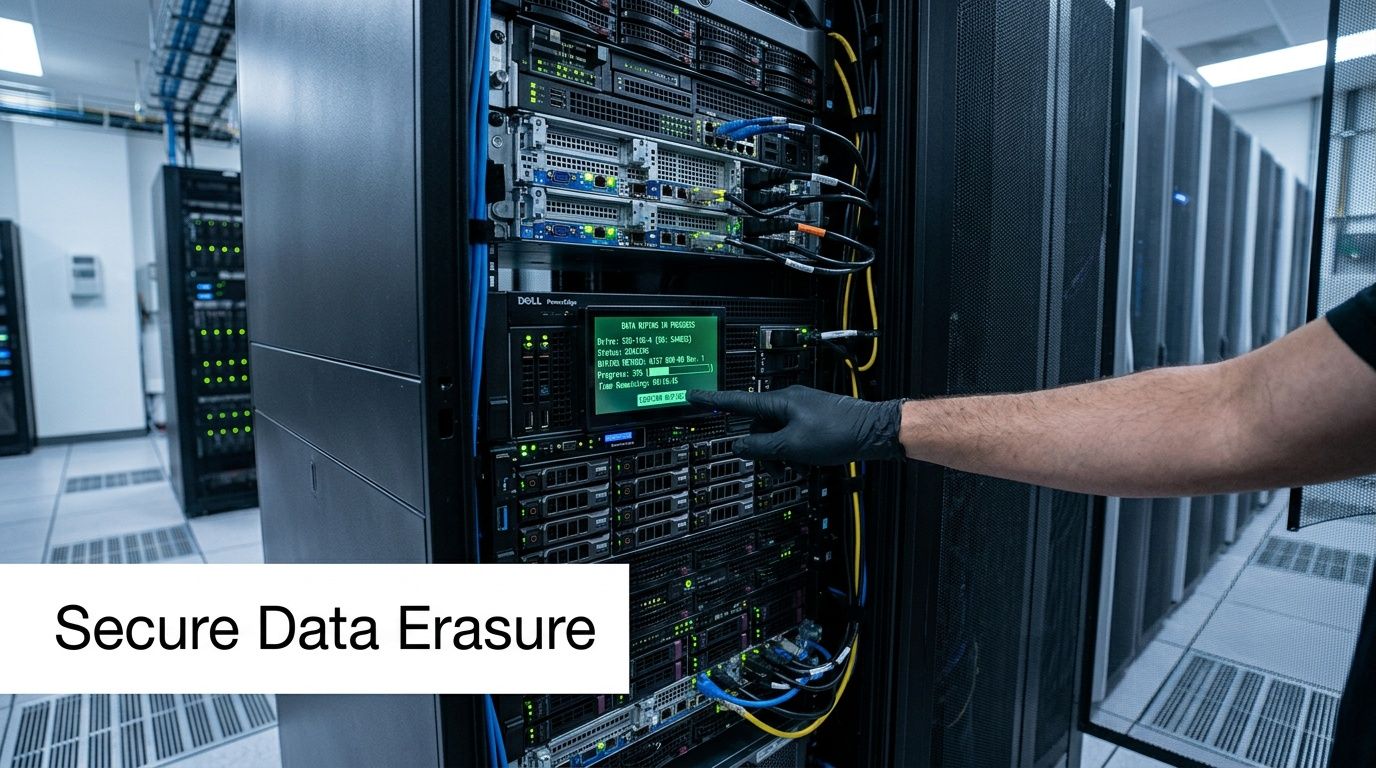
Wiping and shredding are not interchangeable
Top-tier recyclers serving the Grayson area use multi-layered data destruction, including DoD 5220.22-M 3-pass overwrite and physical shredding, to support compliance with HIPAA, SOX, and GLBA, and organizations should require a Certificate of Destruction with serialized inventory reports as proof in this Grayson data-destruction overview.
In plain terms, software wiping is for media that still functions and can be sanitized in a verifiable way. Physical shredding is the fail-safe for obsolete, damaged, or nonfunctional media that can't be trusted to complete a software process.
That distinction matters. If a drive doesn't reliably spin up or respond, “we tried to wipe it” isn't a control. It's a hope.
How to think about DoD 5220.22-M
A 3-pass overwrite is not just deleting files. It is a deliberate sanitization method that writes over the media multiple times so the original data can't be practically recovered through routine means. For clients, the technical detail matters less than the outcome: the recycler should be able to say which method was used, on which asset, and what record ties that action back to your inventory.
For many organizations, the strongest approach is mixed-method handling:
- Functional drives: Sanitized through a documented overwrite process.
- Failed or questionable media: Destroyed physically.
- High-sensitivity material: Routed according to internal policy, often with stricter release controls and reporting expectations.
The document that closes the loop
The Certificate of Destruction is what turns a vendor statement into something audit-ready. Without it, your internal team may still be left explaining what happened to retired storage devices months later.
A solid record package should answer practical questions:
- Which asset was processed
- What identifier ties it to your inventory
- Which destruction method was used
- When destruction was completed
- What supporting reporting exists
Some organizations also want serialized inventory reports because they make internal reconciliation much easier. If the finance team retired an asset, IT released it, and compliance needs confirmation, serialized reporting connects those dots.
Audit mindset: Choose the process you can defend in writing, not the one that sounds secure in a sales conversation.
Compliance is a documentation discipline
HIPAA, financial privacy requirements, and internal governance policies all point in the same direction. You need repeatable controls and evidence those controls were executed. That’s why a recycler’s language matters. “Secure disposal” is vague. “3-pass overwrite on functional drives, shredding on failed media, with serialized reporting and a Certificate of Destruction” is specific enough to evaluate.
If your organization is disposing of drives, servers, or mixed IT assets in Gwinnett County, this resource on secure hard drive destruction in Gwinnett County Georgia is a useful benchmark for what a documented process should look like.
The best Computer Recycling Company in Grayson Georgia won't ask you to trust general assurances. It will show you the method, the custody trail, and the records.
What IT and Lab Assets Can Be Recycled in Grayson
Most clients ask the same question after they sort out security. What can go in the pickup?
The short answer is more than generally expected.
Standard business IT equipment
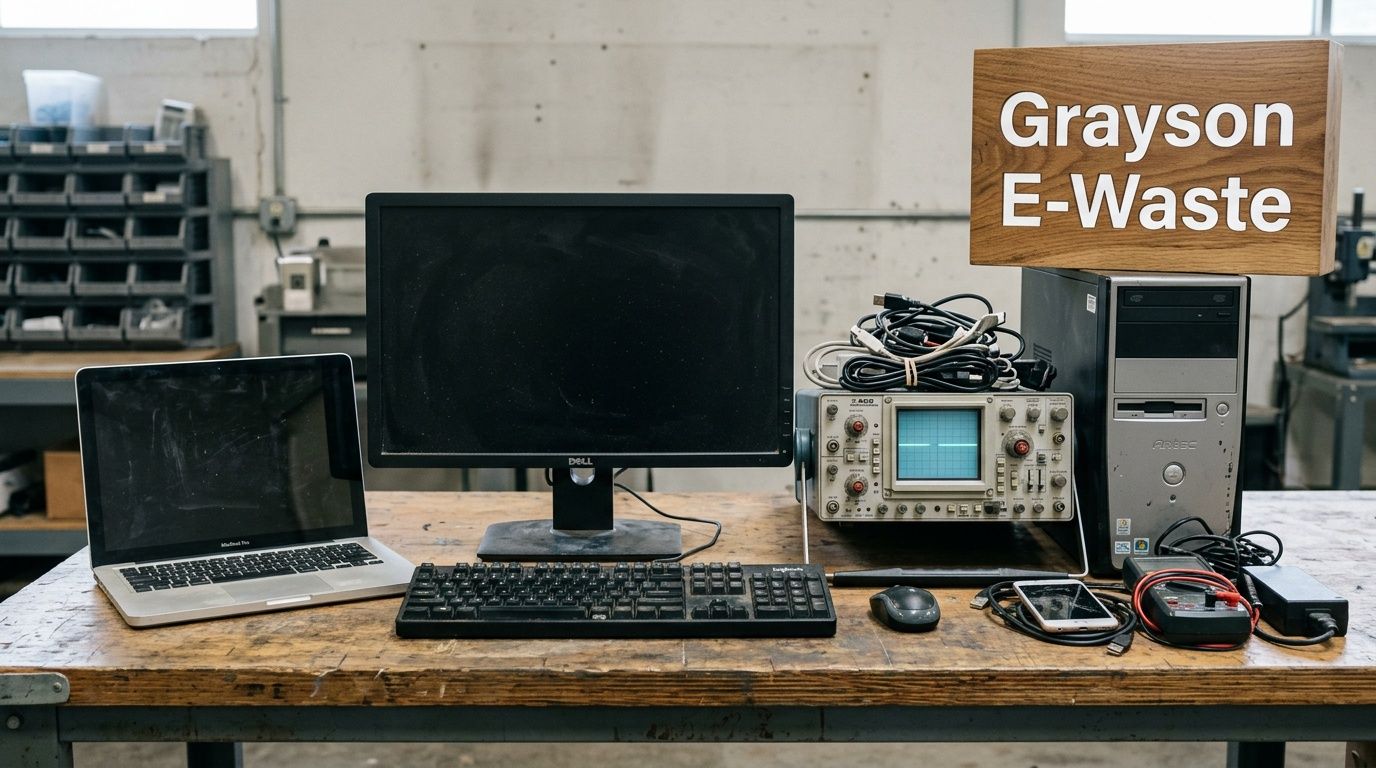
Gwinnett County’s electronics recycling framework shows the local market can support broad categories of surplus technology. The county contract identified the IT Warehouse at 455 Grayson Highway, Suite 200, Lawrenceville, GA 30046 and established a program running through December 31, 2030 for items such as desktops, laptops, servers, monitors, TVs, projectors, cell phones, and network gear within a 150-mile radius under this county contract summary. That tells you the area already has infrastructure for large-scale, public-sector-grade electronics handling.
For private organizations, the usual categories include:
- User devices: desktops, laptops, thin clients, monitors, docking stations
- Back-office equipment: printers, scanners, peripherals, power supplies
- Server room hardware: servers, storage arrays, rack components, UPS-related electronics
- Communications gear: phones, conferencing hardware, accessories
Network and support hardware
These assets are easy to overlook because they don't always look like “computers.” They still need proper handling.
- Closet equipment: switches, routers, firewalls, wireless hardware
- Cabling support items: patch panels and related electronic accessories
- Mobile fleet devices: tablets, handhelds, and retired mobile phones
Lab and technical equipment
Many generic recyclers fall short. Research and medical environments often need a provider that can remove both IT assets and lab-adjacent equipment in the same project.
Common recyclable or recoverable categories may include:
| Category | Typical examples |
|---|---|
| Analytical and bench equipment | analyzers, incubators, centrifuges |
| Small lab tools | pipettes, compact electronic devices |
| Support systems | computers attached to instruments, local controllers, displays |
Scheduling the pickup the right way
The fastest projects start with a clear scope. Build a list by room or department, separate confirmed data-bearing devices, and note anything that requires de-installation or special access. That helps the recycler assign the right crew and equipment the first time.
If you need a practical local starting point, this page on electronics recycling services in Grayson GA is useful for confirming service categories before a cleanout or decommission.
If your organization has both lab equipment and traditional IT assets, try to move them under one coordinated disposition plan. It reduces confusion, duplicate pickups, and internal handoff errors.
Understanding Recycling Costs and Asset Value Recovery
A lot of buyers assume electronics recycling is purely a disposal expense. That’s not always true.
What actually drives cost
Price usually follows labor and complexity. On-site de-installation takes time. Packing and moving heavy or distributed equipment takes coordination. Certified data destruction and reporting add administrative work that low-end haulers don't provide.
That’s why the cheapest quote often covers the least. If a vendor prices the job like bulk junk removal, expect a junk-removal level of documentation.
Where recovery value enters the picture
Some retired equipment still has a second life. According to this review of Georgia certified e-waste providers, IT Asset Valuation and Recovery can materially improve economics because equipment suitable for refurbishment can have 40-60% higher recovery value than assets sent straight to scrap or shredding as explained in this ITAVR overview.
That doesn’t mean every old machine is worth remarketing. It means a qualified recycler should know how to test, sort, and separate viable assets from true end-of-life material.
A better buying question
Instead of asking only, “What will pickup cost?” ask:
- Which assets have reuse potential
- How do you test for refurbishment eligibility
- What reporting shows what was recycled versus recovered
- How are data-bearing assets handled before any remarketing decision
For organizations with ongoing turnover, that approach can change the budget conversation. This local option for free business electronics pickup in Gwinnett County GA is a good example of how pickup logistics and asset review can work together.
Your Next Step for Compliant Recycling in Grayson Georgia
If you’re responsible for old computers, servers, lab workstations, or mixed electronics in the Atlanta metro, the actual task isn't getting rid of them. It's closing out the assets properly.
The right Computer Recycling Company in Grayson Georgia should give you four things. A controlled pickup process. Clear data destruction methods. Documentation that holds up internally. A disposition path that treats reusable equipment differently from true scrap.
That’s what reduces stress for IT, facilities, compliance, and department managers. It also keeps the project from lingering for another quarter because no one wants to own the risk.
If your equipment is sitting in a closet, under benches, in a server room, or across several departments, start with a scoped consultation and a pickup plan. The goal is simple. Identify what you have, separate what needs secure destruction, and move the entire project into a documented chain of custody.
For Grayson organizations ready to act, the easiest next step is to request a pickup through this recycling pickup scheduling page. A good consultation should clarify volume, access, timing, and compliance requirements before any equipment moves.
Scientific Equipment Disposal helps hospitals, labs, schools, corporations, and public agencies retire electronics and laboratory equipment with secure handling, compliant data destruction, and coordinated pickup across the Atlanta area. If you need a practical partner for a cleanout, decommission, or ongoing IT asset disposition program, contact Scientific Equipment Disposal to schedule a no-obligation conversation.