Optimize Your Equipment in Laboratory: 2026 Guide

Let's be honest, staring down a room full of retired lab equipment can feel like a monumental task. But turning that chaos into an organized, compliant process doesn't have to be a headache. It all comes down to having a solid plan for managing the entire lifecycle of your equipment in laboratory settings—from taking inventory to safe decommissioning and, finally, secure disposal.
This is your playbook for turning a massive cleanout project into a smooth, streamlined operation, whether your facility is in Atlanta, GA, or anywhere else nationwide.
A Practical Roadmap for Lab Equipment Lifecycle Management
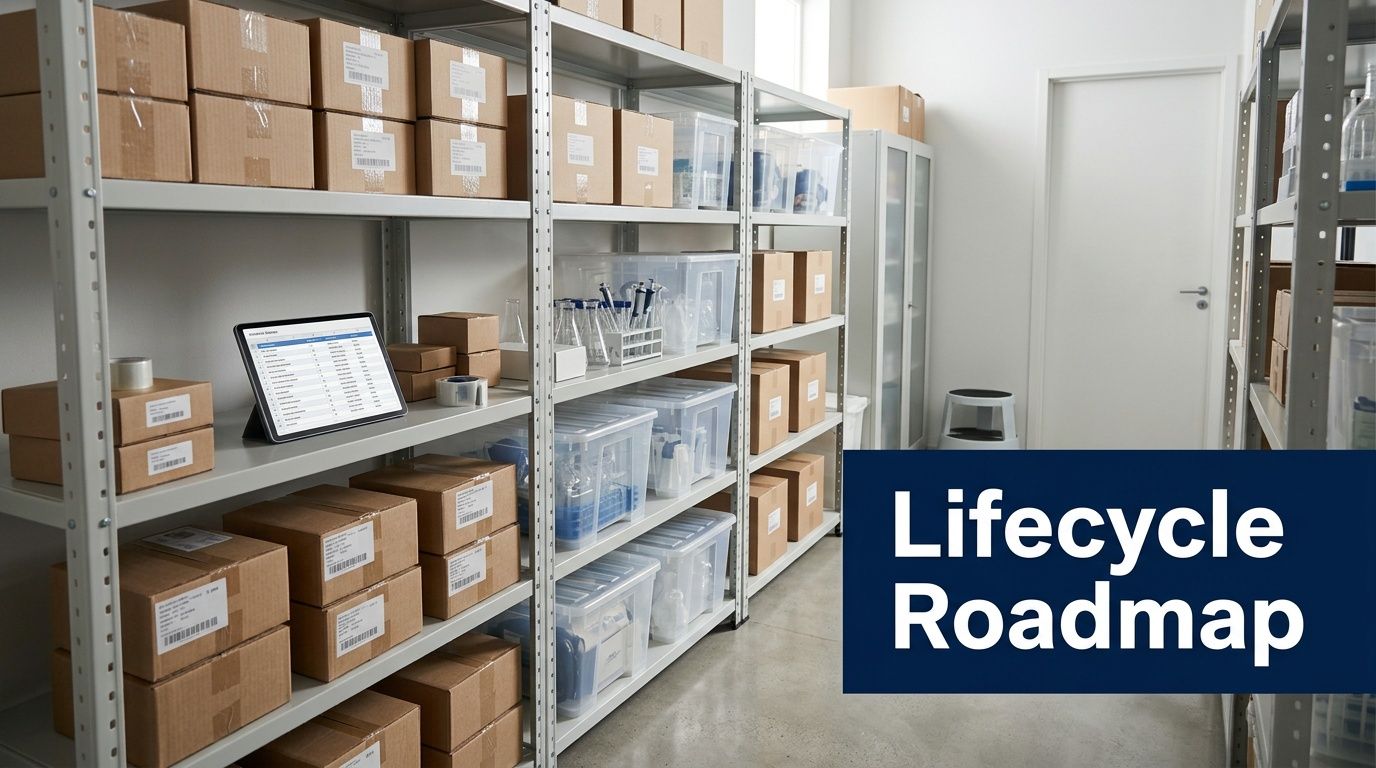
Whether you’re running a hospital in New York City, a university research department in California, or a corporate R&D lab in Texas, a structured approach to asset retirement is non-negotiable. This is about so much more than just freeing up storage space. It’s about protecting your organization from hefty fines, devastating data breaches, and long-term environmental liability.
Think of this guide as your step-by-step roadmap. We’ll walk you through the essential stages to ensure you meet every compliance and security benchmark, whether you need a nationwide disposal partner or local service here in the Atlanta area.
The Key Stages of Equipment Management
The entire process really boils down to a few core phases. Nail these, and you'll minimize your risk and even have a shot at recovering value from those old assets.
- Inventory and Assessment: You can't manage what you don't know you have. The first step is always a thorough inventory. This means identifying every single piece of equipment and, more importantly, understanding its potential hazards and whether it holds sensitive data.
- Decommissioning and Decontamination: This is a critical safety step. Assets must be properly prepped for removal, which includes sanitizing surfaces to eliminate biohazards and performing certified data destruction on any hard drives or storage media.
- Logistics and Removal: Getting the equipment out of your facility requires careful planning. Coordinating the physical removal and transport is a project in itself, designed to prevent damage, loss, or any disruption to your ongoing operations, with service available across the U.S.
- Disposal and Recycling: The final step is handing everything off to a certified partner who can guarantee secure, environmentally responsible, and fully documented disposal for every last item.
Managing the lifecycle of laboratory equipment isn’t just an operational task—it's a critical component of your organization's risk management strategy. A single misstep can lead to significant financial and reputational damage.
This framework applies to everything in your lab—from the simplest benchtop shakers to the most complex analytical instruments. Don't forget, this also includes the computers, servers, and other IT hardware that are essential for running your modern lab.
For a closer look at that specific challenge, our guide on secure IT asset disposal is a great resource. By following a proven plan, you can take control of the asset retirement process and navigate the complexities with confidence.
What’s Really Lurking in Your Old Lab Equipment?
Before you can even think about disposal, you have to know what you’re dealing with. This isn't just about making a checklist of model numbers. It’s about understanding the life story of every single asset, because that story is filled with hidden risks. Viewing your lab inventory as a simple collection of machines is a fast track to serious compliance problems, no matter your location.
A centrifuge looks innocent enough, right? But what if it spent the last five years spinning down infectious agents? A mass spectrometer might be yesterday’s tech, but its hard drive could be a goldmine of protected health information (PHI) that falls squarely under HIPAA. Every piece of equipment has a history, and that history determines exactly how it must be handled.
To make sense of it all, we can break down lab assets into a few key categories.
Lab Equipment Categories and Disposal Priorities
Here’s a practical look at common lab equipment, the unseen dangers they carry, and why you absolutely can't just toss them out with the regular e-waste.
| Equipment Category | Common Examples | Hidden Disposal Risk | Why It Matters |
|---|---|---|---|
| Benchtop Equipment | Centrifuges, vortex mixers, shakers, hot plates, pipettors | Residual Contamination: Chemical, biological, or radiological residues left on surfaces or inside components. | Cross-contamination and direct exposure risk for anyone handling the equipment. Fines and liability are significant if an incident occurs. |
| Analytical Instruments | Mass spectrometers, HPLC systems, DNA sequencers, PCR machines | Data & Chemical Hazards: Hard drives full of sensitive patient/research data, plus residual solvents and hazardous chemicals in lines and pumps. | A single data breach can lead to massive HIPAA fines and reputational damage. Improperly purged chemicals pose an environmental and safety threat. |
| Facility Infrastructure | Fume hoods, biological safety cabinets (BSCs), large autoclaves | Embedded Environmental Hazards: Chemical residues baked into ductwork (fume hoods) or lingering pathogens within the cabinet and filters (BSCs). | These are fixed hazards. Removing them without professional decontamination can contaminate the entire facility and violate environmental regulations. |
| IT & Electronics | Lab computers, servers, data loggers, monitors | Sensitive Data Storage: The most overlooked source of breaches. These devices store everything from research notes to patient records. | Certified data destruction isn't just a good idea—it's a legal requirement to protect against data theft and ensure compliance. |
Each category presents a unique puzzle. Simply unplugging a machine is never the end of the story; it's just the beginning of your disposal responsibility.
General Benchtop Equipment
This is your lab’s daily grind gear: centrifuges, vortex mixers, shakers, hot plates, and electronic pipettors. While they might seem simple, their biggest threat is residual contamination.
Think of a hot plate stirrer like a kitchen stovetop. You wouldn’t just grab a used one at a yard sale without knowing what was last spilled on it. The same logic applies here, but with much higher stakes. Chemical or biological residues can put everyone down the line—from your facilities team to our disposal technicians—at risk. Decontamination isn’t just a suggestion; it’s non-negotiable. For a deeper dive into spotting these dangers, our guide to understanding common toxic hazard signs is an essential resource.
Specialized Analytical and Life Science Instruments
This is where the real complexity begins, mixing serious data security issues with hazardous materials. This group includes high-end instruments like:
- Mass Spectrometers: These are often run with a cocktail of hazardous chemicals and are tethered to computers holding enormous datasets.
- HPLC Systems: It’s easy to forget about the residual solvents hiding in the lines. If not purged correctly, they pose a serious chemical and environmental hazard.
- DNA Sequencers: These are ground zero for sensitive data. Many contain patient data or priceless proprietary research that demands certified, documented destruction.
- PCR Machines (Thermal Cyclers): Even these simpler devices often have internal memory that stores run protocols and associated data.
The single biggest—and most frequently ignored—risk with modern instruments is the data they contain. A hard drive from just one sequencer or its connected PC can hold thousands of sensitive records. This makes certified data destruction an absolute must.
Facility Infrastructure and Support Systems
Finally, don’t forget the equipment that’s literally part of the building. We’re talking about biological safety cabinets (BSCs), fume hoods, and large-scale autoclaves. A BSC is like a tiny, self-contained cleanroom; if it ever handled dangerous pathogens, it remains a biohazard until a professional has fully decontaminated it.
Likewise, the ductwork on a fume hood can be caked with years of crystallized chemical residues. These systems are fixed environmental hazards. They can’t just be ripped out by a standard moving crew; they require specialized de-installation services to protect your staff, your facility, and the environment.
The Critical Steps for Safe Lab Decommissioning
Shutting down a lab or retiring old equipment isn't just a cleanout job. It’s a precision process, and getting it wrong can lead to huge headaches—from compliance fines and data breaches to serious safety hazards.
Think of it less like spring cleaning and more like a carefully planned operation. Every step has to be deliberate. This process starts long before a single plug is pulled. It all begins with a thorough risk assessment that guides every decision you make.
Without a solid plan, you're opening your organization up to costly mistakes. The flowchart below shows you exactly where to start.
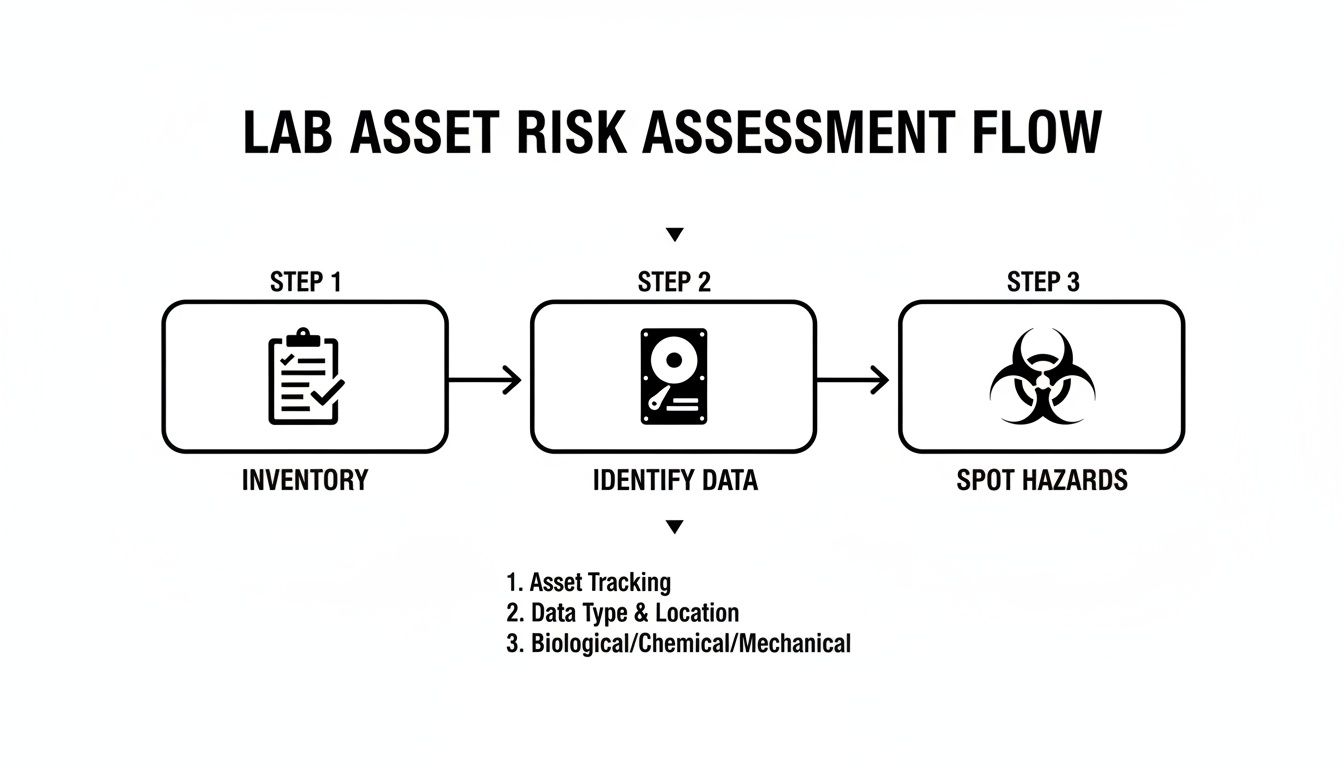
As you can see, a successful project boils down to three core activities: inventory, data identification, and hazard spotting. Nail these three, and you’ll turn a potentially chaotic mess into a controlled, manageable process.
Creating a Bulletproof Inventory
First things first: you need a detailed inventory of every single asset being taken out of service. This isn't just a simple list; it's your project's roadmap. For each piece of equipment, you need to log:
- Asset Details: The manufacturer, model, and serial number.
- Location: Building, floor, and room number where it's located.
- Condition: Is it working or broken?
- Risk Flags: This is critical. Flag any item that might store sensitive data or was used with hazardous materials.
This document is the foundation for the entire job. It allows a professional disposal partner to accurately understand the scope of work and give you a precise action plan. For larger projects, our complete guide to successful laboratory cleanout services for universities and labs dives even deeper.
Decontamination and Data Destruction
With your inventory locked down, it's time to tackle the risks. This means handling two things at once: decontamination and data destruction.
Any equipment you flagged for potential biohazards, chemicals, or other contaminants needs a formal Certificate of Decontamination. This is non-negotiable. It's the official proof that the item has been professionally cleaned and is safe for our team to handle.
At the same time, every device with a hard drive or internal memory—from a DNA sequencer to a basic lab PC—must have its data professionally destroyed. Just hitting 'delete' or doing a factory reset is not enough and leaves you wide open to a data breach.
A professional partner will provide a Certificate of Destruction for every single data-bearing device. This guarantees all sensitive information has been permanently wiped out according to strict government standards like NIST 800-88.
Logistics and Final Removal
Once every asset is inventoried, decontaminated, and its data is destroyed, the final step is the physical removal. This is where a specialized logistics team takes over the entire puzzle.
We handle everything: bringing the right crew and tools for on-site de-installation, securely packing all assets, and transporting them in our own secure fleet. This end-to-end management guarantees a clear chain of custody and delivers a fully compliant, worry-free lab decommissioning from start to finish, available nationwide.
Custom Disposal Strategies for Different Organizations
When it comes to getting rid of surplus lab equipment, a one-size-fits-all plan is a guaranteed path to compliance headaches and security risks. The needs of a hospital are worlds away from a university campus, and neither operates like a private R&D facility. A successful disposal program isn't about a simple pickup; it’s about designing a strategy that fits the unique challenges of your organization.
Think of it this way: we wouldn't use the same blueprint to build a hospital wing and a campus science building. The same logic applies here. Your disposal partner needs to create a custom program, whether you run a single lab in Atlanta or manage facilities across the country.
Hospitals and Healthcare Systems
For any hospital or healthcare system, two things tower above all else: HIPAA compliance and biohazard management. Any device that ever touched patient information—from a genetic sequencer in Boston to a front-desk PC in Miami—is a massive liability.
A single breach involving Protected Health Information (PHI) can lead to fines stretching into the millions. Because of this, any disposal plan for a healthcare facility has to be built on a foundation of absolute, undeniable data security.
Your strategy must include:
- Guaranteed Data Destruction: This isn't a "maybe." It means certified data sanitization following NIST 800-88 standards, followed by the physical destruction of all data-bearing media. You need detailed certificates of destruction tied to every single serial number for your audit trail.
- Rigorous Biohazard Protocols: Equipment can't just be rolled out the door. It has to be handled according to your strict decontamination procedures, with clear documentation like signed Certificates of Decontamination required before any asset even leaves the premises.
Universities and Academic Institutions
Universities have a completely different puzzle to solve: managing assets spread across sprawling, decentralized campuses, from the Ivy League to West Coast state schools. You might have dozens of different departments retiring equipment at the same time, each with its own inventory and its own set of potential hazards. Here, the game is all about logistics and coordination.
A successful university program brings order to that chaos. It involves a single, coordinated plan for identifying, tagging, and funneling assets from multiple buildings into one managed workflow. This is how you prevent old equipment from being abandoned in hallways or forgotten in storage closets, where it quietly becomes a safety risk and a compliance blind spot.
Corporate and Private Labs
In the corporate world—from nimble biotech startups in San Francisco to established pharmaceutical giants in New Jersey—the conversation is all about protecting intellectual property (IP) and satisfying environmental, social, and governance (ESG) reporting. A data breach could mean losing years of priceless research, and failing to meet sustainability goals can spook investors.
The ideal corporate strategy zeroes in on:
- IP Security: This goes a step beyond standard data destruction. It’s about making absolutely sure that no research data, proprietary formulas, or trade secrets ever leave the facility. For many, the peace of mind that comes with on-site shredding of hard drives is non-negotiable.
- Detailed Sustainability Reporting: Your disposal partner has to provide clear, comprehensive reports. These documents should detail the exact weight of all materials recycled and confirm zero-landfill policies. This isn't just paperwork; it's critical proof for your audits and ESG disclosures, demonstrating a real commitment to being a responsible corporate citizen.
Why a Specialized Disposal Partner Is Non-Negotiable
Would you ask a general handyman to perform heart surgery? Of course not. The same thinking applies when it's time to dispose of sensitive and often hazardous equipment from laboratory settings. Partnering with a generic junk hauler or a standard e-waste company simply isn't an option—it opens your organization up to enormous risks they are not qualified to handle.
Working with a specialized disposal partner, whether for a facility in the Atlanta area or nationwide, is an investment in your operational integrity and, frankly, your peace of mind. It’s the difference between hoping you’re compliant and knowing you're protected.
The Four Pillars of Specialized Value
A certified partner brings a lot more to the table than just hauling away old machines. Their entire service is built on four pillars designed to protect your organization's reputation, its data, and its bottom line. These are the core strengths that address the specific, high-stakes challenges of lab asset disposition that generalists almost always miss.
Guaranteed Compliance: Specialists live and breathe regulations like RCRA, HIPAA, and EPA guidelines. They are your shield against crippling fines, ensuring every single piece of equipment is handled, transported, and recycled according to the letter of the law.
Certified Data Security: Your intellectual property and patient data are priceless. A specialist provides certified data destruction to NIST 800-88 standards and delivers the auditable Certificates of Destruction you need to prove that sensitive data was permanently eliminated.
True Sustainability: This goes far beyond a vague promise to "go green." A certified partner gives you detailed reporting that confirms zero-landfill processing and tracks the exact weights of materials recycled. This gives you tangible proof for your ESG reports and internal audits.
Overall Cost-Effectiveness: While a specialist might seem like a bigger upfront expense, they prevent the astronomical costs of a data breach, a compliance fine, or a workplace safety incident down the road. It’s about managing long-term financial risk, not just short-term hauling fees.
Choosing a disposal partner is a critical risk management decision. The right partner acts as a consultant, helping you navigate complex compliance rules and protecting you from liabilities that can cost millions and tarnish your reputation for years.
Ultimately, a specialist provides a safety net that a generalist just can't offer. They manage the entire chain of custody with their own secure fleet and trained personnel, ensuring every piece of equipment is accounted for from your lab right through to its final disposition. To better understand what sets these providers apart, you can learn more about certified scientific equipment disposal providers and the rigorous standards they are required to meet. This level of expertise is simply non-negotiable.
How to Choose the Right Disposal Partner
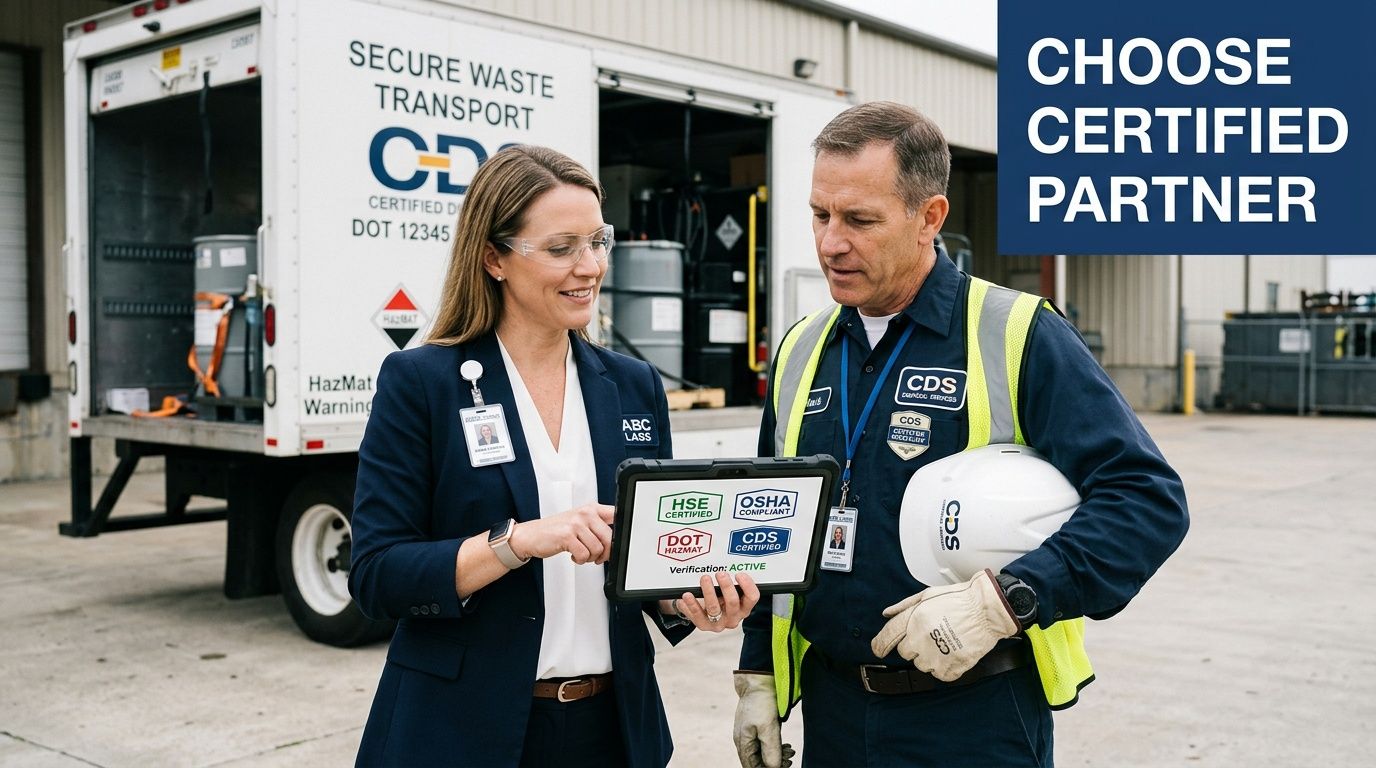
Picking the right vendor for your lab decommissioning project is hands-down the most important decision you'll make. Get it wrong, and you’re looking at potential data breaches, steep compliance fines, and environmental penalties. Get it right, and that old equipment is a closed chapter, handled securely and by the book.
Think of vetting a potential partner like a high-stakes job interview, because it is. A real pro will be transparent and ready for your toughest questions, whether they serve your local area or operate coast-to-coast. They won't just be a hauler; they'll act as your compliance partner.
Essential Vetting Questions
Before you even think about signing a contract, you need to ask some direct questions. The answers you get will tell you everything you need to know.
- Certifications: "Are you R2v3 or e-Stewards certified?" Don't settle for anything less. These are the top-tier certifications that prove a vendor meets the highest standards for environmental safety and data security.
- Documentation: "Can you show me a sample Certificate of Destruction?" This is your legal proof that any data on your equipment has been properly destroyed. If they can't produce an example on the spot, that’s a major red flag.
- Data Security: "What is your process for data sanitization, and does it meet NIST 800-88 standards?" This is the government-mandated gold standard. They should be able to walk you through a clear, documented, and auditable process.
- Logistics: "Do you use your own trucks and staff for transport?" A company that controls its own logistics from start to finish maintains a secure chain of custody. This is non-negotiable for sensitive or high-value assets. You can see how an established e-waste recycling company handles this from pickup to processing.
A partner's job isn't just to pick up your equipment. It's to protect your organization from risk. Their ability to give you straight, verifiable answers is a direct measure of how well they can protect your interests.
At the end of the day, you need a provider who lines up with your own goals for security, compliance, and sustainability. Asking these questions gives you the power to make a smart choice and ensures your lab equipment disposal is seamless and free of risk.
Got Questions About Lab Equipment Disposal? We've Got Answers.
We get calls all the time from lab managers and facilities staff, both here in Atlanta and across the country. Here are the straightforward answers to the questions that come up most often when it's time to retire old laboratory equipment.
What's the Absolute First Step?
Get a list together. Seriously, before you do anything else, you need a complete inventory of every single piece of equipment you're getting rid of.
Note the manufacturer, model, and where it is in your facility. Most importantly, you need to flag any machine that was used with hazardous materials or might have patient data or proprietary research on it. This inventory is the starting point for everything—it’s what allows a disposal partner to give you a real plan and an accurate quote.
How Can I Tell If My Equipment Has Data on It?
Here’s a good rule of thumb: if it has a screen, a network port, or any kind of internal computer, assume it's storing sensitive data. We're not just talking about the obvious stuff like PCs and servers.
Modern analytical instruments are basically specialized computers. Think about your mass spectrometers, DNA sequencers, thermal cyclers, and other advanced systems. They all have hard drives or memory that can hold onto information. A simple factory reset won't cut it. To stay compliant with HIPAA or protect your research, you need certified, professional data destruction.
When in doubt, treat it as a data security risk. The safest move is to have a certified recycler handle all your electronic lab waste. They're equipped to manage both the e-waste regulations and the data destruction, protecting you from massive fines and liability.
Can't We Just Toss Small Electronic Items in the Bin?
No, you absolutely cannot. Even something as small as an electronic pipettor is considered e-waste. It's illegal in most places to send electronics to a landfill because they contain hazardous materials like lead and mercury.
More than that, anything that's been in a lab environment could be contaminated. Tossing it in the regular trash creates a safety risk for sanitation workers and a major environmental hazard. Every single item needs to be handled correctly, which often starts with decontamination.
For a partner that delivers secure, compliant, and sustainable outcomes for your lab, contact Scientific Equipment Disposal. We offer nationwide service, including local support in the Atlanta, GA area. Learn more about our services at https://www.scientificequipmentdisposal.com.