A Guide to Electronics Recycling in Lawrenceville GA for Businesses

For any business in Lawrenceville, GA, dealing with old electronics isn't just about spring cleaning. It’s a serious matter of data security, environmental rules, and keeping your operations running smoothly. Proper electronics recycling in Lawrenceville GA for businesses is the only secure way to handle old IT hardware, lab equipment, and other retired assets. Getting it right prevents data breaches, keeps you compliant, and backs up your company's sustainability efforts.
Solving Your Business E-Waste Challenges in Lawrenceville
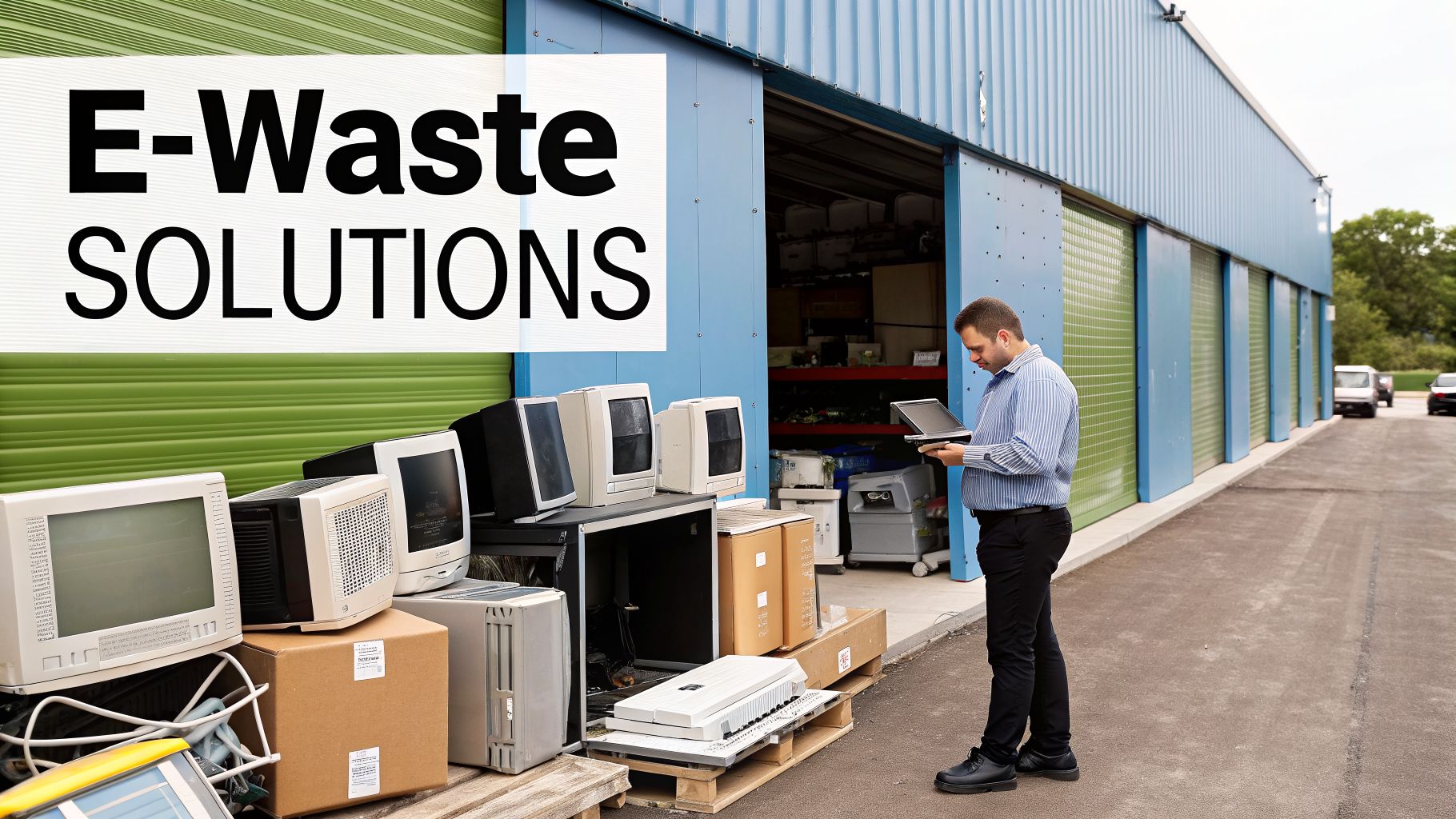
Whether you’re in a corporate office on Sugarloaf Parkway or a medical clinic near Northside Hospital Gwinnett, you'll eventually have to retire your electronic gear. The real headache isn't just clearing out space—it's handling the risks and rules that come with every single server, computer, or specialized device you unplug. Taking shortcuts with disposal can have some serious blowback, whether you operate locally in Georgia or have a national footprint.
A single hard drive with sensitive company or patient data is a goldmine for thieves, and a breach could cost you dearly in both money and reputation. On top of that, Gwinnett County and Georgia have their own environmental regulations, and you don't want to get caught on the wrong side of them. For companies with a nationwide presence, navigating varying state laws makes a certified recycling partner essential.
The True Scope of Business E-Waste
Think beyond just old office computers. The diverse businesses here in Lawrenceville generate a whole range of electronic and scientific gear that needs an expert’s touch to be disposed of correctly. This challenge is magnified for national companies coordinating asset retirement across multiple states.
Here’s a quick look at what we typically see:
- Corporate IT Hardware: This is the common stuff—servers, networking gear, desktops, laptops, and printers, all of which store sensitive business and customer information.
- Medical and Lab Equipment: From analytical instruments and centrifuges to patient monitoring devices, this equipment often falls under HIPAA disposal rules.
- Operational Technology: We're talking point-of-sale systems, industrial controllers, and other specialized electronics that keep your business running day-to-day.
To really get a handle on this, you need a solid plan. A core part of that plan should be a good IT Asset Management strategy, which maps out the life of your equipment from the day you buy it to the day it's securely recycled.
A Strategic Advantage Not a Burden
The big shift happens when you stop seeing electronics recycling as a chore and start treating it like a strategic business process. Working with a professional e-waste partner gives you a clear path forward, turning what could be a huge liability into a secure, efficient part of your operations.
The right recycling program does more than just remove old equipment. It provides certified data destruction, detailed documentation for compliance audits, and logistics support that minimizes disruption to your business, whether you're in Lawrenceville or across the US.
Finding a service tailored to the Lawrenceville area means you get practical solutions like on-site de-installation and scheduled pickups that fit your unique needs. This approach transforms a complex task into a simple advantage, protecting your data, your brand, and the local environment.
Navigating Data Security and E-Waste Compliance In Georgia
When your Lawrenceville business gets rid of old electronics, you're not just handling hardware. You're managing sensitive data and some pretty significant legal responsibilities. The rules behind electronics recycling in Lawrenceville GA for businesses are there to protect the environment, sure, but also your company's most critical asset: its information.
For many local businesses, compliance is not a choice. A healthcare provider near the Gwinnett Medical Center campus, for example, is bound by strict HIPAA guidelines for any patient data on retired medical devices and servers. In the same way, a financial services firm has to follow data privacy laws that require the secure destruction of client records on old hard drives. These federal regulations apply to businesses nationwide, making a consistent, certified process crucial.
Getting this wrong can be a catastrophe. A single hard drive tossed out without being properly sanitized can trigger a data breach, leading to massive financial penalties and wrecking your company's reputation. This is exactly why certified data destruction has to be a non-negotiable part of your disposal plan.
Understanding Your Data Destruction Options
How you destroy the data depends entirely on what you want to do with the equipment afterward. You really have two main, industry-standard choices that make sure the information is gone for good.
Here's a quick comparison of the two most common methods we use to help businesses decide which path is right for their assets.
Data Destruction Methods Compared
| Feature | DoD 5220.22-M 3-Pass Wipe | Physical Shredding |
|---|---|---|
| Best For | Reusable assets (newer PCs, servers) that can be resold. | Obsolete or non-functional hard drives, SSDs, and storage media. |
| How It Works | Software overwrites the drive's data three times. | The device is ground into small, unrecognizable pieces. |
| Outcome | Hardware is preserved and functional, ready for reuse. | Hardware is completely destroyed and unrecoverable. |
| Key Benefit | Preserves asset value while ensuring total data sanitization. | Absolute, verifiable proof of destruction. |
For a medical clinic retiring a fleet of still-valuable laptops, the DoD wipe makes sense because it preserves the hardware's value. But for a law firm's failed server with ten years of archived data, physical shredding is the only way to go for total peace of mind.
Making the right call is critical. If you want to dive deeper into how these methods work, check out our guide on secure data destruction services.
The Importance of Certified Documentation
Once your data is destroyed, you should always demand a Certificate of Destruction. This isn't just a receipt; it's your legal proof that you did everything right.
A Certificate of Destruction is your official record. It details what was destroyed, when it happened, and the method used. This document is essential for compliance audits and protects your business from liability if a data security issue ever comes up.
Think of it as an insurance policy against any future claims of improper data handling. For businesses that take security seriously, this documentation fits right in with implementing robust SOC 2 security controls for customer data. It proves you took every necessary step.
Local Compliance In Action
Gwinnett County itself sets a high bar for secure and documented disposal. A major county contract for secure electronics pickup from its IT Warehouse at 455 Grayson Highway in Lawrenceville spells this out clearly. The contract requires certified processing for all desktops, monitors, and network gear, demanding Certificates of Destruction and detailed quarterly reports.
This local government standard is a great example for all businesses in our area. Following these principles of secure data handling and certified recycling isn’t just good practice—it's what's expected of any responsible Lawrenceville organization.
How On-Site E-Waste Pickup and Logistics Work
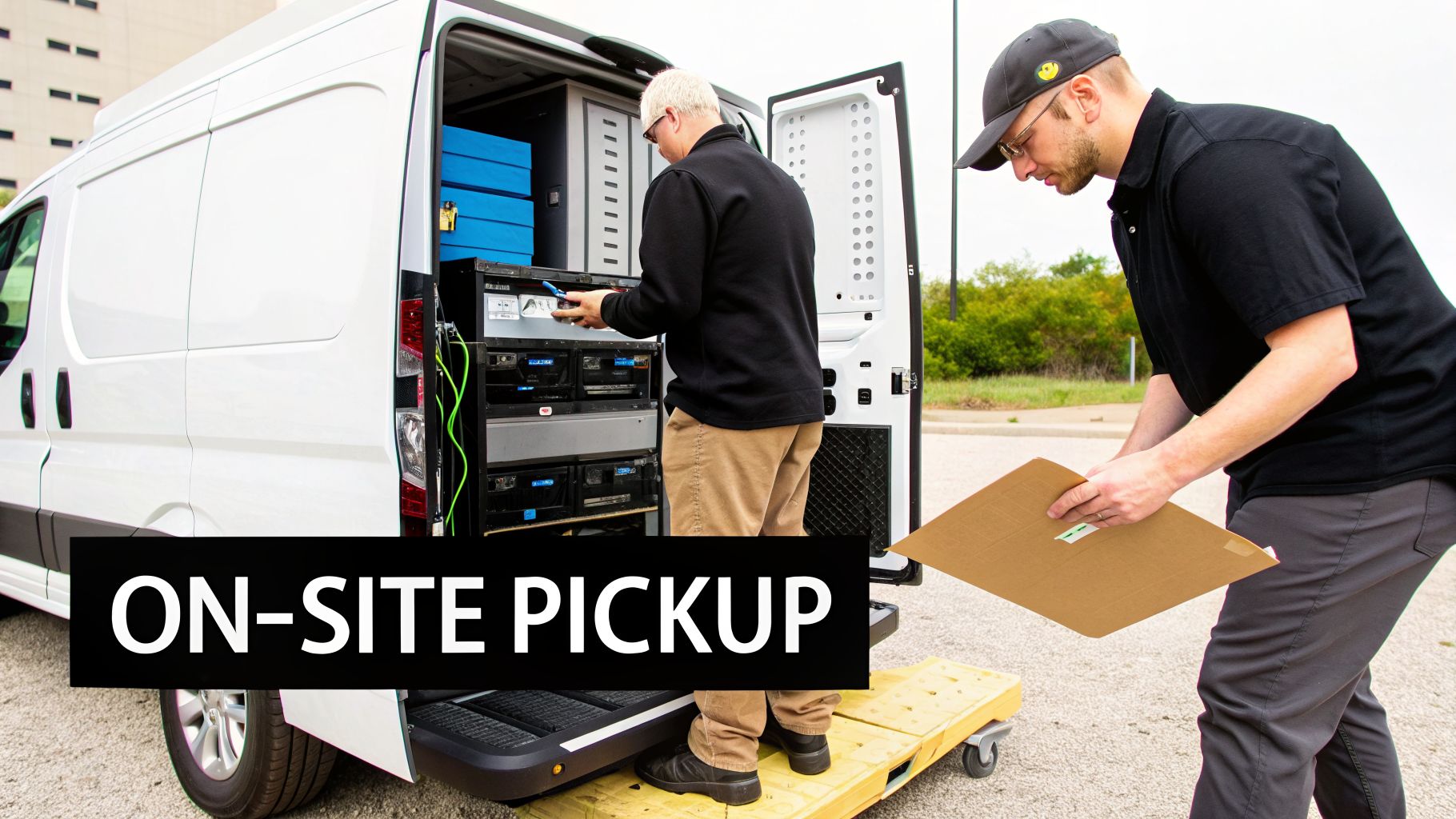
When you schedule an electronics pickup in Lawrenceville, you're not just getting a truck. You're getting a fully managed logistics service designed to take the entire project off your team's plate, from start to finish.
Think about a research facility in Gwinnett County needing to clear out an entire lab. That’s not a job for your in-house staff. It’s a complex project that requires a specialized partner to handle everything securely and without disrupting your day-to-day work.
Our process ensures every step is documented and secure, from the moment we touch an asset to the final data wipe and certification.
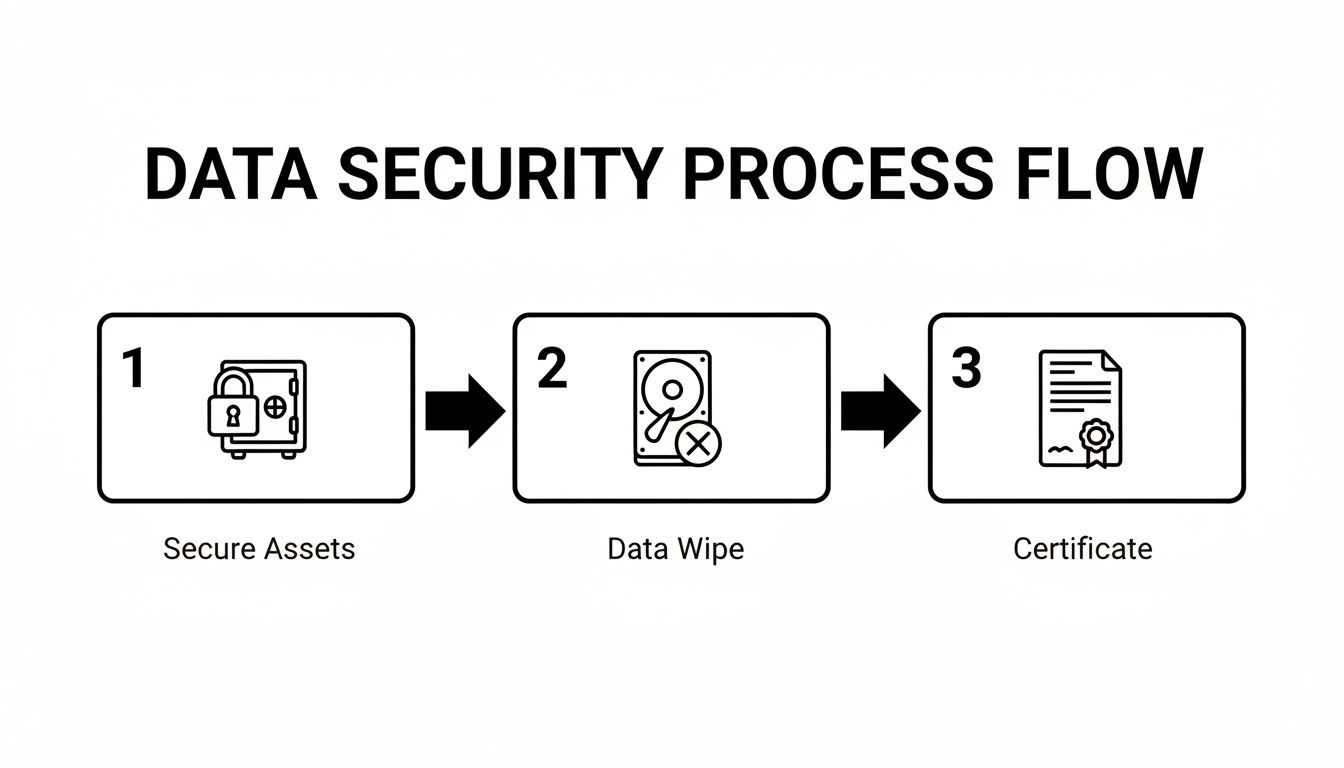
This workflow is simple but essential: we secure your equipment, sanitize the data, and give you certified proof it was all handled correctly.
Planning and Project Coordination
It all starts with a detailed consultation. We need to get a clear picture of the job—what kind of equipment you have, how much of it there is, and where it’s located in your building. Are we talking about standard office PCs or heavy, sensitive lab instruments like centrifuges and fume hoods?
With that information, a project manager puts together a specific logistics plan. This isn't a one-size-fits-all document; it’s a strategy tailored to your needs.
- De-installation: We map out exactly which pieces need to be professionally disconnected and taken apart.
- Packing Protocol: We figure out the right packing materials to protect everything from delicate lab instruments to server racks.
- Pickup Schedule: We work with you to find a time that won’t get in the way of your business.
This kind of detailed planning is what makes a project successful. For a hospital, that might mean scheduling the pickup after hours to avoid any impact on patient care. For a data center, it means every server is labeled and tracked from the second it’s unplugged.
We use our own dedicated fleet and trained logistics team. This is a big deal. It guarantees the people handling your assets—from your loading dock to our facility—understand the proper safety and data security protocols.
On-Site Execution and Asset Removal
On pickup day, our uniformed crew arrives with all the necessary gear—dollies, pallet jacks, and the right packing materials. Before a single item is moved, our on-site lead connects with your point of contact to do a final walkthrough of the plan.
From there, our technicians get to work. They’ll de-install heavy equipment, carefully pack sensitive electronics, and load everything securely onto our box trucks. We follow strict safety protocols to protect our team, your staff, and your property.
If you’re located elsewhere in the county, it’s helpful to see how this works in different situations. You can find out more about how we handle a free business electronics pickup in Gwinnett County, GA and the logistics involved.
Secure Transport and Chain of Custody
The moment your equipment is on our truck, the chain of custody begins. We transport every asset directly from your Lawrenceville location to our secure processing facility in Norcross. We never use third-party logistics companies. This eliminates the risk of your assets getting lost or falling into the wrong hands.
Once at our facility, the real work begins. Equipment is inventoried and sorted. Any device that holds data is immediately moved to a secure quarantine area for sanitization or physical shredding. This seamless handoff from your site to ours gives you complete transparency and peace of mind.
This is what a true partnership looks like. We turn a complicated, high-risk job into a simple, secure, and fully documented process, so your team can focus on their own work.
What Electronics and Lab Equipment We Recycle
When you’re planning an equipment clear-out in Lawrenceville, the big question is always: "What can you actually take?" Knowing what’s on the accepted list is the key to a smooth pickup day, helping you get your inventory straight and avoiding any last-minute headaches.
We built our services to be a single-source solution for companies with all sorts of assets, from standard corporate offices in Georgia to high-tech research labs across the United States. Our electronics recycling in Lawrenceville GA for businesses covers a massive range of equipment, so you can be sure all your retired gear is handled responsibly under one roof.
Standard Office and IT Equipment
This is the stuff we see every day from almost every business. We take pretty much all standard IT and office electronics, making sure every device is processed securely.
- Computers and Laptops: Any brand of desktop, all-in-one PC, laptop, or tablet.
- Servers and Networking Gear: Rack-mounted and blade servers, switches, routers, firewalls, and data storage arrays.
- Monitors and Displays: All types are welcome, including LCD, LED, and even old CRT monitors.
- Printers and Peripherals: Office printers, scanners, copiers, keyboards, mice, and all the cables that come with them.
- Telecommunications Equipment: Business phone systems, VoIP phones, and video conferencing units.
The great news is that the vast majority of these components can be recovered. A whopping 98% of old computers and electronics are recyclable, from the glass and plastic down to the precious metals on the circuit boards. It takes far less energy to recover these materials than to mine new ones.
Specialized Scientific and Lab Equipment
A lot of recyclers stop at IT hardware. But what about businesses with labs, like hospitals, R&D firms, or universities? You need a partner who knows how to handle specialized scientific instruments. We’re equipped for it.
Managing this kind of equipment requires a different playbook and a deeper level of expertise. You can get a closer look at our process in our guide on laboratory equipment recycling and disposal solutions.
We can recycle complex and sensitive instruments, including:
- Analytical Instruments: Spectrometers, chromatographs, and various analyzers.
- General Lab Equipment: Centrifuges, incubators, shakers, and fume hoods.
- Medical and Clinical Devices: Patient monitoring systems, diagnostic equipment, and other electronics from healthcare settings.
- Testing and Measurement Tools: Oscilloscopes, power supplies, and signal generators.
By handling both IT and lab equipment, we make the entire decommissioning process easier. A hospital, for instance, can clear out an entire administrative wing and a research lab with just one coordinated pickup. No need to call two different vendors.
Items We Cannot Accept
To keep our team and your facility safe, there are a few things we simply can't handle. It’s critical to identify and separate these items before we arrive.
We do not accept the following:
- Hazardous Materials: Anything containing biological hazards, chemicals, liquids, or powders.
- Radioactive Equipment: Any device that contains or has been contaminated with radioactive sources.
- Large Household Appliances: We don't take refrigerators, air conditioners, or other units containing Freon.
- Non-Electronic Items: Things like office furniture, light bulbs, or general trash need to be disposed of separately.
Keeping this list in mind as you prep your inventory ensures our team can get in and out of your Lawrenceville facility efficiently and safely. It clears up any confusion and guarantees a fast, effective pickup.
The Real Benefits of Responsible E-Waste Disposal
For businesses here in Lawrenceville, GA, treating electronics recycling as just another line-item expense is a missed opportunity. When handled correctly, it’s not a cost center—it’s a smart operational move that strengthens your brand, protects your bottom line, and makes a real difference locally and nationally.
Thinking about e-waste this way shifts the focus from simple disposal to resource recovery. Instead of old equipment taking up space in a landfill, you’re feeding valuable materials right back into the manufacturing stream. This is how you conserve natural resources and cut down on the massive carbon footprint that comes from mining and processing new materials.
The Positive Environmental Impact
Every server, laptop, or piece of lab gear your company recycles directly contributes to a healthier Gwinnett County. The most immediate benefit is keeping hazardous materials out of our local landfills, where they can eventually seep into the soil and groundwater.
But it’s more than just preventing pollution. It's about recovering valuable assets:
- Copper and Gold: Pulled from circuit boards and put back to use in new electronics.
- Aluminum and Steel: Recovered from device casings and frames, these metals can be recycled almost endlessly.
- Plastics: Sorted by type and reprocessed for all kinds of new products.
By getting these materials back into circulation, your business directly reduces the need for new, energy-hungry mining operations. That's a powerful and measurable contribution to sustainability that your customers and employees will notice.
Economic Advantages and Value Recovery
A solid IT asset disposition (ITAD) plan isn't just about avoiding costs; it’s about creating value. First and foremost, you avoid the steep fines that come with improper disposal or, even worse, a data breach. A single compliance slip-up can result in penalties that make the cost of a professional recycling program look tiny.
On top of that, a lot of your retired assets might still have cash value. Newer equipment like recent-model servers, switches, or laptops can often be securely wiped, refurbished, and resold. This can turn what you thought was a liability into an unexpected revenue stream.
A professional ITAD partner can assess your inventory for remarketing opportunities, ensuring you capture any remaining value from your assets while maintaining complete data security. It's a win-win that directly impacts your bottom line.
This proactive approach really matters. The U.S. EPA estimates that e-waste represents a $7.5 billion annual loss in raw materials that are landfilled instead of recycled. By working with compliant recyclers, Lawrenceville businesses not only help ease the pressure on Gwinnett's limited landfill space but also support local jobs in the recycling industry. Plus, material recovery helps reduce mining emissions by over 50%.
You can find more insights on the impact of local recycling efforts from ReWorx Recycling.
Boosting Your Corporate Social Responsibility
These days, what your company stands for matters. A clear commitment to responsible e-waste recycling tells a powerful story about your dedication to corporate social responsibility (CSR). It shows everyone—from customers to potential hires—that your business cares about its impact on the Lawrenceville community and the nation as a whole.
This isn't just about feeling good; it's a real competitive edge. When you highlight your certified, sustainable disposal practices, you can:
- Enhance Your Brand Image: Customers, partners, and your own team are drawn to businesses that operate ethically.
- Attract and Retain Talent: The best people want to work for companies whose values match their own.
- Strengthen Community Ties: Taking part in local environmental stewardship makes you a leader in the Lawrenceville business community.
When you partner with a certified recycler, you get the documentation to prove your commitment. These reports and certificates can be used in your marketing, on your website, and in annual reports, turning a smart operational process into a compelling story that builds trust.
Your Simple E-Waste Recycling Checklist
Moving from just thinking about recycling to actually doing it is the biggest hurdle. To make the process of electronics recycling in Lawrenceville GA for businesses completely painless, we put together this practical checklist. It's designed to help you get everything ready for a quick, efficient pickup.
Following these few steps takes the guesswork out of the equation. It means that when our truck shows up, the whole process is smooth, secure, and doesn't get in the way of your day-to-day work.
Prepare Your Inventory and Designate a Lead
First things first: you need a clear picture of what's going out the door. A simple inventory list is the best place to start.
- Create an Asset List: Just walk through your facility and jot down a general list of the items you need gone. Note the types of equipment (like servers, laptops, or specific lab instruments) and a rough quantity for each.
- Identify Data-Bearing Devices: This is critical. Make a special note of anything that stores sensitive information—think hard drives in computers, servers, and even some types of medical equipment. Knowing this upfront helps us line up the right certified data destruction services.
- Assign a Point of Contact: Pick one person on your team to be the go-to contact for the project. Having a single point person to coordinate with our logistics team prevents miscommunication and makes the whole pickup run like clockwork.
Once you have this basic prep done, you can move on to getting the physical space ready.
Pro Tip: Your inventory doesn't need to be perfect down to the last serial number. A solid estimate like, "about 50 desktops, 10 servers, and a pallet of monitors" is usually all we need to give you an accurate quote and plan the logistics.
Prepare the Pickup Location
Making sure our crew can get to the equipment safely and quickly is a huge time-saver for everyone. A little bit of prep in the pickup area can make a massive difference on the scheduled day.
- Consolidate Equipment: If you can, gather all the items in one, easy-to-reach spot on the ground floor. A storage room or loading dock is perfect.
- Clear a Path: Make sure hallways, doorways, and any loading areas are totally free of obstacles. This is a big deal for safety and efficiency, especially when we’re hauling out heavy or bulky equipment.
With that checklist handled, you’re all set to schedule your service. Having the details from your inventory list—equipment types, estimated volume, and location specifics—ready will help our team get you a fast and accurate quote. Our entire goal is to make this process, from your first call to the final pickup, completely hassle-free.
To get a better sense of what's available, you can learn about our options to recycle electronics with a free pickup, which breaks down the logistics for different types of businesses.
Common Questions We Get from Lawrenceville Businesses
We hear a lot of the same questions from businesses around Lawrenceville trying to figure out the right way to handle their old electronics. Here are some straightforward answers to help you get a clear picture of how it all works.
How Do You Determine the Cost for Business E-Waste Recycling?
The honest answer is, it depends. There's no one-size-fits-all price for electronics recycling in Lawrenceville GA for businesses because every project is different. The final quote really comes down to a few key things.
The biggest factor is simply how much stuff you have—the total volume and weight. Heavier, larger loads naturally require more manpower and truck space. The type of equipment matters, too. Standard office PCs and monitors are pretty straightforward, but specialized lab or medical instruments might need careful de-installation, which can affect the cost.
We also look at logistics. A simple pickup from a ground-floor loading dock is a lot different than navigating multiple floors in a building without an elevator. Finally, your data security needs play a role. While a DoD-standard wipe is often part of our service, if you need on-site hard drive shredding for extra peace of mind, that's typically an added service.
Giving us a detailed inventory upfront is the best way to get a transparent quote with no surprises down the road.
What Actually Happens to Our Equipment After You Pick It Up?
This is a great question, and we believe in total transparency. Once your equipment leaves your facility in Lawrenceville, it's securely transported straight to our certified processing center. It never sits unattended.
Here's a look at its journey:
- Secure Triage: The moment it arrives, we inventory every asset. Anything with a hard drive or storage is immediately segregated into a secure, monitored area for data sanitization.
- Data Destruction: We process all hard drives and storage media exactly as you specified—either wiped clean to DoD 5220.22-M standards or physically shredded into tiny, unrecoverable pieces.
- Manual Dismantling: Our technicians then take everything apart by hand. They meticulously sort materials like steel, aluminum, plastic, glass, and precious metals from circuit boards.
- Commodity Recovery: These sorted materials are then sent to our certified downstream partners, who refine them back into raw commodities ready to be used in new manufacturing.
We document this entire chain of custody from start to finish. You’ll receive a Certificate of Recycling and Data Destruction, giving you undeniable proof that your assets were managed responsibly and that absolutely nothing ended up in a landfill.
Do You Handle Projects for Both Small and Large Companies?
Absolutely. We've built our services to scale for any business in Gwinnett County.
It doesn’t matter if you're a small medical practice with a storage closet full of old gear or a major corporation decommissioning an entire data center. Our logistics team is equipped to handle everything from a few dozen items to multiple truckloads with the exact same level of security and efficiency.
Ready to manage your e-waste responsibly? Scientific Equipment Disposal offers secure, compliant, and efficient recycling solutions for businesses throughout the Atlanta metro area. Visit us at https://www.scientificequipmentdisposal.com to schedule your pickup today.