Business Electronics Recycling Snellville Georgia

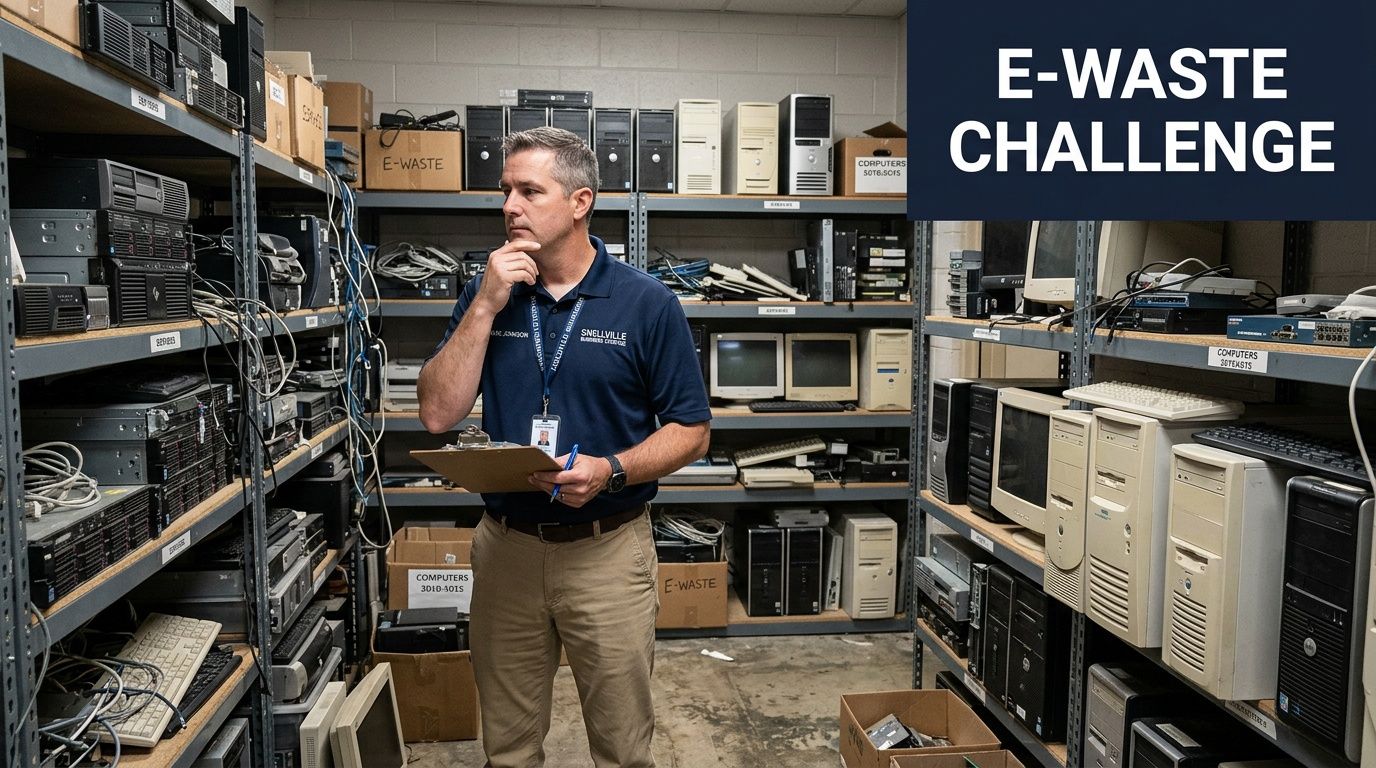
A lot of Snellville businesses end up with the same problem. A back room fills with retired desktops, failed laptops, old access points, a rack of decommissioned servers, and a few pieces of lab equipment nobody wants to move because nobody wants to own the risk.
That pile isn’t just clutter. It can contain regulated materials, patient or employee data, asset tags tied to audit records, and equipment that can’t safely go into ordinary junk removal. In Business Electronics Recycling Snellville Georgia, the difference between a clean project and a messy one usually comes down to planning before anything leaves the building.
Consumer recycling advice won’t help much when you’re dealing with a clinic refresh, a school lab cleanout, or a corporate IT shutdown. Snellville does have local recycling infrastructure, including Reworx Recycling in the area and the city recycling center, but business asset disposition often needs secure chain of custody, de-installation, packing, and documentation that a household drop-off guide never addresses. For organizations managing electronics in Gwinnett County, this overview of business electronics recycling in Gwinnett County is a useful starting point for understanding what a business-ready process should look like.
Your Guide to Business E-Waste in Snellville
A Snellville facility manager usually gets the call after the project slips. IT has finished a refresh. A lab has retired two analyzers and a centrifuge. Receiving needs the hallway cleared by Friday. Nobody has confirmed which devices still hold data, which units need decontamination review, or how the load gets out of the building without disrupting operations.
For a business, e-waste is an asset disposition project with compliance exposure. The work usually involves chain of custody, internal approvals, site access coordination, and records that stand up to an audit. Healthcare offices, schools, manufacturers, and research settings in Snellville deal with different risk profiles, but the pattern is the same. Once equipment leaves service, the company still owns the data, environmental, and handling risk until final disposition is documented.
Consumer recycling advice does not solve that problem. A household drop-off model does not cover HIPAA-sensitive devices, serialized asset reconciliation, or equipment that came out of controlled lab spaces. Companies that need a business-ready process can start with this overview of business electronics recycling in Gwinnett County, then match the service scope to their site, industry, and internal controls.
What businesses usually get wrong
The first mistake is grouping everything together as surplus. That creates avoidable delays because data-bearing equipment, universal waste, lab devices, and resale candidates do not move through the same workflow.
Loads that need closer control usually include:
- Data-bearing devices such as servers, laptops, desktops, copiers, and external drives
- Lab assets including analyzers, incubators, centrifuges, and bench electronics
- Mixed streams like batteries, cables, telecom gear, monitors, and network hardware
- Bulky equipment that needs de-installation before transport
The second mistake is assuming any recycler can handle commercial volume and documentation. Many can accept material. Fewer can manage staged pickups, on-site packing, serialized reporting, and destruction records that satisfy an IT director, compliance officer, or lab manager.
Why this matters in Snellville
Snellville businesses operate in a dense corridor of medical offices, schools, municipal facilities, and growing commercial sites. That means electronics retirement projects are rarely simple one-box drop-offs. They are office moves, clinic upgrades, district-wide refreshes, and lab cleanouts with tight access windows and little tolerance for mistakes.
Business recycling works when the project is treated like asset disposition, not trash removal.
The organizations that keep these jobs under control follow a disciplined process. They identify what they have, separate high-risk assets early, assign handling rules before pickup day, and require documentation at closeout. That is the difference between clearing space and reducing risk.
Preparing Your Assets for Compliant Recycling
A pickup goes off course long before the truck arrives. The usual failure points are internal. A server room inventory that does not match the floor, a centrifuge released without decontamination clearance, or a last-minute cart of loose lithium batteries can stop loading, extend labor time, and create avoidable compliance exposure.
Build an inventory that supports chain of custody
Perfection is not the goal. Control is.
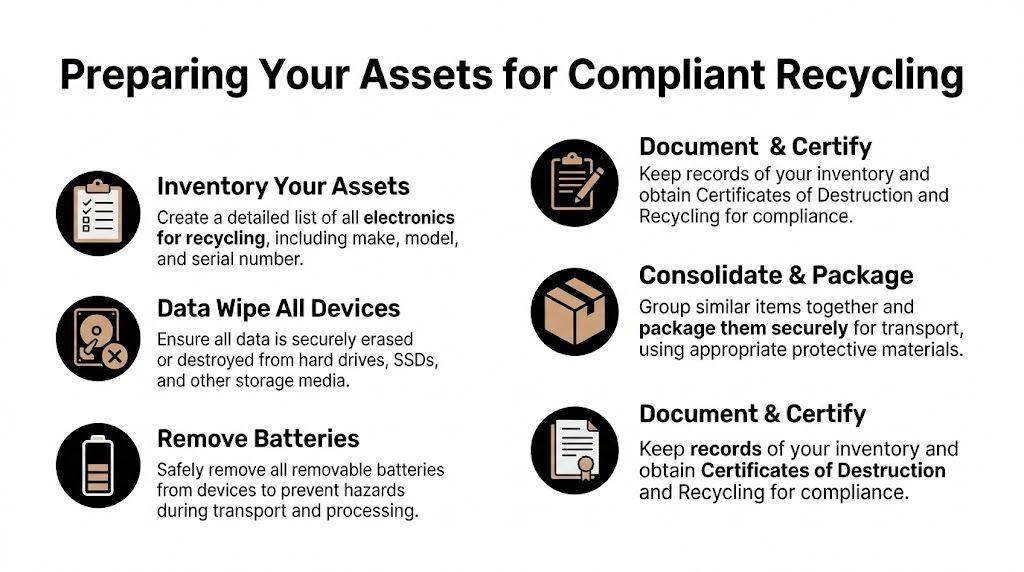
For a business pickup in Snellville, the inventory needs enough detail for scheduling, packing, data handling, and final reconciliation. If the list cannot tell a crew what must be counted, what must be wiped, and what needs special handling, it will not hold up under pressure.
A usable inventory should record:
- Item type. Server, laptop, switch, copier, incubator, freezer controller, analyzer.
- Make and model. This affects handling, resale potential, and downstream processing.
- Serial number or asset tag. Needed for audit trails and closeout records.
- Physical condition. Working, damaged, incomplete, locked, or nonfunctional.
- Data status. Note any device with internal storage or embedded memory.
- Handling notes. Rack-mounted, wall-mounted, bench-installed, fragile, oversized, or sourced from a controlled area.
That last field prevents expensive mistakes. A floor-standing printer and a pathology analyzer may weigh about the same, but they do not move through the same release process.
Put lab and clinical equipment on a separate release track
Business electronics recycling departs from consumer advice. Lab and medical equipment cannot be treated as standard office surplus just because it has a power cord.
Before pickup approval, confirm who signs off internally. That may be Environmental Health and Safety, a lab supervisor, infection control, biomedical engineering, or a compliance lead. The release check should cover residue, decontamination status, removed samples, internal chambers, labels, and any restrictions tied to prior use.
If a unit came from a clinical or research setting, document the clearance before it reaches the loading area. Do not expect a recycling crew to determine whether a device is safe to touch or transport.
Separate by risk before the truck is scheduled
Mixed staging slows everything down. It also creates chain-of-custody problems.
Keep data-bearing assets in one controlled group. Stage peripherals and low-risk scrap separately. Isolate batteries, toner, lamps, and any item that may trigger special packaging or transport rules. If your organization is aligning disposal work with broader digital security and resilience strategies, this separation step is one of the simplest ways to reduce avoidable exposure.
For data-bearing devices, assign a status before pickup day. Some organizations require serialized pickup counts. Others need drive removal logged by asset tag. Others approve transport only after devices are sealed by room or department. The method can vary. The rule is simple. Decide it in advance.
Remove hazards and loose contents before pickup
Crews lose time on preventable cleanup. So do facility teams.
Use a short prep checklist:
- Remove user papers and labels that still contain patient, student, employee, or client information.
- Take out loose batteries if the design allows safe removal.
- Empty drawers, trays, and compartments so no sharps, reagents, samples, or paperwork travel with the asset.
- Remove consumables such as cartridges, tubing, disposable cups, and test accessories.
- Set aside power cords and data cables unless they need to stay with a specific item for remarketing, testing, or identification.
For storage media, match the prep step to the approved destruction method. Teams that need documented sanitization standards should confirm the recycler's secure data destruction process for business electronics before assets leave the site.
Package for verification and safe handling
Neat pallets are not the same as controlled pallets.
If serial numbers must be scanned at pickup, keep tags visible. If monitors are stacked, protect screens and separate layers. If servers come out of racks, stage them by room, rack, or department so records still make sense after transport. If a lab instrument is fragile or recently cleared from a controlled environment, pack it individually and label it accordingly.
The trade-off is straightforward. Dense loading can lower transport cost, but overmixed pallets create exceptions, recounts, and disputes at closeout. For most business projects, control beats compression.
| Asset type | Best prep approach | Common mistake |
|---|---|---|
| Laptops and desktops | Group by type with tags visible | Mixing with low-value scrap |
| Servers and storage | Stage by rack, room, or department | Removing drives without updating records |
| Monitors | Stack upright or layered with protection | Loose loading that cracks screens |
| Lab instruments | Pack individually if fragile or regulated | Releasing equipment before decontamination clearance |
Snellville organizations that prepare assets this way usually get a faster pickup, cleaner documentation, and fewer surprises once reconciliation starts.
Mastering Data Security and Destruction
If a business asks only one hard question before recycling electronics, it should be this one. What happens to the data?
Deleting files isn’t data destruction. Reformatting a drive isn’t data destruction. A handwritten note that says “drives cleared” isn’t data destruction either. For healthcare groups, labs, schools, and private companies, that gap between assumption and proof is where real exposure starts.
Wiping and shredding serve different situations
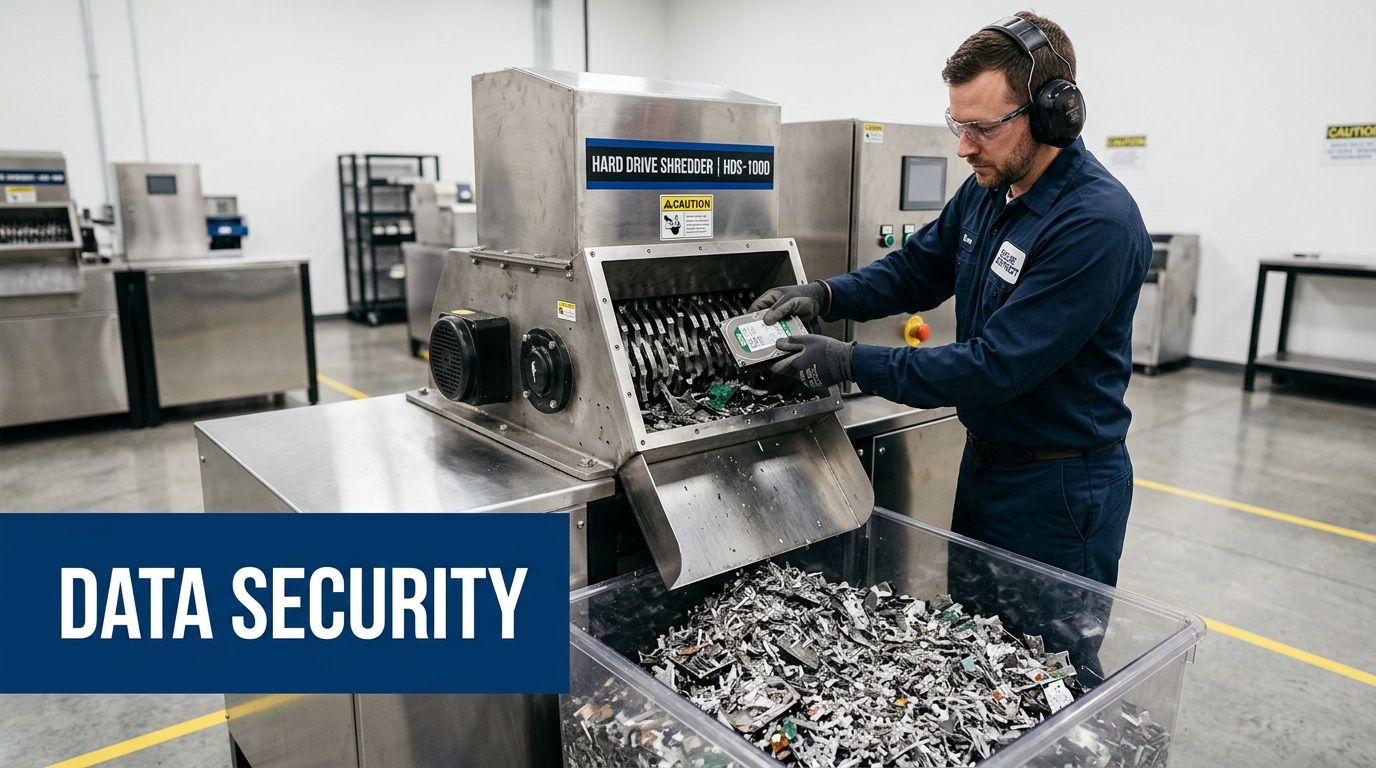
A sound business process uses the method that fits the media condition.
For functional drives, a thorough disposal methodology uses DoD 5220.22-M 3-pass wiping. For nonfunctional media, it uses NIST-compliant shredding, with 100% data unrecoverability as the standard outcome. The same overall process can also divert 80-90% of materials from landfills, which means the project supports security and environmental goals at the same time (Gwinnett County solid waste planning document).
That distinction matters in the field. A healthy batch of retired office laptops may be candidates for wiping. A failed RAID set, dead hard drive, or damaged SSD should go straight to destruction.
Where business teams create unnecessary risk
Most data failures happen before the truck arrives. I’ve seen the same weak points over and over in business cleanouts:
- Untracked drive removal from servers, with no record of which drive came from which asset
- Shared staging areas where wiped and non-wiped equipment sit together
- Assumptions about copier drives and multifunction devices that still store information
- Last-minute recycling decisions made by facilities teams without IT or compliance review
Healthcare and legal exposure raise the stakes further. A clinic or hospital can’t rely on casual assurances when a device may hold patient data. The same applies to HR records, student records, research files, and internal financial documents.
Businesses that want a clearer legal and operational framework should also review broader digital security and resilience strategies so disposal procedures aren’t isolated from the rest of the organization’s security planning.
A secure recycling project should leave no doubt about which media was wiped, which media was shredded, and who released it.
What to require from a recycling partner
Ask specific questions. If the answers are vague, keep looking.
A qualified vendor should be able to explain:
- How functional drives are sanitized
- When media is physically destroyed instead of wiped
- How serial numbers are tracked
- How chain of custody is maintained
- What certificate or reporting you receive after completion
If your project includes servers, laptops, workstations, backup appliances, or network storage, review examples of a proper secure data destruction process before approving a pickup. The security method is part of the service, not an optional add-on to think about later.
Navigating On-Site De-Installation and Pickup Logistics
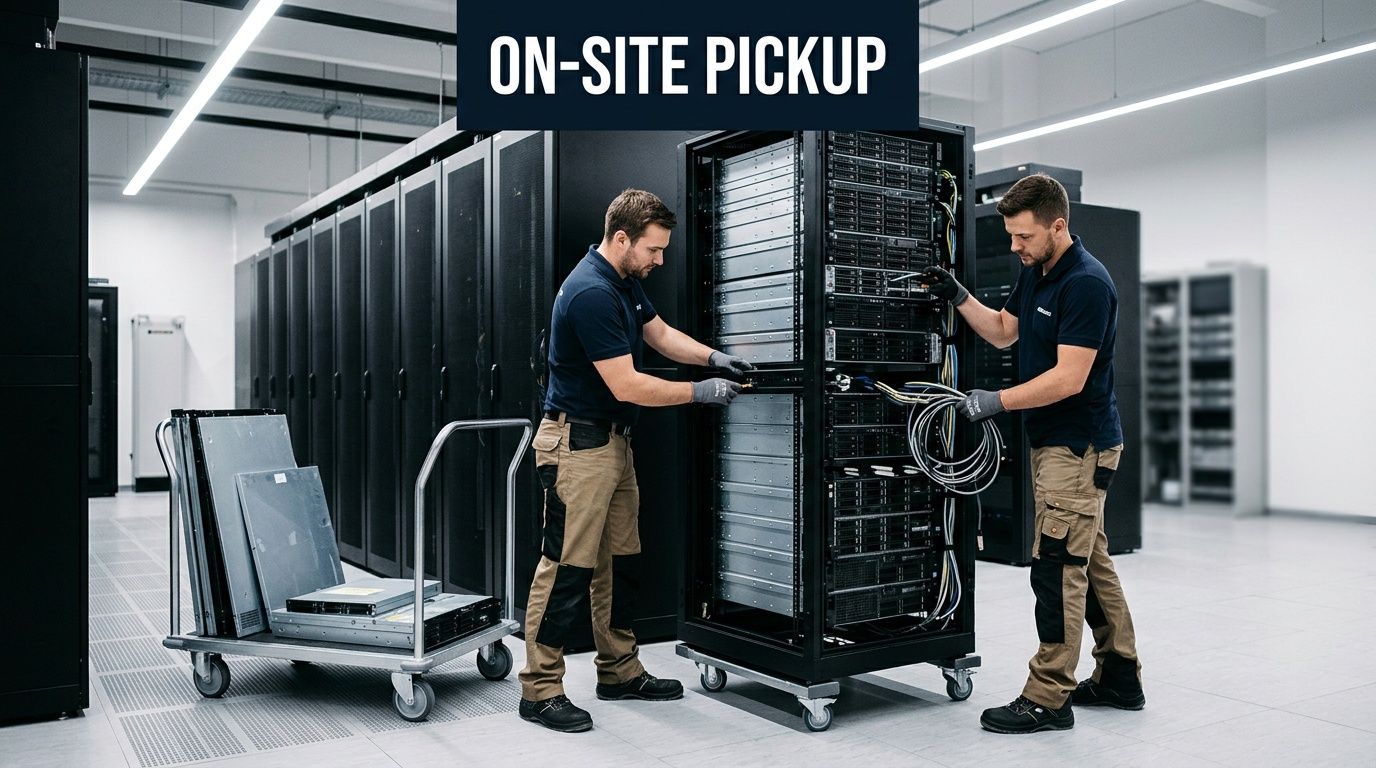
Most difficult recycling jobs aren’t difficult because of recycling. They’re difficult because of access, labor, coordination, and downtime.
A server room may be on the second floor with limited elevator time. A lab may require scheduled entry, internal escorts, and a documented release from staff. An office closure may involve cubicles, loading dock restrictions, and a narrow project window between move-out and landlord turnover.
Why integrated pickup matters
The cheapest-looking option often becomes the most expensive once your team starts supplying labor, packaging, and vehicles. Analysis cited for the Atlanta area found that firms often pay 40% more for e-waste disposal without access to a B2B fleet, and 65% of Gwinnett County lab and IT e-waste goes unrecycled because bulk disposal options aren’t clear (LoadUp summary citing Waste Dive analysis).
That lines up with what operations teams already know. DIY recycling breaks when the load gets heavy, specialized, or time-sensitive.
Build the pickup plan around the site
A smooth job usually follows a simple operational sequence.
Confirm scope before arrival
Send a final count by category, not just “electronics.” Distinguish office IT from lab gear. Flag anything that’s bolted down, unusually fragile, or in a restricted area.
Assign site roles
One person from facilities should own access. One person from IT should own data-bearing release. One person from the lab or department should answer questions about equipment history if specialty assets are involved.
Stage without losing control
Some projects benefit from central staging. Others don’t. If moving items into a common area breaks chain of custody or creates hallway congestion, crews should remove them directly from point of use.
The best pickup plan reduces touches. Every extra move increases the chance of breakage, confusion, or asset count errors.
What works better than multiple drop-off runs
For business electronics recycling in Snellville Georgia, scheduled fleet pickup usually wins for four reasons:
- It protects staff time. Employees stay focused on operations instead of hauling scrap.
- It reduces handling damage. Fragile or awkward assets are packed and moved once.
- It fits larger projects. Labs, schools, and offices rarely clear out in passenger vehicles.
- It supports documentation. Pickup crews can reconcile what was removed against the release list.
If your project includes office closures, server refreshes, or lab decommission work, a dedicated pickup program for free business electronics pickup in Gwinnett County gives you a better model than piecing together staff vehicles and public drop-off rules.
Understanding Documentation Costs and Timelines
Once the equipment leaves the site, the paperwork becomes the proof. Without that record, you’re relying on memory and emails when someone later asks what was removed, how data was destroyed, and where the material went.
The documents that matter
For business recycling, two records carry the most weight.
One is a Certificate of Destruction for data-bearing media. The other is a Certificate of Recycling or equivalent downstream record showing the disposition path. Exact formats vary, but the principle doesn’t. You need a documented audit trail.
A weak vendor often treats documentation as an afterthought. A strong vendor treats it as part of the deliverable.
Why certification changes the risk profile
A 2025 EPA report noted that 70% of U.S. medical labs mismanage e-waste data risks due to inadequate vendor certification. The same source says partnering with a certified B2B vendor can reduce breach risks by 80% and ensure over 95% of assets are securely recycled (PayMore Snellville page citing EPA-related data).
That doesn’t just matter to hospitals. It matters to any organization that may face an internal audit, insurer question, legal hold review, or regulator inquiry.
How to think about costs
Pricing varies by the mix of assets, labor needs, access conditions, and whether there’s remarketable equipment in the load. The right question isn’t “Is there a free option?” The right question is “What costs am I avoiding by doing this correctly?”
Compare quotes using criteria like these:
| Evaluation point | Why it matters |
|---|---|
| On-site labor included | Prevents surprise handling fees |
| Data destruction included | Avoids separate vendor coordination |
| Asset reporting available | Helps close internal records |
| Certificates provided | Supports audits and compliance |
| Pickup timing defined | Reduces project drift |
Reviewing a sample certificate of destruction helps procurement, compliance, and IT align before the project starts.
Timeline expectations
Simple office pickups can move quickly. Complex projects take longer when they involve room-by-room coordination, de-installation, internal release approvals, or specialty packing.
The useful planning rule is this. Fast projects still need clean inventories and clear access. Slow projects usually become slow because those two things were missing.
Meeting Snellville Regulations and Sustainability Goals
A Snellville facility cleanout can go off track fast when retired PCs, backup drives, battery carts, and old lab devices all get treated like ordinary recycling. For a business, that creates three separate problems at once. Waste handling rules, internal compliance requirements, and sustainability reporting rarely line up on their own.
Local waste rules still matter. The City of Snellville’s solid waste bid materials show how contamination affects municipal handling costs and processing quality, which is one reason mixed electronics should stay out of standard trash and single-stream recycling flows (City of Snellville solid waste bid materials).
For commercial sites, the practical baseline is simple. Keep data-bearing equipment, batteries, and electronic devices in a controlled stream from the moment they are removed from service. Do not assign office staff to improvise drop-offs unless the receiving site clearly accepts the specific material. That mistake wastes labor and often sends regulated or higher-risk assets back into storage.
The bigger issue is that minimum local compliance does not close the B2B risk. Hospitals, clinics, and dental offices may need HIPAA-aligned destruction records. Labs may need decontamination review before pickup. Multi-floor offices and schools may need coordinated removal that keeps docks, elevators, and work areas open. Consumer recycling advice usually skips those details because households do not deal with chain of custody, asset registers, or internal audit trails.
Sustainability goals should be handled the same way. A business gets better results when recycling is set up as a controlled disposition process instead of a cleanup event. Separate reusable equipment from scrap. Route hazardous components to qualified downstream processors. Keep enough reporting to support ESG summaries, board questions, and procurement reviews.
That standard is easier to maintain when pickups are planned before storage rooms overflow. If your team needs a documented commercial process, use this business electronics pickup request form to set the scope, timing, and handling requirements before the project turns urgent.
Well-run asset disposition supports compliance and sustainability at the same time. It reduces landfill exposure, protects sensitive information, and gives your Snellville operation a record of what left the site, how it was handled, and where it went.
Take the Next Step in Responsible Asset Disposition
Business electronics recycling in Snellville works best when the job is handled in four parts. Prepare the assets correctly. Secure the data. Move everything with a controlled pickup plan. Keep the documentation.
That approach protects more than storage space. It protects patient information, employee records, research environments, facility schedules, and internal audit trails. It also keeps recyclable materials in the right downstream channels instead of pushing them into junk streams that were never designed for commercial electronics.
For facility managers, IT directors, lab supervisors, and operations leaders, the practical move is to standardize this process before the next cleanup becomes urgent. If your site has aging servers, retired desktops, failed lab instruments, or mixed electronic surplus, get the inventory together and schedule the project before the pile gets harder to control.
When you’re ready to move, use a dedicated request form to schedule a pickup and turn a storage-room problem into a documented, compliant closeout.
Scientific Equipment Disposal helps Atlanta-area organizations manage electronics and lab asset disposition with secure data destruction, on-site pickup, de-installation, and certified recycling. If your team in Snellville needs a practical path for servers, computers, storage devices, lab equipment, or mixed e-waste, contact Scientific Equipment Disposal to discuss your project.