Scientific Equipment Removal for Labs and Universities: Safe, Efficient Nationwide & Local Service

Decommissioning a lab might seem chaotic, but a solid framework turns scientific equipment removal for labs and universities into a straightforward, manageable project. We see it all the time, from local university labs to nationwide research networks. The whole process really comes down to four key pillars: building a bulletproof inventory, nailing the compliance paperwork, locking down your logistics, and ensuring sustainable disposal. Think of this as your roadmap, guiding you from the moment you decide to clear a lab to the final certificates of destruction.
Your Framework for Lab Equipment Removal
Whether you’re in charge of a single university lab in Atlanta or a whole network of research facilities spanning multiple states, the first step is always understanding the core components of the job. This isn't just about moving boxes from point A to point B. It’s a strategic operation that involves valuable assets, highly sensitive data, and often, hazardous materials. A successful project is one where every single stage is handled with precision.
The job is so much more than just the physical removal of equipment. You need a detailed plan to tackle real-world challenges, like protecting confidential research data and properly managing biohazardous materials before they ever leave the room. When you're dealing with equipment that holds patient information or proprietary research, the data security component is absolutely critical. You can see our complete guide on https://www.scientificequipmentdisposal.com/it-asset-disposal/ to get a better handle on what's required for securing digital information nationwide.
The Four Pillars of a Successful Project
A comprehensive framework is the only way to make sure nothing gets missed. We’ve found that each of these pillars supports the next, which creates a process that is both seamless and fully compliant, whether you're operating locally or across the country.
- Inventory and Assessment: Don’t just make a list. You need to tag every single asset, noting its condition, decontamination status, and whether it contains any data-bearing components.
- Compliance and Documentation: This is where you navigate the maze of EPA, HIPAA, and other local and federal regulations. Prepare meticulous paperwork, including chain-of-custody forms for every item.
- Secure Logistics: This involves planning for professional de-installation, expert packing, and secure transport. When planning your lab's equipment removal, it's wise to consider different business equipment storage solutions for any items that aren't being immediately disposed of or transferred.
- Sustainable Disposal: You must partner with certified recyclers who can provide verifiable certificates of destruction. This is your proof of responsible and legal disposition.
This structured approach is no longer just a "best practice"—it's a necessity. The global market for lab equipment disposal is on track to grow from $2,056.5 million in 2025 to $3,500 million by 2035. This growth is almost entirely driven by stricter regulations and a bigger push for sustainability.
This framework sets you up for the practical, step-by-step advice we’ll cover next. Following it will protect your institution from liability and help you complete your lab transition efficiently and on schedule, no matter your location.
Key Phases of Lab Equipment Removal
To bring these pillars to life, it helps to see how they fit into a typical project timeline. We've broken down the process into key phases that we follow for every lab or university decommissioning job, from a single site to a nationwide portfolio.
| Phase | Key Activities | Primary Goal |
|---|---|---|
| Phase 1: Planning & Inventory | Create a master asset list, tag all equipment, and assess the condition and decontamination needs of each item. | To establish a complete and accurate record of all assets slated for removal and define the project scope. |
| Phase 2: Compliance & Documentation | Prepare decontamination certificates, chain-of-custody forms, and data destruction logs. Verify all local, state, and federal regulations. | To ensure the entire project is fully compliant with all legal, safety, and environmental requirements. |
| Phase 3: Secure Logistics | Schedule on-site de-installation, professional packing, and secure transportation with a qualified nationwide or local vendor. | To safely and securely move all assets from the facility to their final destination without damage or data breaches. |
| Phase 4: Final Disposition | Execute data destruction, sort assets for recycling or resale, and obtain certificates of destruction and recycling. | To provide documented proof of responsible disposal and close out the project with complete, auditable records. |
Each of these phases is critical for a smooth and compliant outcome. Skipping or rushing a step, especially in the early planning stages, almost always leads to costly delays and potential compliance issues down the road.
Building Your Decommissioning Playbook
A successful scientific equipment removal for labs and universities is won long before the first centrifuge is ever unplugged. The real work happens in the planning phase, and it all boils down to creating a detailed decommissioning playbook.
This isn't just a simple to-do list. Think of it as your project’s command center. It’s the single source of truth that keeps everyone, from your on-site lab managers in cities like New York or Houston to nationwide facility coordinators, on the same page. A solid playbook is the foundation for a smooth, compliant, and defensible process.
Crafting the Master Asset Inventory
First things first: you need an exhaustive inventory. Every single piece of equipment, from a massive fume hood down to the smallest pipette, has to be accounted for.
For each item, you’ll need to assign a tag and log the critical details that determine exactly how it needs to be handled, cleaned, and ultimately disposed of. This isn’t optional—it’s the cornerstone of the entire project. This detailed log is what your logistics partner will rely on, what keeps you compliant with EHS, and what protects your institution from major liabilities down the road.
A single poorly documented piece of equipment can derail the whole removal. For a multi-campus university system with locations across the United States, a good entry looks something like this:
- Asset ID: A unique tracker you create (e.g., UATL-CHEM-001).
- Description: The basics—make, model, and serial number (e.g., Agilent 7890B Gas Chromatograph).
- Decontamination Status: A signed and dated tag proving the item has been cleaned of all hazards. This is absolutely critical.
- Hazard Assessment: A quick note on any specific chemical, biological, or radiological materials it was exposed to.
- Data-Bearing: A simple Yes/No flag for anything with a hard drive or memory that needs data sanitization.
We see this all the time: an item shows up at a disposal facility without a clear, signed decontamination form. It's almost always rejected on the spot. This creates a logistical nightmare and racks up unexpected costs for the university, whether they are in California, Texas, or Florida.
Demystifying the Web of Compliance and Documentation
Once your inventory is built, it's time to tackle the regulations. This is the part where most labs and universities start to feel overwhelmed, but if you break it down, it becomes much more manageable.
Your documentation is your shield. It's not just about ticking boxes to avoid a fine; it’s about building a clear, auditable trail that proves you did everything by the book at every single stage of the scientific equipment removal for labs and universities.
Essential Compliance Documents
Get these documents prepared and organized ahead of time. Having them ready to go ensures a seamless handover to your removal partner and prevents last-minute scrambles.
Decontamination Forms: This is, without a doubt, the most important document in the entire process. A completed form must be physically attached to each piece of equipment, certifying it was cleaned according to your institution's EHS protocols. If you're looking for more background, our guide on the proper sterilization of equipment offers some great context.
Chain-of-Custody (CoC) Forms: The CoC is a legal document. It tracks an asset from the second it leaves your lab to its final recycling or disposal. It creates an unbroken chain of responsibility by logging every person who handles the equipment.
Data Destruction Logs: For any device you flagged as "Data-Bearing," you need a log detailing how and when its data was wiped or destroyed. Whether you used multi-pass software wiping or physical shredding, this record is your proof of compliance for HIPAA and other data privacy laws.
By putting together this playbook—your master inventory and your compliance file—you turn what could be a chaotic cleanout into a controlled, predictable, and fully compliant operation, whether for a local lab or a nationwide project.
Executing a Secure and Compliant Removal
You’ve done the planning, now it’s time to get boots on the ground. This is where your careful preparation pays off, turning what could be a chaotic mess into a smooth, controlled operation. The execution phase is all about logistics—safely getting equipment out of your facility and ensuring everything, especially items with data, is handled securely from your loading dock to its final destination, anywhere in the country.
This isn’t just a job for heavy lifters. It requires a tight, coordinated effort between your team and your removal partner. A professional vendor acts like an extension of your own staff, using your master inventory list as their roadmap. They’ll show up with the right tools, packing materials, and a clear plan for every piece of equipment, from a simple lab bench to a highly sensitive analytical instrument.
Data Security Is Non-Negotiable
When it comes to scientific equipment removal for labs and universities, data security isn’t just an add-on; it’s everything. Any device with a hard drive or internal memory—whether it’s a complex mass spectrometer or a basic office PC—is a potential data breach waiting to happen. For universities and medical labs, that could mean exposing sensitive research, intellectual property, or protected health information (PHI), which can lead to staggering fines under regulations like HIPAA.
A single unsecured hard drive can snowball into a major compliance disaster, costing you millions in fines and torpedoing your reputation. The most common mistake we see is assuming a device is "too old" to hold valuable data. This risk is the same whether your lab is in a major hub like Chicago or a smaller college town.
That’s why you absolutely must get irrefutable proof that all data has been permanently destroyed before any equipment is recycled or resold. There's no room for error here.
Choosing the Right Data Destruction Method
Not all data sanitization is the same. The method you need depends on the media type, its condition, and your own internal security rules. You’ll want to work with a vendor that offers multiple options so you can match the right level of security to each asset.
Here’s a quick breakdown of the two main methods:
| Method | Best For | How It Works | Key Benefit |
|---|---|---|---|
| DoD 3-Pass Wipe | Functional hard drives that could be reused or resold. | A software-based process overwrites the entire drive three times with patterns of ones and zeros, making the original data forensically unrecoverable. | Preserves the drive's value for remarketing while guaranteeing data is gone for good. |
| Physical Shredding | Non-functional, damaged, or older hard drives and other media. | The drive is fed into an industrial shredder that grinds it into small, unrecognizable metal fragments. | Offers the ultimate, visible proof of destruction. There is zero chance of data recovery. |
For most institutions, a hybrid approach makes the most sense. Newer, functional devices can undergo a DoD-compliant wipe to preserve their value for resale. Older or failed drives go straight to the shredder for total peace of mind.
The whole process, from de-installation and packing to transport, requires a rock-solid chain of custody. It starts on-site with the removal team systematically packing and labeling every item against your inventory log. Delicate instruments like mass spectrometers or electron microscopes demand custom crating and anti-static materials to prevent damage in transit. To see what this looks like in practice, our guide on laboratory cleanout services for universities and labs digs deeper into the step-by-step process.
This flowchart maps out the core steps for a compliant lab decommissioning.
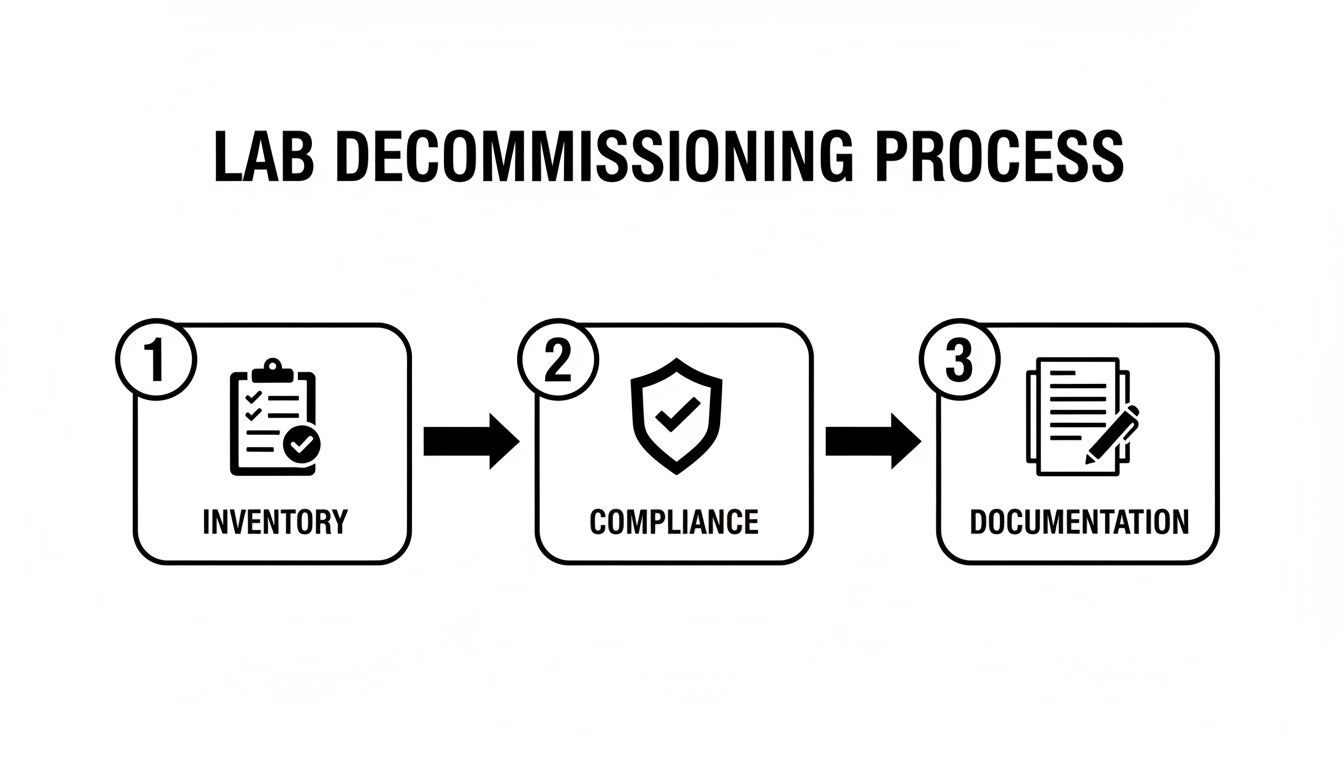
As you can see, a successful project is built on three pillars: a thorough inventory, strict compliance checks, and meticulous documentation. Nail these steps before anything leaves your facility, and you’ll create an auditable and secure process from start to finish.
Navigating Responsible Disposal and Recycling
You've done the hard work of planning, tagging, and getting everything ready for transport. So, where does all that equipment actually go? This final step is critical. Choosing the right disposal partner is where your institution’s liability is either fully resolved or, frankly, just beginning.
There’s a world of difference between a standard e-waste hauler and a true specialist in scientific equipment. A general recycler might just see a centrifuge as scrap metal. A specialist, on the other hand, understands it’s full of complex electronics, might have hazardous residues, and contains valuable, recoverable metals.
Making the right choice here is what ensures none of your assets end up in a landfill, creating a legal and environmental headache down the road, whether your facility is in a major metropolitan area or a remote location.
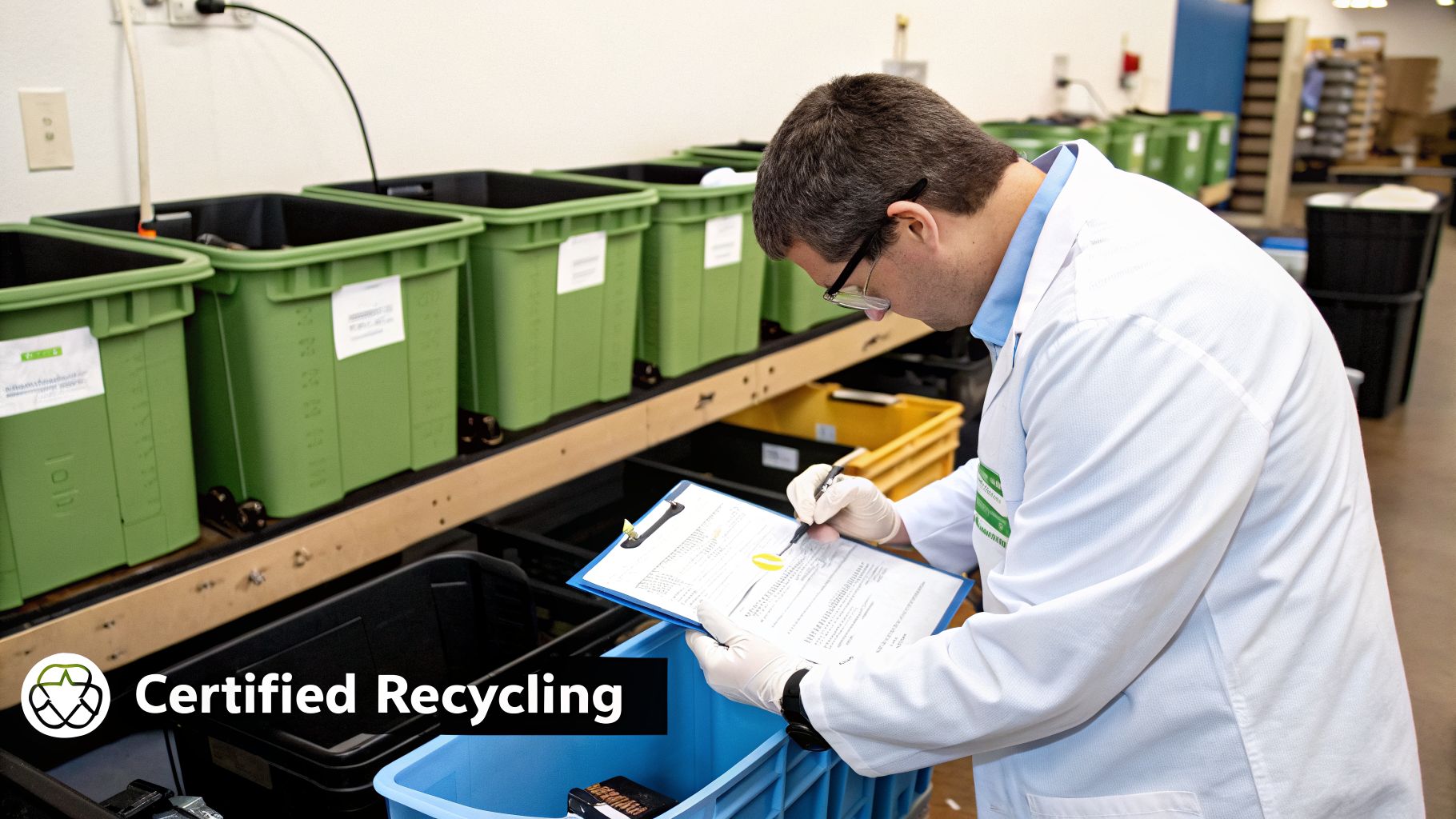
The Importance of Certified Recycling
You need a vendor who can prove they do things by the book. This is where third-party certifications are your best friend—they're your independent verification that a recycler meets the highest standards for environmental safety, data security, and worker health.
Don't partner with anyone who can't show you these credentials:
- R2 (Responsible Recycling): This is the gold standard for electronics recycling. An R2-certified facility is regularly audited to prove it manages materials correctly, secures data, and tracks every component downstream.
- e-Stewards: Another highly respected global certification, e-Stewards has a major focus on preventing hazardous e-waste from being exported to developing nations. Its requirements are known for being incredibly strict.
These aren't just logos to put on a website. They're a real commitment to ethical operations. They give you solid proof that your retired equipment won’t become someone else’s problem. Our own guide on EPA-compliant laboratory equipment disposal digs deeper into why these standards matter.
A vendor’s certifications are your safeguard against downstream liability. Without them, you have no verifiable proof that your hazardous or data-bearing assets were handled correctly after they left your sight.
Closing the Loop with Documentation
Whether your lab is in a local Atlanta suburb or part of a university system spanning multiple states, the job isn’t done until the paperwork is in your hands.
This final documentation is your permanent, auditable record showing that every single asset was managed responsibly. You should always insist on receiving these two key documents from your disposal partner:
- Certificates of Recycling: This report details the types and weights of all materials that were processed, confirming nothing went to a landfill.
- Certificates of Destruction: This is absolutely essential for any equipment that held sensitive information. It certifies that hard drives and other media were physically destroyed or sanitized to a specific standard, like DoD 5220.22-M.
These certificates officially close the chain of custody loop. They are your ultimate proof of due diligence and your best defense in any audit, showing your institution met all its environmental and data security obligations.
How to Choose the Right Decommissioning Partner
Choosing a partner for your scientific equipment removal for labs and universities is one of the most critical decisions you'll make in the entire decommissioning process. This isn't just about hiring someone to haul away old machines. It's about finding a specialist you can trust with your institution's valuable assets, highly sensitive data, and regulatory compliance on a local or national scale.
I've seen it firsthand: the wrong choice can quickly spiral into a nightmare of data breaches, hefty compliance fines, and even environmental liability. A true partner knows the lab environment inside and out. They should be able to answer tough, specific questions about their protocols long before they ever step foot in your facility. This vetting process is your single most important tool for managing risk.
Key Questions to Ask Potential Vendors
Don't be shy about digging into the details. A qualified, professional partner will welcome your questions as a chance to prove their expertise. When you start your research, look at how established specialists like Southern Tier Resources present their services to get a feel for what a professional nationwide operation looks like.
Here are the critical questions we recommend asking any potential vendor:
- Lab-Specific Experience: "Can you share some case studies or provide references from other labs or universities you've decommissioned, both locally and in other states?"
- Logistics and Fleet: "Do you use your own trucks and team for transport nationwide, or do you subcontract the work?" For institutions in major hubs like Atlanta, Boston, or San Francisco, an in-house fleet gives you far more security and control over the chain of custody.
- Data Security Protocols: "Walk me through your data sanitization process. Can you show me what a sample certificate of destruction from your company looks like?"
- Compliance and Certifications: "What industry certifications do you hold, like R2 or e-Stewards? Can you provide a certificate of insurance that includes general liability and data breach coverage?"
Any hesitation or inability to give you clear, documented answers to these questions is a massive red flag. A pro will have this information ready to go and be completely transparent about their processes.
Differentiating Service Providers
Not all removal companies are built the same. When it comes to a complex lab environment, the difference between a general mover and a true specialist is night and day. Knowing what to look for is crucial to protecting your institution, whether you need local service or a partner with a national footprint.
To help you choose the right partner, here's a quick comparison of the different types of vendors you might encounter.
Vendor Type Comparison for Lab Equipment Removal
| Service | General Movers | Standard E-Waste Recycler | Specialized Lab Removal Service (Nationwide & Local) |
|---|---|---|---|
| Hazardous Materials | No training or certification for handling biohazards or residues. | Basic handling of e-waste, but not lab-specific contaminants. | Trained team follows strict protocols for decontaminated equipment. |
| Data Security | No data destruction services. This is a significant security risk. | May offer basic drive wiping, but often lacks auditable reports. | Provides certified, documented data destruction (wiping and shredding) to HIPAA standards. |
| Logistics | General packing supplies, no specialized gear for sensitive instruments. | Focus is on bulk transport, not careful de-installation of lab gear. | Uses custom crating, anti-static materials, and maintains a strict chain of custody. |
| Final Documentation | Provides a simple bill of lading. | Offers a basic recycling receipt. | Delivers auditable Certificates of Destruction and Recycling for full compliance. |
At the end of the day, selecting a specialized partner for scientific equipment removal for labs and universities is an investment in security, compliance, and your own peace of mind. It’s the only way to ensure the project is handled correctly from start to finish, protecting your institution’s resources and good name.
Common Questions on Scientific Equipment Removal
No matter how well you plan a lab cleanout, questions always pop up. We get it. When it comes to scientific equipment removal for labs and universities, facility coordinators and lab managers often run into the same handful of concerns.
Here are the straight answers to the questions we hear most, both from our local partners in Atlanta and from institutions nationwide.
How Do We Manage Contaminated Equipment
This is the big one, and it's all about safety and compliance. Any equipment that has touched biological or chemical materials must be decontaminated before it goes anywhere. This isn't optional, regardless of your state's regulations.
Your own certified personnel have to do the cleaning according to your EHS rules. They then need to sign and date a decontamination form and stick it directly on the machine. This is your proof of process. Make sure your removal partner knows about any potential risks, but never, ever let uncertified equipment leave your building.
What Documentation Should We Get From Our Vendor
Your job isn't over when the equipment is loaded onto the truck. You need a paper trail. A professional disposal partner must give you a full documentation package that proves you did everything by the book.
Don't settle for less. You should always receive:
- Chain-of-Custody Records: A detailed log that follows every single asset from your lab door to its final destination.
- Certificates of Data Destruction: If a machine holds sensitive data, this document is your proof it was sanitized or destroyed according to standards like DoD 5220.22-M.
- Certificates of Recycling or Disposal: This is the final piece of the puzzle, showing your assets were handled legally and responsibly—not dumped in a landfill.
Think of this paperwork as your compliance insurance policy. These documents are your official record for audits and demonstrate that you met all legal, security, and environmental obligations for every item removed.
Can We Recover Value From Old Lab Equipment
Everyone hopes to get some cash back, but the reality is a bit more complicated. For newer, in-demand equipment, the answer is sometimes yes. Some specialized vendors have asset value recovery programs where they can refurbish and resell equipment, which can help offset your removal costs.
But for most older, highly specialized, or broken items, the value isn't in the resale. The real ROI is getting a compliant, secure, and documented recycling process that shields your institution from any future liability, whether you're a local college or a major national research organization.
How Long Does a Typical Lab Decommissioning Take
The timeline can swing wildly depending on the size of the job. Cleaning out a small, single-room lab might just take a couple of days. Decommissioning an entire research building as part of a nationwide campus consolidation? That could easily be a multi-week or even months-long project.
Honestly, the longest part is usually the prep work—the inventory, planning, and documentation. Once you have a solid plan and your vendor is locked in, the physical removal is often the quickest part of the whole process. Always talk to a specialist to get a real timeline based on your specific project.
Navigating a lab cleanout requires a partner who understands the unique challenges of scientific environments. For universities, hospitals, and research facilities from the Atlanta area to locations nationwide, Scientific Equipment Disposal provides secure, compliant, and sustainable solutions for your equipment removal needs. Visit https://www.scientificequipmentdisposal.com to learn how we can help with your next local or national project.