A Resident’s Guide to the Cobb County Waste Station in Georgia

If you've got more junk than your curbside bin can handle, the Cobb County Waste Station in Georgia is your go-to spot. This public facility is officially a "transfer station," which is just the county's central drop-off point for all the household trash, bulky items, and yard debris that won't fit in your weekly pickup.
It’s located right in Marietta, Georgia, and is a critical part of how the county manages waste for its residents and the surrounding Atlanta metropolitan area.
Your First Trip to the Cobb County Waste Station
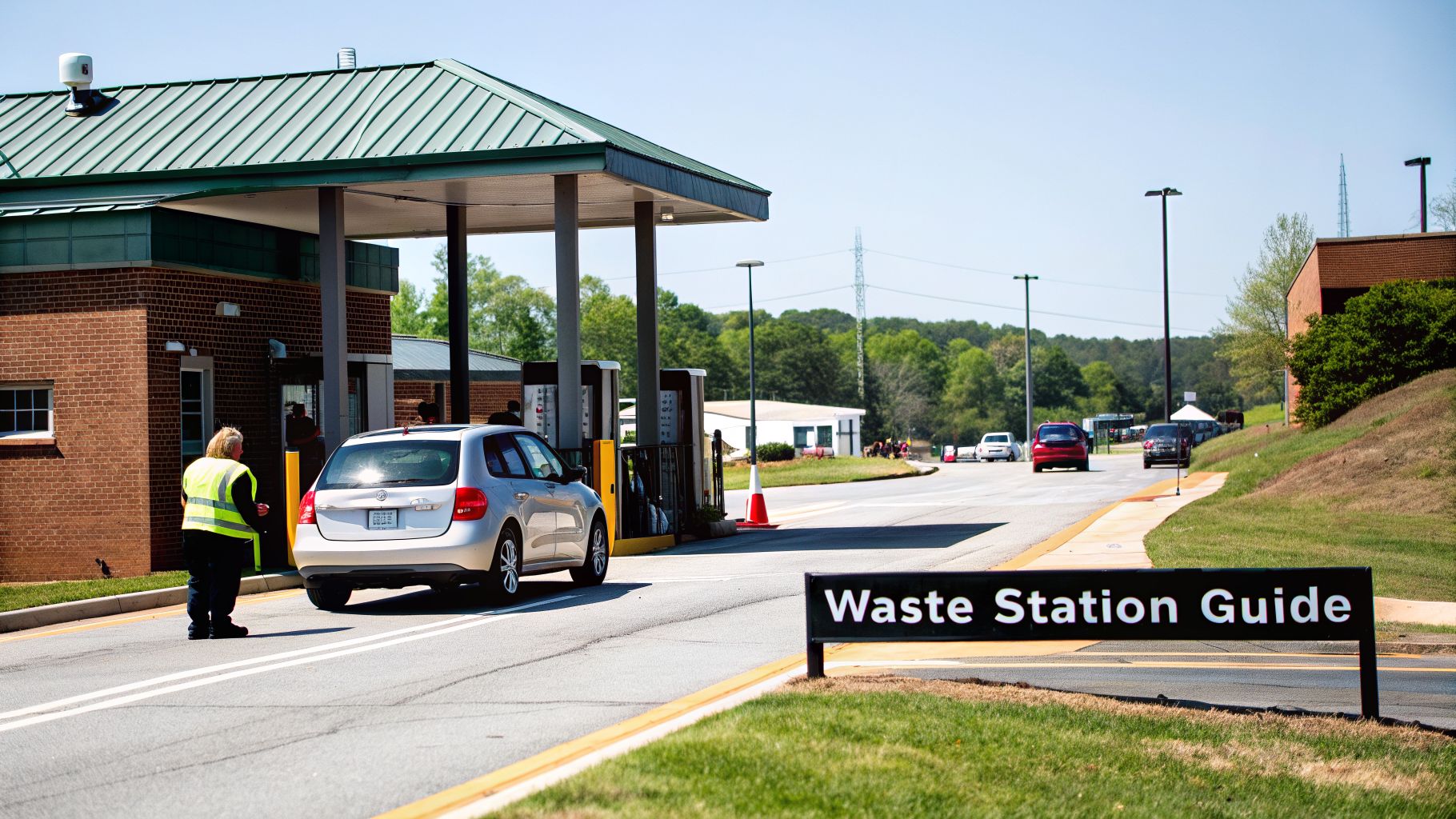
Dropping off waste yourself might seem like a hassle, but the system is actually designed for efficiency. It helps to understand that this isn't a landfill.
Think of a transfer station as a sorting hub. Waste comes in from residents, gets packed into much larger loads, and is then hauled off to a regional landfill. It’s far more efficient than having hundreds of smaller cars and trucks driving to a final disposal site miles away. For those looking at other local options in the region, you can get more context from our guide on the nearby Pine Bluff Landfill in Canton.
Managed by GFL Environmental since 2009, the Cobb County Transfer Station is a serious operation. It processes an incredible 90,000 tons of waste every year, serving a population of over 763,000 residents in an environmentally sound way. This facility plays a crucial role in waste management infrastructure, not just for Cobb County but for the greater Atlanta, GA, area as well.
Who Can Use the Facility?
First things first: eligibility. The Cobb County waste station is meant specifically for residents and certain businesses inside the county. You'll need to prove you live there, so have a driver's license or a utility bill with your Cobb County, GA address ready. This keeps the service available for the community it was built to support.
One of the most common questions we hear is about business use. While some small commercial outfits might be allowed, the station is not equipped for large-scale commercial, industrial, or regulated waste. If you're a business, always call ahead to see if you're eligible.
To make your visit as smooth as possible, we’ve put together the essential details in one place.
Here’s a quick summary of what you need to know before you go.
Cobb County Waste Station At-a-Glance
| Information | Details |
|---|---|
| Official Name | Cobb County Transfer Station |
| Location | 1897 County Services Pkwy, Marietta, GA 30008, USA |
| Phone | (770) 486-3529 |
| Operator | GFL Environmental |
| Hours of Operation | Monday – Friday: 7:00 AM – 5:00 PM; Saturday: 7:00 AM – 4:00 PM |
Keep this information handy, and you’ll find that your trip to the transfer station is quick and straightforward.
What to Bring and What to Leave Behind
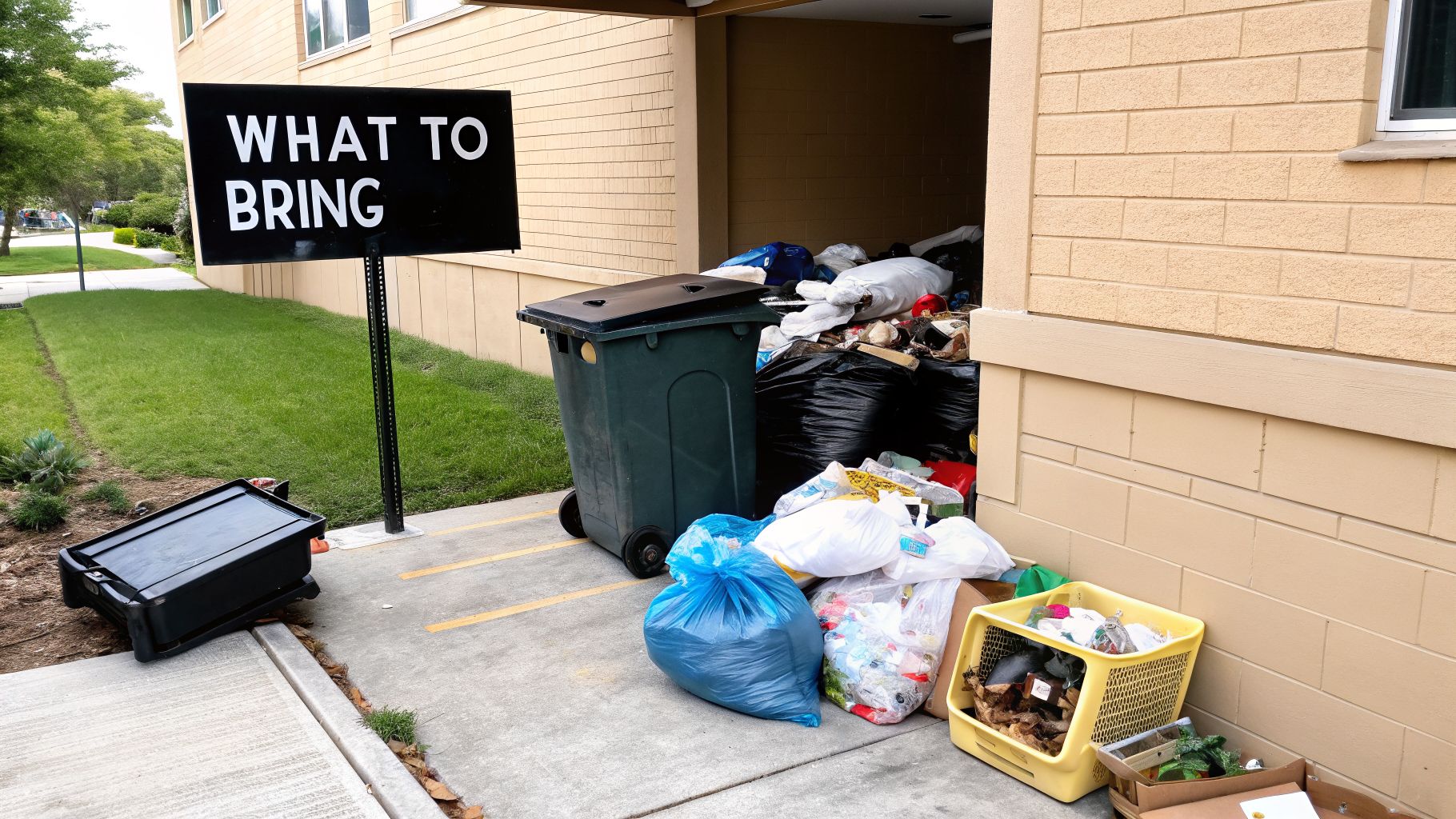
The most important part of using the Cobb County Waste Station is knowing what to bring—and what to leave at home. Showing up with the wrong materials is the fastest way to get turned away, wasting your time and effort. The facility is really meant for common household waste that’s just too big or bulky for your weekly curbside pickup in Marietta, GA and other Cobb County cities.
Think of it as the go-to spot for everything that won't fit in your regular trash can. It’s perfect for that old couch that’s seen better days, the pile of branches from a weekend of yard work, or the clutter you finally cleared out of the garage.
Accepted Household and Bulky Items
To make your drop-off as smooth as possible, it helps to know exactly what the station is set up to handle. For the most part, they accept a wide range of standard residential waste.
Here’s what you can generally bring:
- Household Trash: The everyday garbage that overflowed your weekly bin.
- Bulky Furniture: Things like sofas, mattresses, chairs, and tables that are too large for regular collection.
- Yard Debris: Branches, leaves, and grass clippings from your own property.
- Appliances: Stoves, washers, and dryers. Just be aware that items containing refrigerant might have special handling rules.
This list covers what most residents need to dispose of. However, the system's success hinges on people sorting their waste correctly. It’s a challenge the county is trying to tackle head-on, especially since only 17% of Cobb County households currently recycle on a regular basis. Officials are hoping to boost that number with investments like the renovated County Services Parkway drop-off center, which you can read more about on Waste360.
Critical Note on Electronics: Dropping off a personal or work computer at a public facility is like leaving a filing cabinet unlocked in a public park. The waste station has significant limitations on e-waste and provides no certified data destruction, creating a serious security risk you shouldn't take.
Prohibited Materials You Must Leave at Home
Knowing what’s banned is just as crucial as knowing what’s allowed. The Cobb County Waste Station is not equipped to process hazardous, industrial, or certain regulated materials. Bringing these items here creates a safety and environmental hazard.
Do not bring any of the following:
- Hazardous Waste: This includes chemicals, pesticides, paint, solvents, and motor oil.
- Liquids of Any Kind: No old cooking oil, cleaning solutions, or anything else in liquid form.
- Medical or Biohazardous Waste: These materials require specialized, compliant disposal and are never accepted.
- Asbestos and Lead-Contaminated Materials: These must be handled by professional abatement and disposal services.
- Large-Scale Construction Debris: While a few scraps from a small DIY project may be fine, waste from a major renovation is not permitted.
For any business, lab, or institution, these restrictions are a clear signal that you need a dedicated disposal partner for your specialized assets. If you’re dealing with anything from old lab instruments to IT equipment, see our detailed guide on what we accept for commercial disposal.
How to Prepare for a Smooth and Cost-Effective Visit
Showing up to the Cobb County waste station unprepared is a recipe for a long, frustrating day. A bit of planning ensures your visit is quick, easy, and as affordable as possible, saving you from unexpected charges or delays at the gate.
The first thing to understand is how they charge you. Fees are calculated by weight. You’ll drive your vehicle onto a large industrial scale when you arrive and then again right before you leave. The difference between the two weights determines your final disposal fee.
Mastering the Drop-Off Process
Once you know the lay of the land, getting in and out of the facility is straightforward. The entire process, from the scale house to the "tipping floor" where you actually unload your waste, is designed to keep traffic moving safely.
For a visit with no surprises, follow these essential tips:
- Secure Your Load: This isn't just a good idea—it's the law in Georgia, USA. All loads must be covered or strapped down to stop debris from flying out on the highway. Use a tarp, a net, or heavy-duty straps to avoid a fine and keep the roads safe.
- Sort Materials Before You Arrive: If you're hauling different types of waste, like household trash and yard trimmings, sorting them ahead of time can save you time and sometimes money at the facility, especially if certain materials have different disposal rates.
- Have Payment Ready: Before heading out, check which payment methods they accept. Most stations take credit/debit cards and cash, but it never hurts to confirm so you aren't caught off guard at the pay window.
Beyond the Basics for a Better Visit
Proper prep isn't just about tying down your load. Think strategically about how you pack your truck or trailer. It’s best to place heavier items on the bottom with lighter stuff on top, arranging everything so you can unload it easily once you get to the tipping floor.
For businesses, the time and labor spent by an employee to drive to, wait at, and unload at a public facility represent a hidden cost. While efficient for residents, this process is rarely a cost-effective solution for commercial operations that require streamlined logistics and documentation.
This manual, do-it-yourself approach works fine for spring cleaning at home, but it highlights the massive operational gap for a business. Companies that need to manage their waste streams efficiently can't rely on a public dump. To see how a professionally managed workflow operates, learn more about how a structured disposal process can save your organization significant time and resources.
Exploring Cobb County's Recycling and Special Waste Programs
The Cobb County waste station is just one stop in a much larger, county-wide effort to handle waste responsibly. The county has built out a surprisingly robust system of programs specifically designed to keep materials out of the landfill. These initiatives give residents a place to take items that simply don't belong in a curbside bin or at the main transfer station.
This system is set up to manage everything from your typical recyclables to more specialized waste. For example, facilities like the County Services Parkway recycling drop-off center give you a spot to bring glass or certain plastics that might not be picked up at your curb, making it far easier to recycle right in the Marietta area.
Key Facilities Beyond the Transfer Station
To really get a handle on Cobb County's environmental strategy, you have to look at its specialized facilities. Each one has a specific job, all focused on diverting different kinds of waste away from the landfill. On a broader scale, understanding the principles of sustainability in facility management shows how these individual efforts contribute to a larger, more efficient system for handling waste nationwide.
These dedicated centers are the backbone of the county's program for materials needing special care:
- Composting Facility: This is a game-changer for organic waste. It takes yard trimmings and other biodegradables and turns them into valuable compost, instead of letting them rot in a landfill.
- Vegetative Waste Recovery Center: This facility is all about processing bigger yard debris—think tree limbs and stumps—and converting it into mulch and other useful products.
- Household Hazardous Waste (HHW) Events: Through Keep Cobb Beautiful, the county holds regular collection events for things you can't just throw away, like old paint, chemicals, and batteries, making sure they're disposed of safely.
The Impact of Integrated Waste Management
When you put all these programs together, you get a powerful, integrated system. The numbers don't lie. During one tracking period, Cobb County's Solid Waste Division processed a staggering 211,436 tons of waste and managed to achieve a 49.15% reduction in what it sent to the landfill. The Composting Facility alone was responsible for a 19% drop. You can dig into all the details in the county's Comprehensive Solid Waste Management Plan.
This level of commitment from the county sends a clear message to businesses and institutions. It sets a high bar for responsible disposal, pushing commercial operations to find specialized partners who can meet that same standard for their own complex waste.
For any company dealing with regulated materials, knowing what the local public programs can and can't do is crucial. If you're looking for more details on commercial options, our guide on recycling options throughout the Atlanta area can help. These public initiatives really drive home the need to work with a vendor that's aligned with modern environmental and compliance standards.
Why Businesses Need a Specialized Disposal Partner
The Cobb County waste station is a fantastic service for homeowners, but it was never intended to handle the complex disposal needs of a business. This is especially true for companies in regulated fields like healthcare, research, or finance, both in Georgia and across the United States.
Trying to use a public transfer station for business asset disposal is a high-risk gamble. It's simply the wrong tool for the job. Any business that handles sensitive data or specialized equipment needs a professional partner, and the reasons come down to three critical factors: compliance, data security, and operational reality.
The High Stakes of Non-Compliance and Data Security
For any organization that manages private information, data security is a legal mandate, not a suggestion. Tossing an old server, company laptop, or medical device into a public bin is a direct line to a data breach. These facilities provide no certified data destruction, leaving your company’s—and your customers’—most sensitive information completely exposed.
The fallout from improper e-waste disposal can be catastrophic:
- Hefty Regulatory Fines: A HIPAA violation can easily climb into the millions of dollars.
- Irreversible Brand Damage: It only takes one data breach to shatter customer trust that took years to build.
- Legal Liability: Your business is legally on the hook for its data from the moment it's created to the moment it's verifiably destroyed.
Any device with a hard drive requires certified data destruction. This isn't optional. It means using processes like DoD 5220.22-M data wiping or physical shredding to render the information unrecoverable. A public waste station is in no way equipped to offer these services.
This decision tree helps illustrate how different waste streams must be managed in Cobb County, steering business waste toward qualified, professional services.
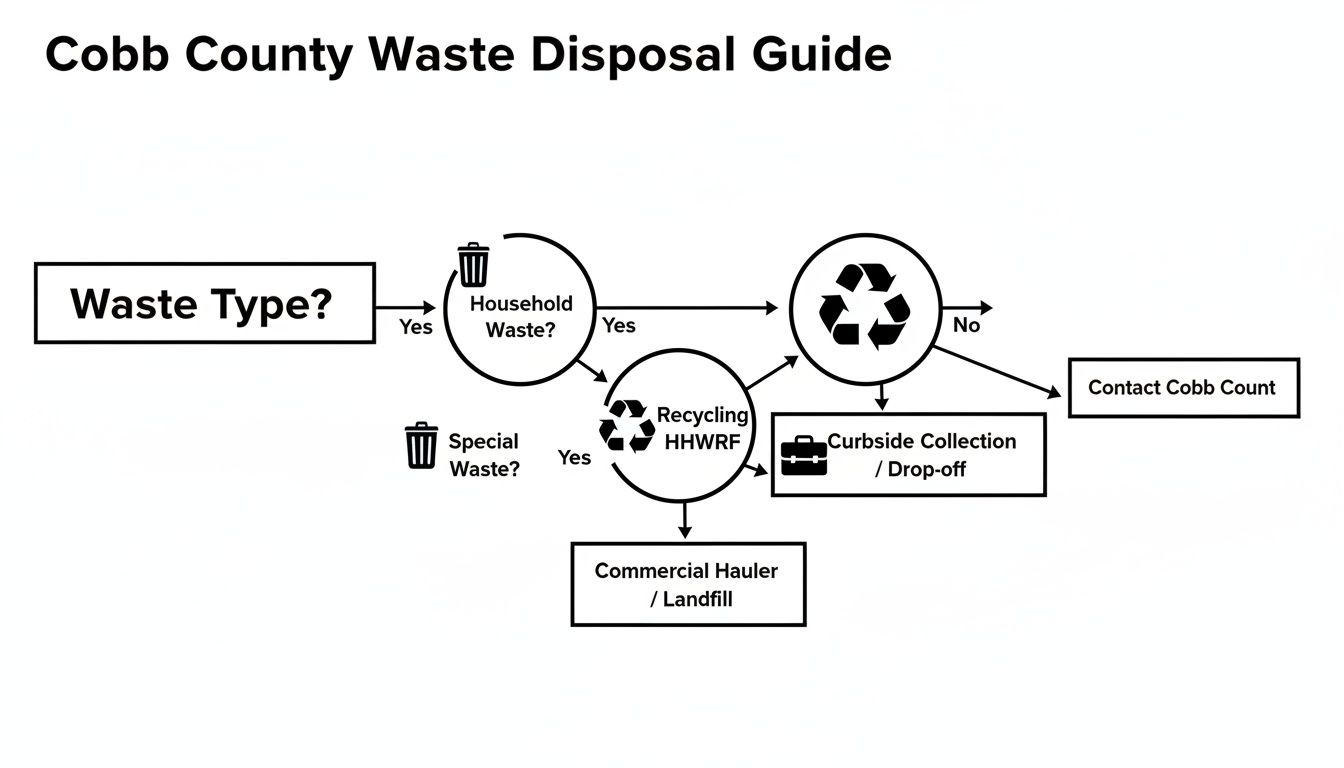
The key takeaway is that business assets follow their own distinct, regulated path. This pathway is entirely separate from the options available to the public.
Operational Efficiency and Specialized Handling
Beyond the crucial security aspect, a professional partner brings operational advantages that a DIY approach simply can't match. Imagine your team spending hours trying to de-install, pack, and transport heavy or bulky equipment. A specialized service handles all the on-site logistics, saving your staff's valuable time.
When vetting a disposal partner, look for companies that use efficient mobile workforce management solutions to guarantee punctual and reliable service.
Moreover, many businesses produce waste streams that are flat-out prohibited at public sites. This includes certain chemicals, biohazardous materials, or large quantities of electronic scrap.
A commercial partner ensures every single item is handled according to strict federal and state regulations. They provide a clear chain of custody and certified recycling documentation—your proof of compliant disposal that protects your organization long after the assets are gone.
Public Waste Station vs. Specialized Disposal Partner
For businesses, especially those handling lab or IT equipment, the choice of disposal method has significant consequences. This table breaks down the fundamental differences between using a public facility and partnering with a specialist like S.E.D.
| Feature | Cobb County Waste Station | Scientific Equipment Disposal (S.E.D.) |
|---|---|---|
| Data Security | No certified data destruction; high risk of breaches. | DoD 5220.22-M wiping & physical shredding. |
| Compliance | No chain of custody; does not meet HIPAA/GLBA. | Provides Certificates of Destruction & Recycling. |
| Logistics | DIY; you handle all labor, packing & transport. | Full-service; on-site de-installation & removal. |
| Accepted Items | Limited to household waste; restricts e-waste/hazmat. | Accepts specialized lab, IT, and medical equipment. |
| Liability | Remains with your business; no proof of proper disposal. | Transfers liability with documented, compliant process. |
| Best For | Residential trash, yard debris, and basic recyclables. | Business assets, e-waste, lab & medical equipment. |
For businesses in the Atlanta area—particularly in Cobb, Douglas, and Fulton counties where data centers and research hubs are booming—this level of certified, documented disposal isn't just a good idea. It's non-negotiable.
Your Questions Answered About Waste and E-Waste Disposal
After digging into the options for public facilities and commercial disposal partners, you probably still have a few questions. That's completely normal. We get calls all the time about the specifics of waste disposal here in Cobb County, GA, from simple household concerns to the tricky requirements for businesses getting rid of e-waste.
Let's clear up that confusion with some straightforward answers. The rules can feel complicated, especially with all the specialized industries popping up in our area, but we'll break it down so you can choose the right path with confidence.
Business and Commercial Disposal Questions
For companies, especially those in the healthcare, research, and tech fields booming across Cobb, Douglas, and Fulton counties in Georgia, knowing the disposal rules isn't just a good idea—it's critical. The region's rapid growth, including the development of nearly 100 data centers, means a flood of servers, computers, and specialized electronics will eventually need a secure end-of-life plan.
Can my business use the Cobb County Waste Station for electronics or old lab equipment?
No. The public transfer station is strictly for residential use and is not set up to handle commercial e-waste or specialized laboratory equipment.
Attempting to use the Cobb County waste station for business assets like servers, old computers, or medical instruments opens your company up to serious compliance and data security risks. The facility provides no certified data destruction services (like DoD 5220.22-M wiping), which is a deal-breaker for protecting sensitive information under laws like HIPAA. For businesses, a specialized partner is the only way to guarantee compliance and get secure, on-site service.
How do I dispose of items the waste station does not accept?
When it comes to business-generated e-waste, surplus IT assets, or decommissioned lab equipment, you need a commercial disposal partner. A dedicated service manages the entire process for you—handling all the logistics and transport, and ensuring every part is recycled compliantly. This keeps hazardous materials out of landfills and, most importantly, protects your data.
You can learn more about how to properly manage these assets by exploring our guide on what electronic waste recycling entails.
General Questions About the Public Facility
Knowing how the county's infrastructure works helps everyone use it more effectively. These answers should clear up the role of the public transfer station and what to do with some common but tricky household items.
A common point of confusion is the difference between a transfer station and a landfill. Think of a transfer station as a sorting hub, not a final destination. Waste arrives, gets consolidated into larger, more efficient loads, and is then transported to a distant regional landfill. This "hub-and-spoke" model is much more efficient and environmentally sound.
What is the difference between a transfer station and a landfill?
The Cobb County waste station is a transfer station. It’s a temporary collection point where waste from residents is gathered and compacted into large trucks before being shipped off to a final disposal site. A landfill, on the other hand, is the final destination where waste is actually buried. Cobb County’s old landfills have been closed for years and no longer accept trash.
Are there extra fees for items like tires or mattresses?
Yes, you should definitely expect to pay extra per-item fees for specialty items like tires and mattresses. These things are a headache for waste facilities because they can't be easily compacted with regular trash. The extra fees cover the higher costs of handling and processing them separately.
To avoid any surprises at the gate, it's always smart to check the official Cobb County website or call the station directly for the current fee schedule before you head over.
What about items like paint and household chemicals?
For things the station prohibits, like leftover paint, pesticides, and other household hazardous waste, the county has other solutions. Keep Cobb Beautiful runs special collection events where residents can drop these materials off safely. Just check the county’s official website for the latest schedule and locations for these events in the Marietta, GA area.
For businesses, labs, and healthcare facilities in the Atlanta, GA area and nationwide, navigating disposal regulations for electronics and specialized equipment requires a professional partner. Scientific Equipment Disposal provides certified, compliant, and secure disposal services, ensuring your assets are managed responsibly from pickup to final documentation. Protect your data and your brand by visiting us online to schedule a consultation today.