Your Guide to the Landfill Canton GA and Disposal Alternatives

If you're looking for the "landfill in Canton GA," you've probably realized it's not always a straightforward trip. The main facility for the area is the Cherokee County Landfill, and while it handles most everyday trash, knowing the rules is key to a smooth visit. We'll cover all the essentials—location, hours, fees—to get you started.
But what about the items they won't take? That’s where things get more complicated, especially for local businesses in Canton and even organizations operating nationwide.
Navigating Waste Disposal in Canton, GA
Waste disposal in Canton, GA isn’t just about knowing where the landfill is. It’s about understanding what you can toss and, more importantly, what you can’t. For homeowners, that’s usually straightforward—household trash, old furniture, or yard debris.
For businesses, though, it's a different ballgame. Research labs, medical facilities, and tech companies often have specialized equipment that absolutely cannot go into a landfill, whether in Georgia or any other state. Think about it: improperly dumping old computers or retired lab instruments can create huge environmental headaches and, for a business, massive data security risks with nationwide implications.
This guide is designed to help both sides of the coin. We'll start with the basics for the Cherokee County Landfill, but we won't stop there. We’ll also show you exactly what to do with those prohibited items, like sensitive electronics and scientific equipment, no matter where your business operates.
Why a Guide for Canton Waste Disposal?
Canton and the rest of Cherokee County are growing fast. All that growth puts a strain on local resources, and waste management is high on that list. Being smart about disposal isn't just about following the rules anymore; it’s about protecting our community for the long haul.
A landfill is like a giant storage unit with a fixed amount of space. Once it’s full, finding a place for a new one is an expensive and disruptive process.
By understanding the entire landscape of waste management—from the local landfill in Canton, GA, to specialized nationwide recycling partners—you can make more informed and responsible decisions. This ensures compliance and helps preserve our local environment for future generations.
Here's what we'll walk you through:
- Essential Landfill Information: Location, hours, and contact details for the main facility.
- Accepted & Prohibited Items: A clear breakdown of what you can and cannot bring.
- Secure Disposal Alternatives: Smart solutions for businesses needing to dispose of electronics and lab equipment locally and nationwide.
Our goal is simple: to give you a clear roadmap for managing any kind of waste in Canton, GA. Whether you’re a homeowner clearing out the garage or a facility manager decommissioning an entire lab, you'll find the answers you need. For those curious about the bigger picture, you can also learn more about recycling in Atlanta, Georgia.
Planning Your Visit to the Cherokee County Landfill
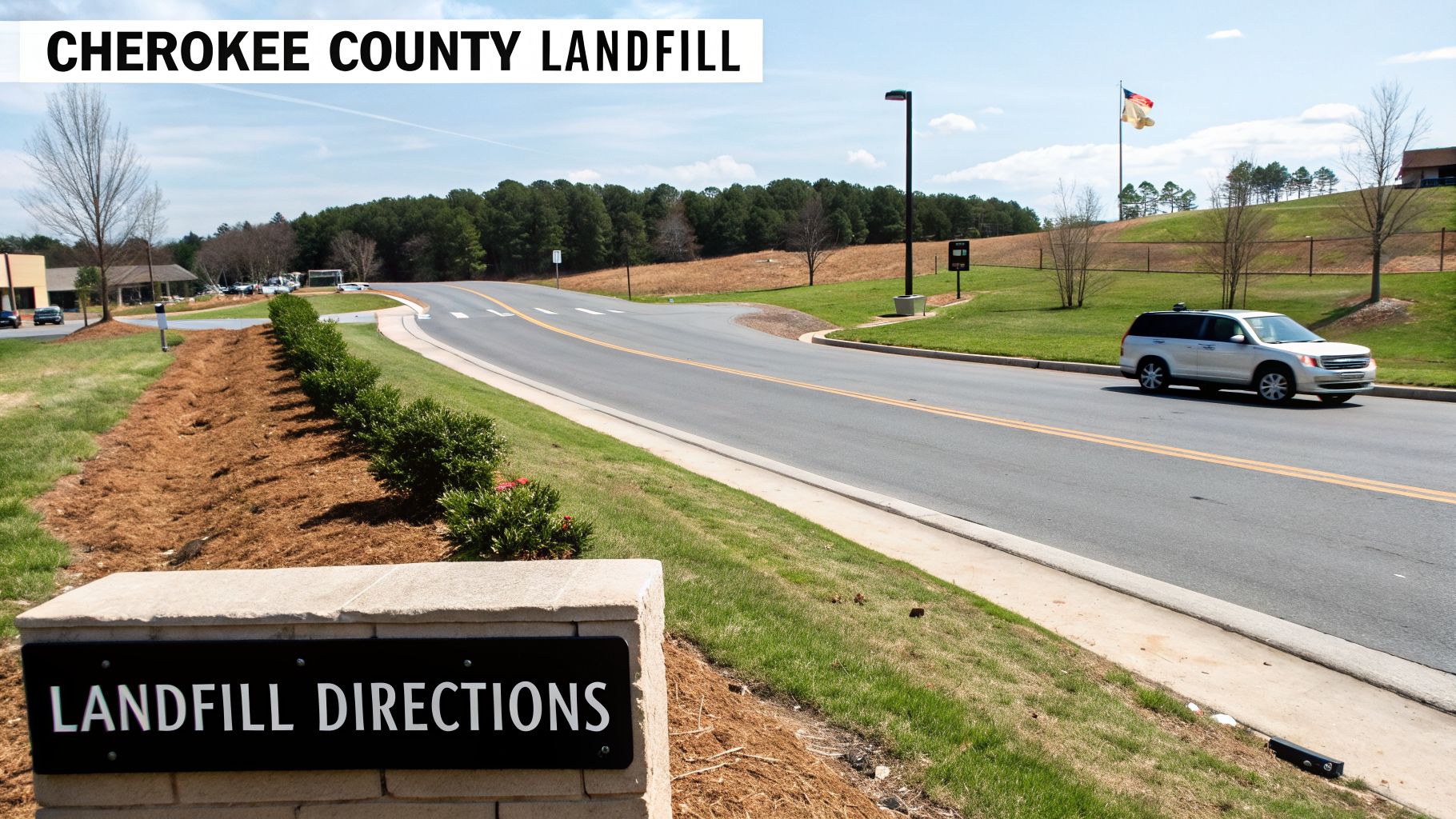
Making a trip to the dump doesn't have to be a guessing game. If you're in Canton, your main spot is the Cherokee County Landfill, which is operated by Waste Management. Knowing the basics before you head out will make the whole process much smoother.
The facility is located right at 1700 Blalock Road, Canton, GA 30115. It’s a pretty straightforward drive from downtown Canton. Just take GA-20 E/Knox Bridge Hwy, hang a left onto GA-5 N/I-575 N, and then take exit 19 for GA-20 W. From there, just follow the signs for Blalock Road.
Hours of Operation and Important Times
Getting your timing right is half the battle. The landfill keeps different hours on weekdays versus the weekend, so you’ll want to plan ahead.
- Monday – Friday: 7:00 AM to 5:00 PM
- Saturday: 7:30 AM to 12:00 PM
- Sunday: Closed
Here’s a pro tip: try to show up at least 30 minutes before closing. This gives you plenty of time to get weighed, dump your materials, and weigh out without feeling rushed. They are serious about their closing times and the gates lock right on the dot.
Understanding the Fee Structure
So, how much is this going to cost? It’s one of the first questions everyone asks. At the Cherokee County Landfill, fees are calculated based on what you’re dropping off and how much it weighs. It's a lot like checking out at the grocery store—you pay for what you've got.
When you pull in, your truck or car gets weighed. You'll then be directed where to unload everything, and on your way out, you get weighed again. Your fee is based on that difference in weight.
Landfill fees are designed to cover the operational costs of managing waste safely and to encourage recycling. The more a community can divert from the landfill, the longer this vital resource can serve the county.
Some items, though, have their own special pricing. For instance, tires usually have a separate, per-item fee because they need special handling and don't mix well with regular trash. It’s also critical to know what not to bring. While the landfill takes a lot of common materials, things like electronics and specialized lab equipment are typically prohibited. For a better idea of what can be recycled professionally, you can review this list of accepted e-waste and lab equipment.
Paying is simple, as most facilities take major credit cards and cash. Here’s a quick breakdown to help you budget for your trip.
| Fee Type | Description | Payment Methods Accepted |
|---|---|---|
| Per-Ton Rate | Applied to general municipal solid waste (household trash) and construction/demolition debris. | Cash, Credit/Debit Cards |
| Minimum Charge | A flat fee for loads under a certain weight threshold, ensuring every trip covers basic operational costs. | Cash, Credit/Debit Cards |
| Special Item Fees | A per-item charge for specific materials like tires, which require separate processing from the main waste stream. | Cash, Credit/Debit Cards |
What You Can and Cannot Dispose of at the Landfill
Before you load up the truck and head to the landfill in Canton, GA, it pays to know exactly what they’ll take at the gate. Nothing’s more frustrating than getting turned away with a full load because a few prohibited items were mixed in.
The Cherokee County Landfill has clear rules designed to protect the environment and ensure safety. For residents doing a spring clean-out or a small DIY project, the guidelines are fairly straightforward. But for businesses, especially those in tech or healthcare, the restrictions get much more specific.
Accepted vs. Prohibited Items at the Canton Area Landfill
To make it simple, we've broken down what's generally allowed versus what's strictly forbidden at the Cherokee County municipal solid waste facilities. Think of this as your cheat sheet for a hassle-free trip.
| Item Category | Accepted | Prohibited |
|---|---|---|
| General Waste | Everyday household trash, non-recyclable food packaging | Liquids of any kind (paints, solvents, oils) |
| Furniture | Couches, mattresses, tables, chairs, dressers | Items contaminated with hazardous materials |
| Yard Debris | Branches, leaves, grass clippings, shrubs | N/A |
| Construction | Wood, drywall, roofing shingles, carpet, insulation | Asbestos-containing materials |
| Appliances | Refrigerators and AC units (if Freon is professionally removed) | Items still containing Freon or other coolants |
| Electronics | N/A | Computers, servers, TVs, monitors, printers, phones |
| Hazardous Items | N/A | Batteries, chemicals, pesticides, medical waste, lab waste |
Knowing these distinctions is the first step. Disposing of a prohibited item isn't just against the rules—it can pose serious long-term risks.
Why Some Items Are Strictly Banned
This isn't just red tape. The rules on what you can and can't dump are there for critical safety and environmental reasons. Landfills are engineered for solid, relatively inert materials.
Improperly disposing of just one regulated item, like a car battery or a container of old lab chemicals, can contaminate soil and groundwater. The toxic materials can leach out over time, creating a serious environmental hazard that's difficult and expensive to clean up.
That's why certain categories of waste are always rejected:
- Hazardous Waste: This is a huge category covering paints, cleaning fluids, pesticides, and industrial chemicals. These require special handling, period.
- Liquids: Landfills aren't designed to contain liquids. They can create instability in the landfill structure and contribute to toxic runoff.
- Batteries: Whether it’s a car battery or a box of AAs, batteries contain corrosive acids and heavy metals that don’t belong in the ground.
- Electronics (E-waste): This is where many businesses run into trouble. Old computers, servers, and monitors are packed with lead, mercury, and cadmium. These items absolutely cannot go to the landfill and require certified disposal. You can learn more about the specifics in our guide on what electronic waste recycling entails.
- Medical or Lab Waste: Needles, biological samples, and contaminated instruments are biohazards. They carry a risk of disease transmission and are never, ever allowed in a municipal landfill.
For any organization, these rules draw a clear line. That old server rack in the IT closet or the retired centrifuge from your lab can’t just be hauled to the dump. You need a partner who understands compliant, secure disposal for retired IT assets and old laboratory instruments, whether you're in Canton or anywhere else in the U.S.
Why Responsible Disposal Matters in Cherokee County
Ever wonder why there are so many rules about what you can and can't throw away? The regulations at the local landfill in Canton, GA, aren't just there to make life difficult—they’re a direct result of the incredible growth our community has seen. This suburban boom is putting a massive strain on our entire waste management system.
Think of our landfill like a storage unit with a fixed amount of space. As more people and businesses set up shop in Cherokee County, we’re filling that space faster than ever. It makes every single decision about what goes in the trash that much more important.
This isn't just some vague environmental issue; it’s a real, local problem with some eye-opening numbers to back it up.
The Impact of Explosive Growth on Our Landfill
The explosive growth around here directly translates to more and more waste. Between 2007 and 2018, Cherokee County's population shot up by 115.2%. Canton itself saw a staggering 304.7% increase during that same time.
In just one year (from July 2007 to June 2008), the county trucked about 334,412 tons of waste to municipal landfills. At that rate, projections showed we were on track to pile up over 3.6 million tons of trash by 2018. You can dig into these numbers yourself in the regional planning documents.
This rapid accumulation of waste highlights a critical point: responsible disposal is no longer just about following rules. It’s about actively protecting our community's future by extending the life of our essential infrastructure.
When businesses and residents go out of their way to divert materials from the landfill, it makes a huge difference. For certain items, especially seasonal ones, finding green alternatives can really lighten the load. For instance, there are great guides on handling holiday waste, like those explaining eco-friendly Christmas tree disposal and recycling programs.
Every single item that gets recycled or properly handled through an alternative service is one less thing taking up precious space. This is exactly why organizations, especially those in technical fields, have to find partners for sustainable disposal. For labs, understanding and implementing sustainable laboratory practices is non-negotiable for both compliance and environmental stewardship.
By diverting bulky e-waste and old lab equipment, your business becomes a crucial part of the solution, helping to ease the pressure on our local systems.
The Smart Disposal Alternative for Businesses
When your business in Canton, GA, has old electronics or lab equipment to get rid of, the local landfill just isn't the right place. The rules against dumping e-waste and other specialized materials aren't mere suggestions; they're in place to prevent serious environmental damage and protect you from data liability. This is exactly where a certified disposal partner becomes a necessity, offering a secure and fully compliant path forward for companies locally and nationwide.
For organizations like hospitals, universities, corporate offices, and research labs, the stakes are simply too high. Taking old IT assets or scientific instruments to the landfill in Canton, GA is a non-starter. Instead, a professional equipment retirement service provides a far better solution, built to handle the specific needs of these facilities with care and precision.
Why Certified Equipment Disposal Is Non-Negotiable
Choosing a certified partner over a trip to the landfill isn't just about following the rules—it's about shielding your organization from significant risk. The benefits are clear and immediate, offering a level of security that a simple dumpster never could.
- Guaranteed Data Destruction: Old hard drives and servers are loaded with sensitive data, making them a major liability. Professional services provide Department of Defense (DoD) level data wiping, completely sanitizing media before it's recycled. For drives that no longer work, secure shredding ensures the data is physically destroyed and impossible to recover.
- Full Regulatory Compliance: Trying to navigate the tangled web of state and federal disposal regulations is a complex job. A specialized partner ensures every single item is handled in full compliance with laws like HIPAA for healthcare data, protecting your business from steep fines and legal headaches.
- Sustainable Recycling: Certified disposal keeps hazardous materials like lead, mercury, and cadmium out of our local soil and water. Instead of contaminating the ground, valuable components are recovered and put back into the supply chain, which promotes a circular economy.
The simple diagram below shows how population growth puts more and more pressure on local resources.
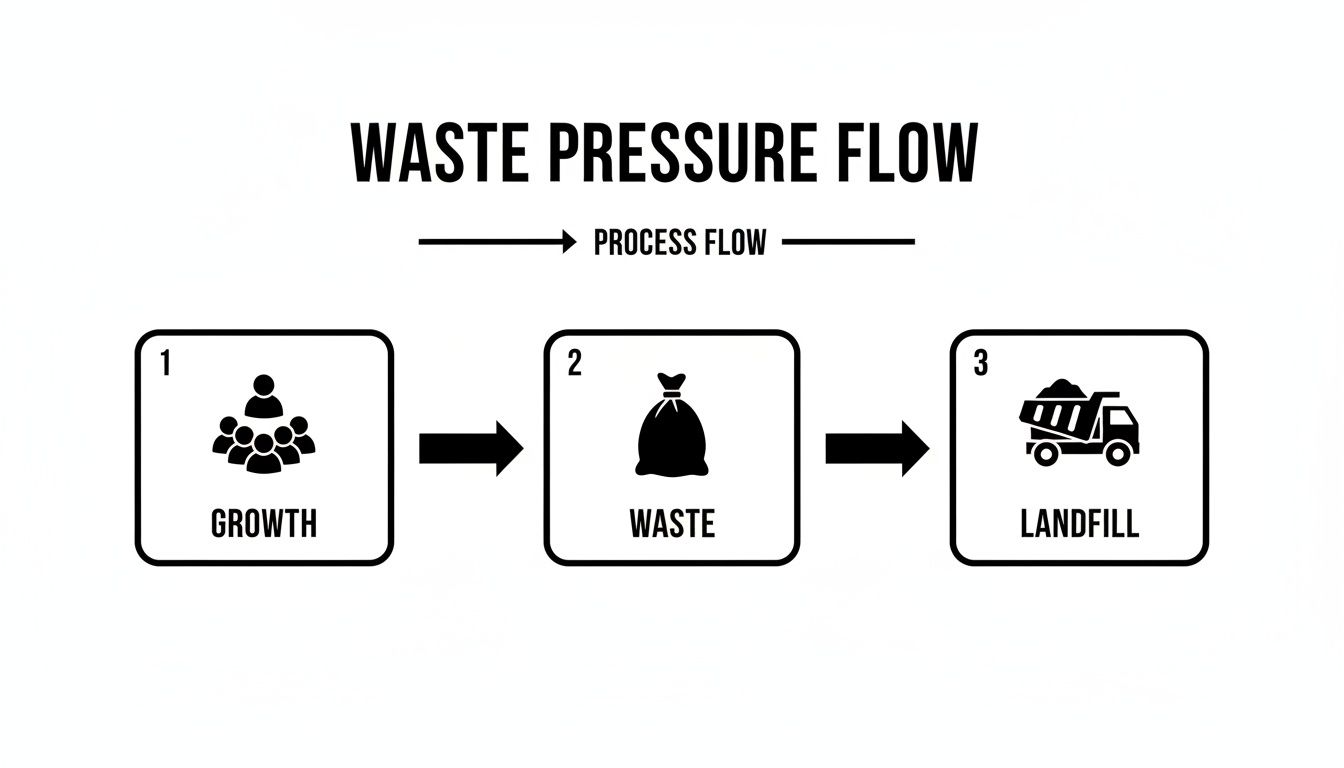
Diverting specialized waste through a certified partner is a key strategy for easing this burden on our community's infrastructure.
From Local Needs to Nationwide Expertise
While your immediate need might be right here in Canton, many organizations have facilities spread across the country. A disposal partner with a nationwide reach understands the logistics of multi-site cleanouts and full lab decommissions. They can give you a single point of contact for consistent, compliant service, no matter where your locations are.
This approach transforms equipment retirement from a logistical nightmare into a streamlined, documented process. Instead of wrestling with different local landfill rules, you get a secure and environmentally responsible outcome for all your retired assets.
When you contrast the risks of improper disposal—data breaches, environmental fines, and a damaged reputation—with the security of expert handling, the choice becomes obvious. Working with a dedicated provider is the smartest move for any organization that values its data, its reputation, and its community.
Understanding Georgia’s Waste Management Laws
If you’re running a business in Canton, GA, you know that what you can and can’t take to the local landfill isn’t just a simple list of rules. These regulations are the result of decades of work by the state to clean up its act and protect our environment. It's a story that every business owner should know to avoid some serious risks.
Believe it or not, Georgia used to have a real problem with unregulated dumps. The big change started back in 1972 with the Georgia Solid Waste Management Act, which created the Environmental Protection Division (EPD). Over the next 20 years, the EPD got to work, shutting down roughly 600 old-school, open-burning dumps and putting a real permitting system in place for landfills.
The Evolution of Landfill Classifications
As part of this massive cleanup, Georgia started classifying its landfills. The system we have today boils down to three main types: Municipal, Construction/Demolition, and Industrial.
This is where it gets critical for businesses. If you have waste that doesn't neatly fall into one of those buckets—think old computers, specialized lab equipment, or medical devices—you can't just toss it. Trying to dump this kind of material can get you into hot water, legally and financially. It’s essential to understand how to stay compliant, especially when it comes to EPA-regulated laboratory equipment disposal.
The strict landfill classifications send a clear message: specialized waste needs specialized handling. Ignoring this isn't just a minor slip-up; it's a major business risk.
For big cleanouts of standard waste, looking into commercial and residential dumpster rental services can be a smart, efficient way to handle disposal for materials the landfill will accept.
But for everything else—the regulated, sensitive, and specialized equipment—that’s where a certified disposal partner becomes essential. We operate completely outside the landfill system, giving you a secure, documented process that guarantees your business stays compliant. It's just smart risk management.
Frequently Asked Questions About Disposal in Canton
Thinking about a trip to the Canton landfill? You're not alone. We hear the same questions all the time from residents and local businesses just trying to do the right thing.
Let's clear up some of the most common points so you know exactly what to expect before you load up your truck. Getting it right the first time saves you a massive headache.
Can I Bring Old Computers or a TV to the Landfill?
In short, no. The Cherokee County Landfill, like most modern landfills, prohibits e-waste. That means common items like computers, monitors, servers, and TVs aren't accepted.
These devices are packed with hazardous materials like lead and mercury, which can't just be buried in the ground. They have to go through a specialized recycling process to keep the environment safe and—just as importantly—to ensure your data is completely destroyed.
For a business, this is non-negotiable. Tossing an old office computer in a dumpster isn't just bad for the environment; it’s a wide-open door for a data breach.
Do I Need to Prove I Am a Cherokee County Resident?
Yes, you'll need to show you're a local to get residential access and pricing. A driver's license or a current utility bill with your name and local address usually does the trick.
Commercial haulers have a different set of rules, but they still often need to provide documentation on where the waste came from to stay compliant.
What Is the Cheapest Way to Get rid of Large Items?
If you’re tossing accepted items—think old furniture or basic construction debris—hauling it to the landfill yourself is usually the most budget-friendly route. But when it comes to prohibited items like electronics, the "cheapest" option can get expensive fast.
The real cost of disposal includes potential fines for non-compliance and the long-term risk of a data breach. Using a specialized service for prohibited items is the only secure and legal method, making it far less expensive in the long run.
This isn't just a local issue. Historically, the entire region has been grappling with a huge increase in waste. Despite recycling efforts, Georgia's per capita waste disposal rate jumped by 28.4% in a single decade. The Atlanta area alone produces nearly half of the state's total. You can see the full picture in this study on Georgia's municipal solid waste trends and how our growth has strained local infrastructure.
For organizations in Canton and across the Atlanta metro area, Scientific Equipment Disposal provides a secure, compliant, and sustainable way to retire old lab equipment and e-waste. We handle your assets responsibly, ensuring your data is destroyed and the environment is protected. Get your free, no-obligation quote from Scientific Equipment Disposal.